BAföG Reform on the Brink: Coalition Argues Over Future of Student Financing
Berlin, June 02, 2026
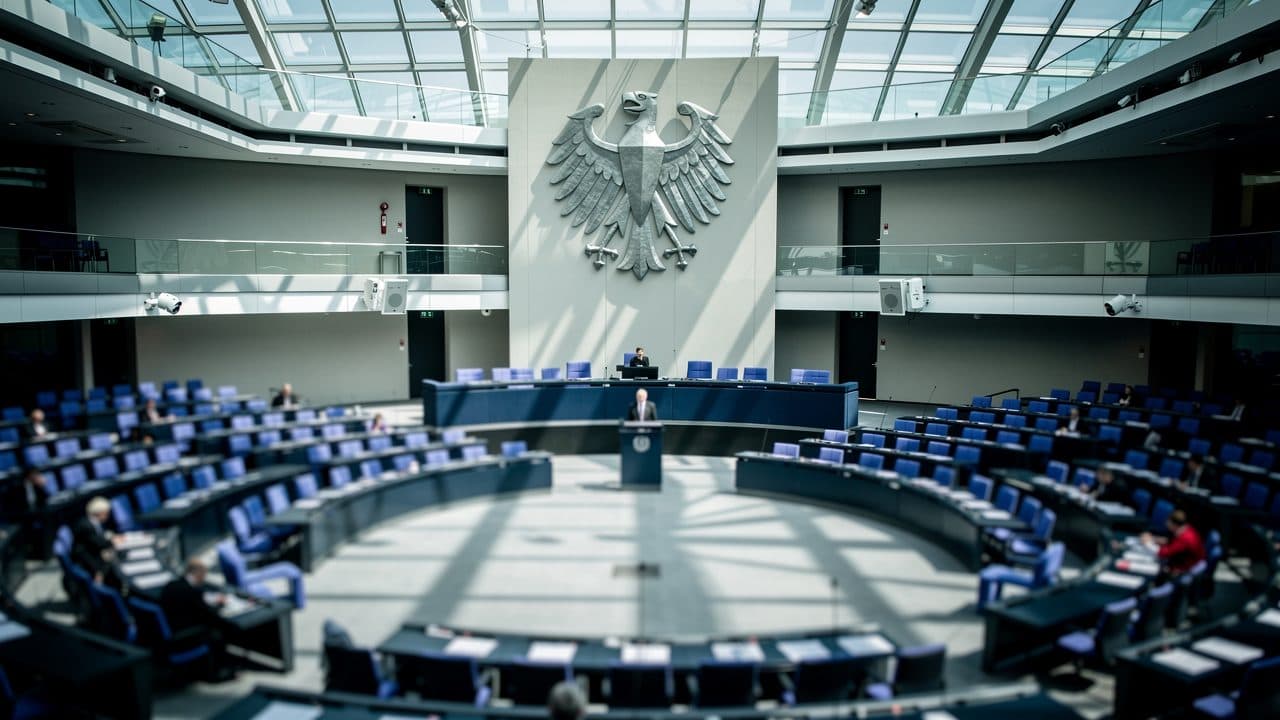
AI-generated image (flux-2/pro-text-to-image via Kie.ai)
Summary
The planned BAföG reform by the black-red coalition is on the brink. After Research Minister Dorothee Bär (CSU) questioned the reform, criticism rained down from the SPD, the opposition, and student representatives.
Berlin, June 02, 2026
The BAföG reform, agreed upon by the CDU/CSU and SPD in the coalition agreement, is threatening to fail after Research Minister Dorothee Bär (CSU) and Union parliamentary group leader Jens Spahn (CDU) publicly questioned the initiative.
The reform was supposed to start with the upcoming winter semester and, in a first step, increase the housing cost allowance for students not living with their parents from 380 to 440 euros per month. A year later, a gradual increase of the basic needs allowance to the level of basic security was planned, whose standard rate is currently 563 euros.
However, at the end of May, Union parliamentary group leader Jens Spahn expressed doubts about the plan. State benefits such as Bürgergeld, housing benefit, parental allowance, or BAföG would likely not be increased, said the CDU politician. A few days later, Research Minister Bär followed suit, stating in an interview with the Funke Mediengruppe newspapers that she no longer expected the reform proposals in their current form to find a majority.
Bär showed understanding for a possible halt to the reform. "If those in need of care are to save money and cuts are made to parental allowance, then it is understandable that one does not promise large additional benefits elsewhere at the same time," she said verbatim. At the same time, the CSU politician emphasized that her ministry had "set all the tracks for the BAföG reform, and we are also on schedule."
Outrage from SPD and Opposition
The minister's statements triggered a wave of outrage. SPD research spokesperson Lina Seitzl called Bär's statement "wrong and irritating." The BAföG reform had been agreed upon between the coalition factions, and the financing had been clarified and secured. Deputy SPD parliamentary group leader Wiebke Esdar also warned of damage to the coalition if the Union were to unilaterally scrap the project.
"That the Chancellery is questioning the agreement on BAföG is unsettling for young people – and unnecessary," criticized Esdar. She pointed out that Federal Finance Minister Lars Klingbeil (SPD) had already taken the costs of the BAföG increase into account in his budget planning. "The financing is in place."
Government spokesperson Stefan Kornelius confirmed that discussions within the federal government about the BAföG reform are ongoing. At the same time, he referred to Chancellor Friedrich Merz's (CDU) position, according to which all agreements from the coalition agreement are "subject to financing." The reform also includes "significantly more" than just benefit increases, including "simplifications, digitalization, and so on."
"Incredibly Stupid Stereotypes": Young Socialists Attack Minister
Sharp criticism came from the Young Socialists (Jusos). Their chairman Philipp Türmer called Bär's statements "outrageous" on Deutschlandfunk. The minister was repeating "incredibly stupid stereotypes" about lazy students. Bär had previously said that it was "no drama if students work alongside their studies" and described the situation of students as very privileged.
Türmer countered that 65 percent of students already work and still cannot make ends meet due to rising rent and food costs. He knew no one in the SPD who did not fully support the BAföG reform. Green Party politician Asar also emphasized on Deutschlandfunk that BAföG is not a social benefit but an investment in the skilled workers of tomorrow. Educational justice apparently has no priority for the coalition.
The Green Party chairwoman, Franziska Brantner, accused the coalition of "poor governance." The BAföG increase was "clearly regulated in the coalition agreement, even with figures." The Left Party chairwoman Ines Schwerdtner called a failure of the increase a "scandal." Who is allowed to study in Germany still depends primarily on "who has the most money and what family background they come from."
Student Services: Minister "Forgetful of the Future"
The CEO of the German National Association for Student Affairs (Deutsches Studierendenwerk), Matthias Anbuhl, expressed himself "somewhat disappointed" with Minister Bär on Deutschlandfunk. He expected a minister to fight for the younger generations and students and not give up at the first sign of headwinds from her own parliamentary group. An increase in BAföG had been firmly promised and was long overdue. BAföG has been lagging behind the cost of living for years.
The German National Association for Student Affairs accused the minister of having lost all interest in the younger generation and being completely detached from the reality of students' lives. Anbuhl called Bär "forgetful of the future" and warned: "If the coalition breaks its BAföG promise, there is a risk of six years without an adjustment of the funding to rising prices."
The figures support the critics. According to the German National Association for Student Affairs, about a third of students in Germany live in poverty or are at risk of poverty. Only about twelve percent of all students receive BAföG at all. According to the Moses Mendelssohn Institute, the average rent for a shared apartment room was recently 512 euros, and 800 euros in Munich. The Federal Statistical Office reports that students spend about 53 percent of their income on housing costs – compared to 25 percent on average for the population.
The Financial Reality of Students
Currently, BAföG consists of a basic allowance of 475 euros plus a housing cost allowance. This is 59 euros for students living with their parents and 380 euros for those living independently. The maximum funding rate is thus 534 euros for students living at home and 855 euros for those living away from home, with a health insurance supplement of up to 992 euros. The current rates have been in effect for two years.
According to a social survey by the German National Association for Student Affairs from 2021, almost two-thirds of all students work alongside their studies. The Nuremberg Institute for Employment Research (IAB) found that the employment rate among students aged 20 to 24 increased by about 19 percentage points to 56 percent between 2015 and 2023. A full-time course of study corresponds to an average workload of about 40 hours per week; during the lecture period, students are generally not allowed to work more than 20 hours to maintain their "Werkstudent" (working student) status.
At the end of April, the Federal Ministry of Education and Research had announced that the CDU/CSU and SPD had agreed on the financing of the BAföG reform and that the legislative process could begin. Now, according to sources within the coalition, the project is endangered due to empty public coffers. Clarity is expected in a few weeks when the federal budget and the financial planning for the coming years are on the cabinet's agenda. The reform is scheduled for the federal cabinet in July.
Protests Announced – Decision in July
Student representatives are planning protests for the coming week against the delay in the BAföG reform. The Green Party faction in the state parliament of Saxony-Anhalt also called for a clear statement from the federal government. Their higher education policy spokesperson Olaf Meister said that Saxony-Anhalt could not afford to slow down young talent. The federal government must now "deliver instead of dithering."
CDU Bundestag member Joachim Ebmeyer, on the other hand, defended the reform initiative: "The reform will lead to more applications being possible, faster procedures, and quicker approvals reaching students." The CSU-led Research Ministry also quickly assured that work on the reform would be continued with vigor.
The debate reveals a deep rift in the black-red coalition. While the SPD insists on the implementation of the coalition agreement, leading Union politicians are openly questioning the project, citing the strained budgetary situation. For hundreds of thousands of students, the stalemate means ongoing financial uncertainty.
Questions & Answers
What exactly is the planned BAföG reform?
The reform provides for a gradual increase in BAföG rates: first, the housing cost allowance for students living away from home is to rise from 380 to 440 euros, and later the basic needs allowance is to be permanently aligned with the level of basic security.
Why did Research Minister Dorothee Bär question the reform?
Bär referred to the strained budgetary situation and necessary savings in other areas such as care and parental allowance; she expressed understanding that under these circumstances, no large additional benefits could be promised for BAföG.
What happens next with the BAföG reform?
Discussions within the federal government are ongoing; clarity is expected in a few weeks when the federal budget and financial planning are on the cabinet's agenda – the reform is scheduled for the federal cabinet in July.