The sperm whale Timmy: remains transferred to a Danish factory after autopsy
Randers, 09 June 2026
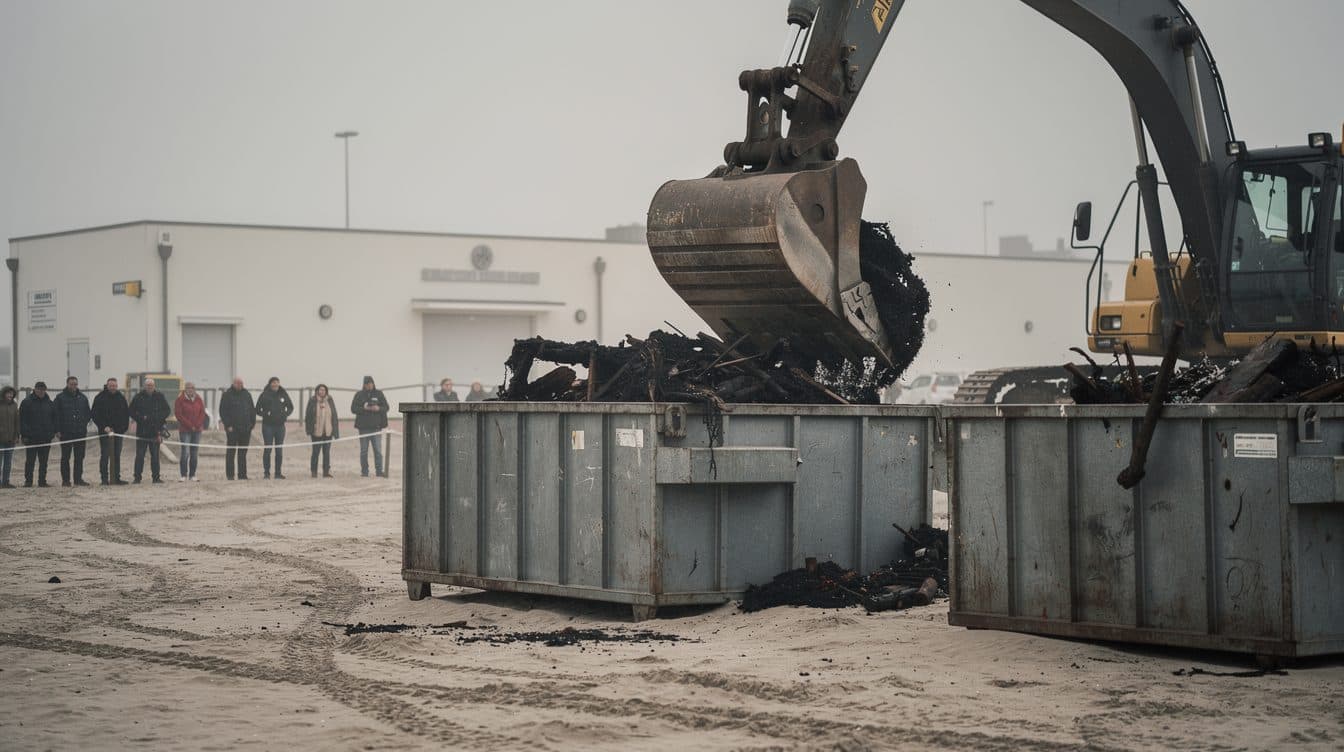
AI-generated image (flux-2/pro-text-to-image via Kie.ai)
Summary
The remains of the sperm whale known as Timmy, which washed up dead weeks ago on the Danish island of Anholt, have been transported to a factory in Randers after the autopsy. The company Daka Denmark will convert the fat into biodiesel, while bones, skin and tendons will become biomass destined for a cement factory.
Randers, 09 June 2026
The remains of the sperm whale nicknamed Timmy, which washed up dead several weeks ago on the Danish island of Anholt, were transported on Monday to a factory in Randers, Denmark, where the company Daka Denmark will process the fatty tissues to produce biodiesel and transform bones, tendons and skin into biomass.
The discovery and recovery operations
The animal, a female sperm whale known by the nickname Timmy, had been found lifeless on the beach of the island of Anholt in the Kattegat weeks ago, after a series of sightings along the German Baltic Sea coast starting from the end of March. The remains were removed from the beach on Friday and the transport to the Danish mainland took place on Monday, as reported by local authorities.
The autopsy of the sperm whale was completed on Thursday evening on the island of Anholt. A team of experts and veterinarians examined and dissected the carcass in an attempt to clarify the circumstances of the animal's death, but a clear cause of death was not initially identified, as explained by the Danish biologist Charlotte Bie Thøstesen speaking to local media.
According to veterinarian Tim Jensen of the University of Copenhagen, no fishing nets or other foreign bodies were found in the whale's mouth and stomach. The specialists who had visited the animal the previous week had been unable to determine with certainty the cause of death.
Following the autopsy, it emerged that the sperm whale was not pregnant in the last months of its life. Parasites were found in the animal, but the experts ruled out that they could have caused its death. "Vergangene Woche untersuchten Fachleute das Tier, sie konnten jedoch keine klare Todesursache feststellen", explained the veterinary source, recalling that "Für die Untersuchung wurde der Kadaver geöffnet und zerlegt".
The autopsy on the island of Anholt
No visible injuries were present on the body, a circumstance that may however be linked to the state of decomposition, given that the animal had died several weeks earlier. An excavator loaded the individual parts of the carcass into containers for transport to the mainland, as reported by local sources.
Once they arrive at the Daka Denmark facility in Randers, the whale's remains will be separated into three main components. "In der Fabrik des Unternehmens in Randers werden die Überreste von Walen wie 'Timmy' laut einem Sprecher zunächst in drei Bestandteile getrennt", explained a company spokesperson, which deals with the recycling of by-products from agriculture and the food industry.
The processing at the Randers factory
The fatty part of the animal, including the thick layer of subcutaneous fat, will be converted into biodiesel. "Knochen, Haut und Sehnen werden zu Biomasse aufbereitet, die später in einer Zementfabrik verbrannt wird", specified the processing managers, adding that "alles andere – Knochen, Sehnen und Haut – wird zu einer Art Mehl verarbeitet, das als Biomasse zur Verbrennung in einer Zementfabrik endet".
The company Daka Denmark, specialized in the recycling of by-products from agriculture and the food industry, confirmed the processing plans, as reported by the Danish press. "Das Unternehmen Daka Dänemark, das den Kadaver übernommen hat, bestätigte entsprechende Pläne", according to the information released.
At the same time, several bones had already been collected from the beach the previous week and have been destined for the collection of the Natural History Museum of Copenhagen. "Mehrere Knochen wurden bereits vergangene Woche vom Strand abgeholt und gehen an die Sammlung des Naturhistorischen Museums in Kopenhagen", explained the curators.
The bones destined for the Natural History Museum
A part of the sperm whale's skeleton will also be preserved for scientific and museum purposes. "Ein Teil des Skeletts bleibt erhalten", specified those responsible for the collection, confirming the documentary value of the specimen for the Danish and international scientific community.
The water derived from the carcass, once cleaned, will be discharged into the fjord, as required by current environmental procedures. "Demnach wird das Wasser aus dem Kadaver gereinigt und in den Fjord geleitet", local authorities announced, emphasizing attention to disposal procedures.
The mystery surrounding the cause of death
The circumstances of Timmy's death remain partly shrouded in mystery, although analysis of the tracker data could provide answers in the coming months. A tracking device had been attached to the animal by a private initiative, which was later found on the whale itself. "Eine private Initiative hatte den sehr geschwächten Buckelwal Ende April mit einem Lastschiff Richtung Nordsee transportiert und dort später ausgesetzt", the organizers recalled.
The tracker data and future investigations
The tracker data was collected by the Ministry of the Environment of Mecklenburg-Western Pomerania, in Germany. According to a spokesperson, "Die Daten sollen möglichst zügig abschließend ausgewertet werden. Sobald dies geschehen ist, wird die Öffentlichkeit über die hieraus folgenden Erkenntnisse informiert", explained the representative of the German ministry contacted by dpa.
The private initiative that had taken charge of rescuing the animal, in collaboration with the authorities, had decided to transport the severely weakened sperm whale towards the North Sea on a cargo ship at the end of April and release it in the open sea. The operation ended with the death of the specimen, later found on the beach of Anholt.
The case of Timmy had moved German and Danish public opinion, fueling a debate on the rescue of stranded cetaceans and the management of the carcasses of protected marine animals. The processing of the remains by a specialized company represents one of the standard procedures envisaged by Danish regulations for large specimens.
The specialists who participated in the autopsy stressed the importance of the examination for understanding the health conditions of the sperm whales that frequent the waters of the Baltic Sea. The information collected on the animal, including the tracker data, could help clarify the migratory routes and causes of mortality of this protected species.
The entire affair, from the discovery on the beach of Anholt to the transfer of the remains to the factory in Randers, required coordination between the Danish and German authorities and the private rescue initiative. The final treatment of the remains – biodiesel and biomass – complies with the circular economy practices applied to large animal by-products.
The bones destined for the Natural History Museum of Copenhagen will be the subject of study by researchers, who will thus be able to expand knowledge on the biology of the sperm whale. The preserved part of the skeleton will also allow future museum exhibitions dedicated to the marine fauna of Northern Europe.
Questions & Answers
What happened to the sperm whale Timmy?
The female sperm whale, nicknamed Timmy, washed up dead on the Danish island of Anholt several weeks ago, after repeated sightings along the German Baltic Sea coast. The remains were then transported to a factory in Randers for processing.
How will the whale's remains be used?
The fat, including the thick fatty layer, will be converted into biodiesel by the company Daka Denmark, while bones, tendons and skin will be transformed into biomass destined for combustion in a cement factory.
Which parts of the sperm whale have been preserved for science?
Several bones collected from the beach and a part of the skeleton have been destined for the collection of the Natural History Museum of Copenhagen for studies and future exhibitions.
Sperm whale Timmy: remains in Danish factory for biodiesel | allfacts360