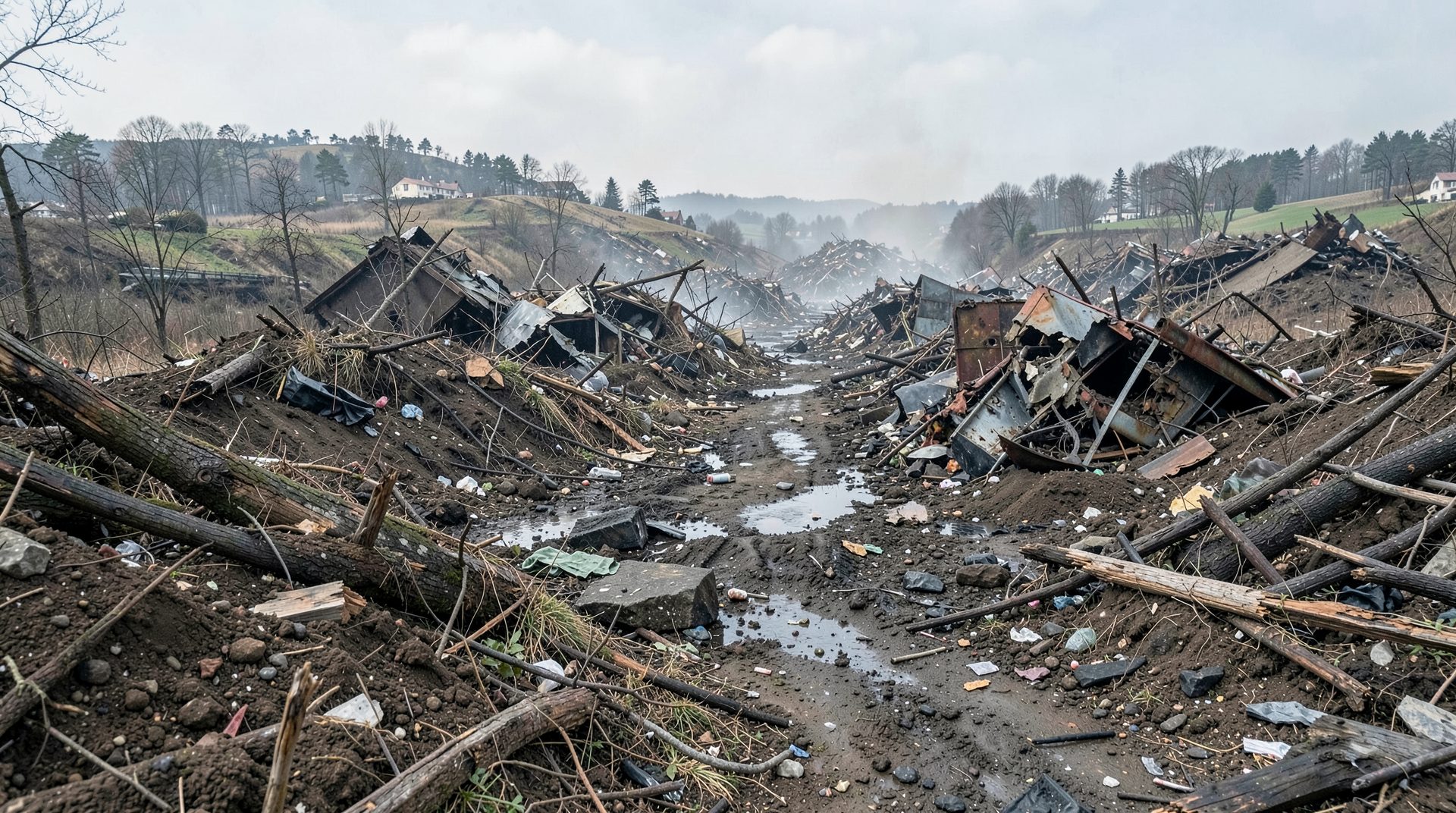
Berlin, Germany — April 2, 2026 Germany experiences an average of one magnitude 5 earthquake every decade, with highly destructive quakes occurring roughly once a century, according to seismic data corroborated by multiple sources. While often perceived as seismically stable, Germany harbors several active earthquake zones, including regions along the Rhine Valley and near the French border. The country’s strongest recorded earthquake, a magnitude 6.1 event in 1911, caused widespread structural damage, underscoring the potential risks.
## High-Risk Regions Identified The Koblenz area in the Middle Rhine region has been flagged as a seismic hotspot, with frequent tremors linked to geological activity beneath the river valley. Similarly, the stretch between Karlsruhe and Mainz, particularly around Rheinstetten and Rastatt, experiences regular earthquakes.
Further south, the Upper Rhine Graben near Strasbourg has shown increased seismic activity in recent years. Another historically active zone lies around Albstadt, south of Stuttgart, where tectonic shifts have triggered notable quakes in the past. These areas are monitored closely by Germany’s Federal Institute for Geosciences and Natural Resources (BGR).
## Historical Context and Future Risks The 1911 earthquake near Albstadt remains Germany’s most powerful recorded seismic event, with its magnitude 6.1 tremors damaging buildings across the region. Statistically, such destructive quakes recur every 100 years, raising concerns about preparedness in vulnerable areas.
Smaller but more frequent quakes—averaging magnitude 5 every decade—pose ongoing challenges for infrastructure and emergency planning. The Eifel region and Cologne Basin (Kölner Bucht) are also noted for their seismic activity, though less frequent than the Rhine Valley hotspots.
Authorities emphasize the importance of earthquake-resistant construction in high-risk zones, particularly given the unpredictable nature of tectonic movements. The BGR’s public portal (bgr.bund.de) provides real-time data and historical records to aid researchers and policymakers.
## Monitoring and Public Awareness Ulrich Schreiber, a geologist cited in multiple reports, has highlighted the need for continuous monitoring in Germany’s active zones. “The Earth’s crust here is far from static,” he noted in a recent assessment, pointing to the Rhine Valley’s complex fault lines.
Public awareness campaigns have increased in regions like Albstadt and the Upper Rhine Graben, where residents are encouraged to secure heavy furniture and familiarize themselves with evacuation routes. Meanwhile, scientists continue to study the potential long-term effects of tectonic shifts, including the speculative formation of a “new ocean” in the Eifel region over millions of years.
As Germany marks 115 years since its last major quake, the statistical likelihood of another destructive event looms larger. Preparedness remains the focus for communities in the shadow of these seismic threats.