
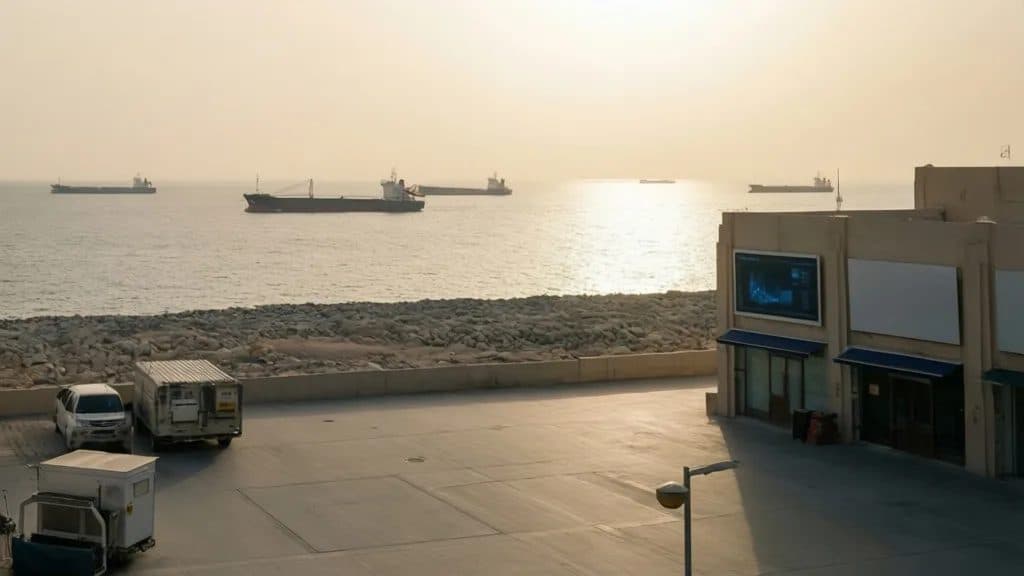
Tehran, April 8, 2026 Under international law, ships retain the right to pass through the Strait of Hormuz, even within territorial waters, as long as their transit is innocent and continuous, according to legal experts.

Legal Framework for Navigation

The Strait of Hormuz, a critical maritime chokepoint, is governed by international legal principles that ensure unimpeded passage for vessels. According to corroborated sources, coastal states like Iran and Oman cannot impose fees solely for ships traversing their territorial waters.

Nele Matz-Lück, a noted legal scholar, emphasized that such rights are enshrined in international maritime law. "The principle of innocent passage is fundamental," she stated, highlighting that coastal states may only regulate specific services, such as towing or harbor usage, not the act of passage itself.

This legal framework mirrors regulations applied to other strategic waterways, including the Suez Canal. However, unlike the Suez, where fees are levied for transit services, Hormuz remains a free passage route under international norms.

Coastal States' Rights and Limitations

While Iran and Oman exercise sovereignty over their respective territorial waters, extending up to 12 nautical miles from their coastlines, their authority is constrained by international law. Coastal states cannot unilaterally restrict or tax innocent passage through straits used for international navigation.

Legal experts point out that any attempt to impose fees or block transit could violate the United Nations Convention on the Law of the Sea (UNCLOS). This treaty, ratified by most nations, including Iran, explicitly safeguards transit rights in such strategic waterways.

The distinction between territorial waters and international straits is crucial. While coastal states retain jurisdiction over their territorial seas, straits like Hormuz are classified as international waterways, granting vessels broader transit rights.

Historical Context and Precedents

The legal status of the Strait of Hormuz has been a point of contention for decades. Historical disputes have occasionally flared, with Iran asserting control over the waterway during periods of regional tension. However, international law has consistently upheld the principle of unimpeded passage.

Comparisons have been drawn to other maritime chokepoints, such as the Strait of Malacca and the Bosporus, where similar legal principles apply. In each case, coastal states must balance sovereignty with the global community's reliance on free navigation.

The 12-mile territorial limit, a standard under UNCLOS, ensures that key shipping lanes remain accessible. This provision has been instrumental in maintaining global trade flows, particularly for oil exports transiting Hormuz.

Implications for Regional Stability

The reaffirmation of these legal principles comes amid ongoing regional tensions. Analysts suggest that any deviation from established norms could escalate disputes, potentially disrupting one of the world's most vital shipping routes.

Oman, which shares control of the strait with Iran, has historically advocated for peaceful navigation. Its adherence to international law contrasts with Iran's periodic threats to close the waterway, underscoring the delicate balance of power in the region.

Legal experts warn that unilateral actions by coastal states could provoke international responses, including sanctions or naval deployments to ensure compliance with UNCLOS. The global community's vested interest in Hormuz's openness ensures close scrutiny of any restrictive measures.

As maritime traffic continues to grow, the Strait of Hormuz remains a litmus test for the enforcement of international maritime law. Its legal status, firmly rooted in global treaties, serves as a bulwark against unilateral control, preserving its role as a cornerstone of global trade.