Ukraine Partners With Japanese Firm to Develop Low-Cost Intercept Drones for Air Defense Kyiv, Ukraine — April 6, 2026
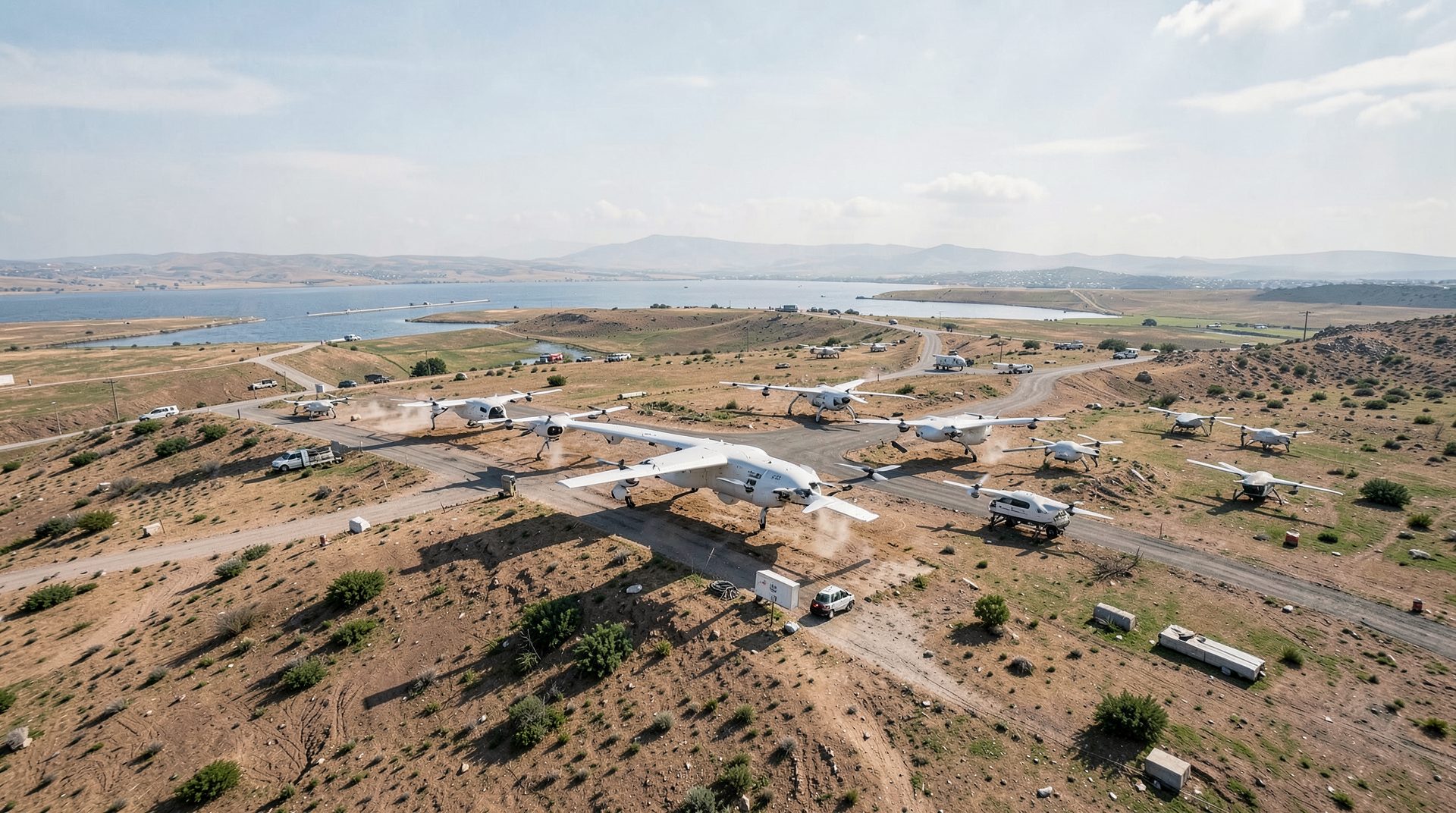
Ukraine is collaborating with a Japanese technology company to develop a new generation of low-cost intercept drones designed to counter airborne threats more economically than traditional missile systems.
The project, backed by a $10 million investment from Terra Drone, aims to produce drones capable of reaching speeds up to 300 kilometers per hour and engaging targets at distances of up to 35 kilometers. The initiative addresses a critical asymmetry in modern warfare: the high cost of missile defenses compared to the inexpensive drones they are often deployed to destroy.
Cost-Effective Air Defense Solution
Simple attack drones frequently cost just tens of thousands of dollars, while the missiles used to intercept them can be significantly more expensive. By contrast, the new intercept drones are expected to be producible for a few thousand dollars each, offering a scalable and financially sustainable alternative for air defense.
Terra Drone’s investment will expand production capacity, enabling Ukraine to deploy the technology on a larger scale. The partners also plan to potentially offer the system internationally, signaling broader applications beyond the immediate conflict.
Technical Capabilities and Strategic Implications
The intercept drones’ projected speed of 300 kilometers per hour and engagement range of 35 kilometers position them as a viable tool for neutralizing low-altitude threats, including reconnaissance and attack drones. Their development reflects a shift toward asymmetric defense strategies, where cost efficiency plays a pivotal role in sustaining prolonged conflicts.
Ukraine’s partnership with Terra Drone underscores the growing role of private-sector innovation in military technology. The collaboration could set a precedent for future defense solutions, particularly in scenarios where traditional systems prove prohibitively expensive or logistically challenging.
The project’s success may influence how other nations approach air defense, especially in regions facing similar threats from inexpensive, mass-produced drones. As the technology matures, its potential adoption by international partners could reshape global defense markets and strategies.
No further details about the drones’ operational deployment timeline or additional partners were disclosed in the available reports.