
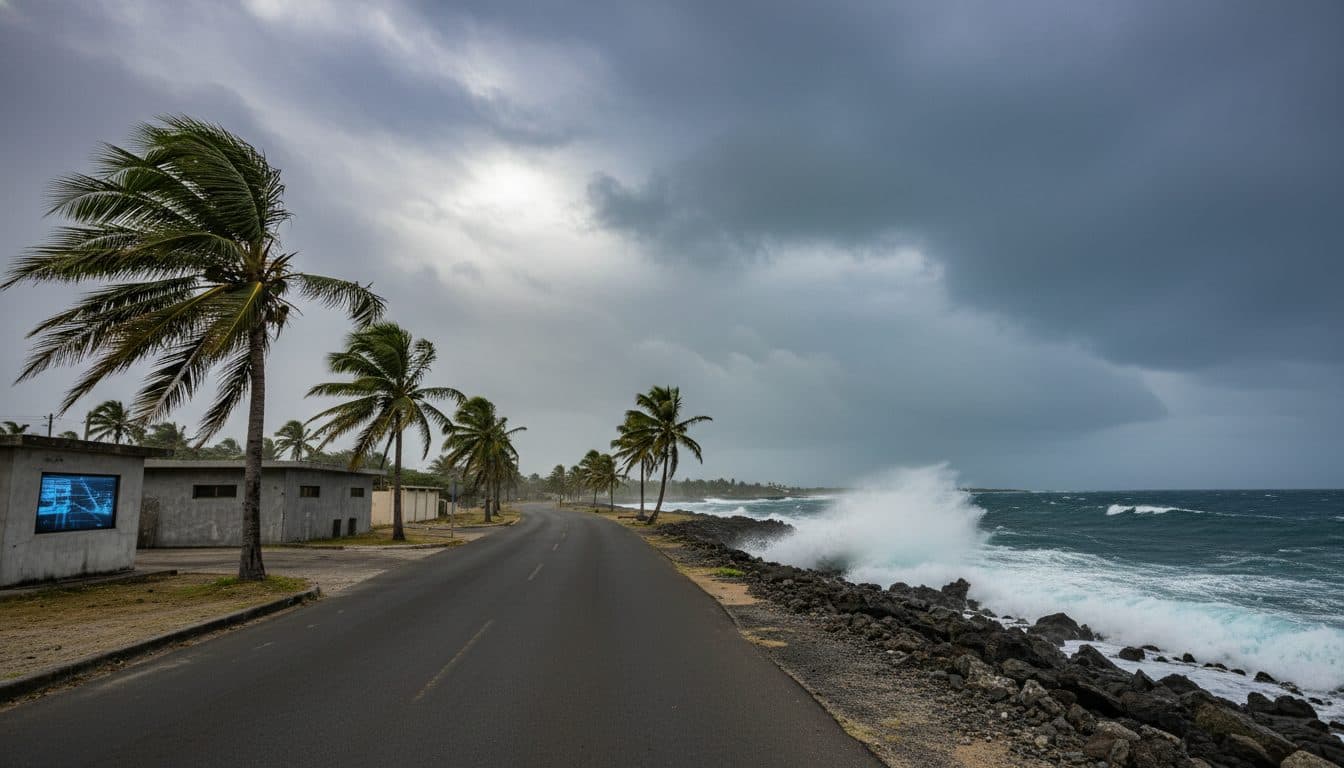
Saipan, Northern Mariana Islands — April 15, 2026
Super Typhoon Sinlaku slammed into the Northern Mariana Islands with devastating force early Thursday, unleashing wind gusts exceeding 210 kilometers per hour and towering nine-meter waves that caused widespread destruction across the U.S. territory.
Slow-Moving Storm Intensifies Damage
The typhoon’s unusually slow movement prolonged its destructive impact, battering the islands of Saipan and Tinian for hours with catastrophic winds and torrential rains. Meteorologist Landon Aydlett from the National Weather Service in Guam described the situation as uniquely perilous due to the storm’s sluggish pace.
*"Das macht die Auswirkungen besonders diabolisch. Sobald es über den Inseln heller wird, werden wir mehr Klarheit haben,"* Aydlett said, emphasizing the prolonged chaos. Authorities warned residents to remain indoors or in shelters amid ongoing threats of flooding, landslides, and structural collapses.
Deborah Fleming, a representative from a local women’s association on Tinian, painted a harrowing picture of conditions: *"Es ist absolut beängstigend — man kann draußen nichts sehen, es weht immer noch ein extrem starker Wind, Wasser dringt ein, viele Bäume sind umgestürzt, Häuser wurden verwüstet."* Her account underscored the storm’s relentless fury, with homes inundated and infrastructure shattered.
Evacuations and Stranded Tourists
Hundreds of tourists found themselves stranded across the island chain as airlines canceled all flights ahead of the typhoon’s arrival. Local evacuation centers filled with residents who fled vulnerable coastal areas, though the full scale of displacement remains unclear until daylight reveals the extent of the damage.
The Pacific Daily News reported wave heights reaching nine meters off Saipan, compounding the danger with severe coastal erosion and storm surges. Guam, another U.S. territory in the region, avoided a direct hit but still faced heavy rains and gusty winds as Sinlaku passed nearby.
Though downgraded from a super typhoon, Sinlaku retained Category 4 strength, posing extreme risks to life and property. Experts identified it as the most powerful tropical storm this year and the most destructive since Typhoon Yutu ravaged the Northern Mariana Islands in 2018, a storm that left billions in damages and claimed multiple lives.
Long-Term Threats and Historical Context
The Northern Mariana Islands, home to roughly 45,000 people, have faced escalating typhoon threats in recent years due to warming Pacific waters. Sinlaku’s slow trajectory—a hallmark of climate-charged storms—allowed it to dump unprecedented rainfall and sustain hurricane-force winds longer than typical systems.
Emergency crews prepared for a protracted response, with landslides and flash floods likely to persist even after the typhoon’s center moves away. The National Weather Service cautioned that recovery efforts could take weeks, particularly if critical infrastructure like airports and roads remains compromised.
As daylight breaks over the islands, officials anticipate a clearer assessment of the devastation. For now, the focus remains on safeguarding lives amid the storm’s lingering wrath.

