BASF shrinks Ludwigshafen workforce to lowest level since 1954 as restructuring accelerates
Ludwigshafen, 29 July 2026
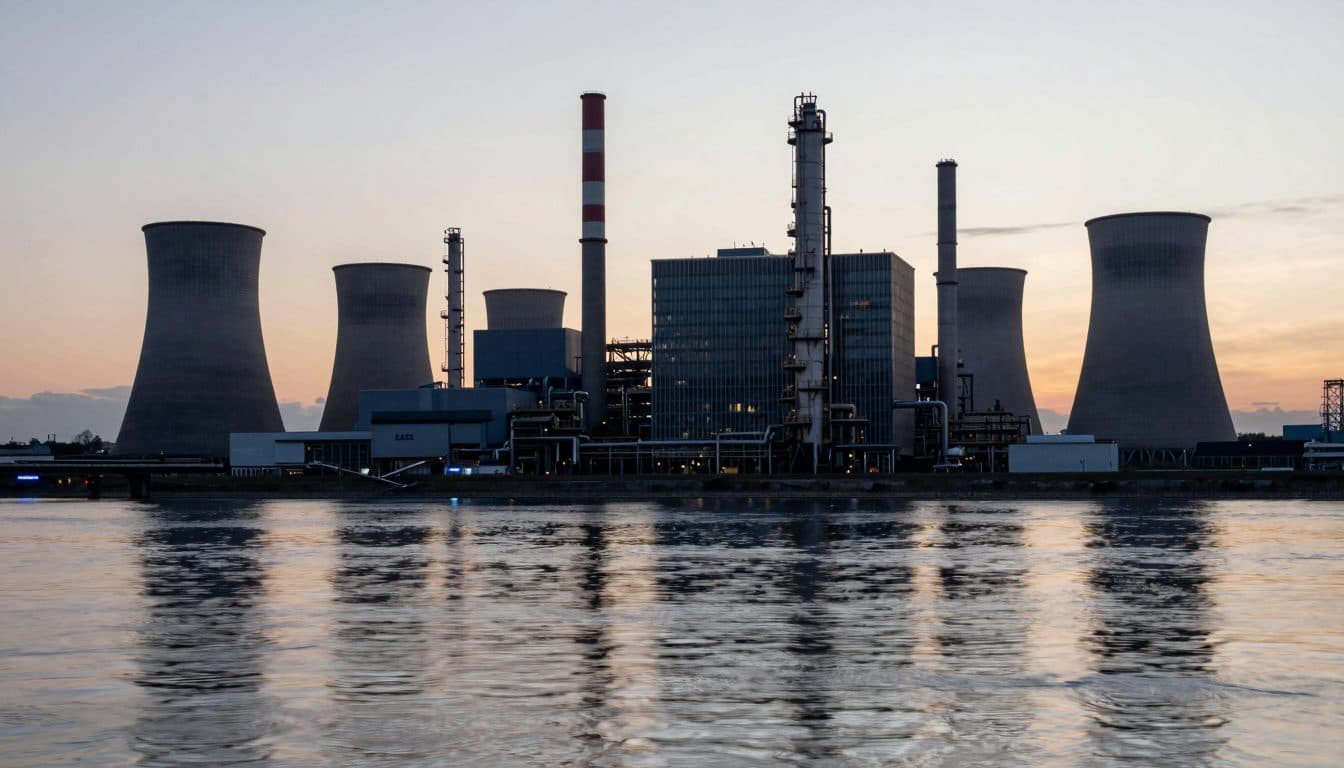
AI-generated image (z-image via Kie.ai)
Summary
BASF has cut full-time positions at its Ludwigshafen headquarters to below 30,000 for the first time since 1954 as the world's largest chemicals group accelerates a sweeping corporate overhaul. Shares rose sharply as the company also announced a multi-billion-euro share buyback tied to earlier guidance.
Ludwigshafen, 29 July 2026
BASF, the world's largest chemical company, has reduced full-time headcount at its Ludwigshafen headquarters to below 30,000 for the first time since 1954 as it pushes ahead with a sweeping corporate overhaul that includes cost cuts, debt reduction and a multi-billion-euro share buyback.
Chief executive Markus Kamieth said the company had increased the pace of its restructuring to make its global organization leaner and more efficient. "Wir haben das Tempo noch einmal erhöht, um unsere globale Organisation schlanker und effizienter aufzustellen", sagte Kamieth bei der Vorlage der endgültigen Zahlen zum zweiten Quartal. Speaking in Ludwigshafen on Wednesday, Kamieth said the workforce reduction was "ein wichtiger und notwendiger Schritt, um den Standort wieder wettbewerbsfähig zu machen".
BASF said the number of full-time positions in Ludwigshafen had fallen below 30,000 in May, the lowest level since 1954. Kamieth said the company had cut 300 to 350 jobs per month at the site during the first half of 2026 alone — more than in the previous two years combined.
Workforce shrinks at historic pace
The cuts are part of a wider restructuring programme launched in 2024 to refocus the chemicals giant on its core businesses that are tightly integrated into BASF's production network. Globally, BASF has reduced its workforce by roughly 7,000 positions since January 2024, with full-time headcount falling by just over 14 percent to around 94,900 year-on-year.
Alongside the job cuts, BASF is moving to slim down its structure. The company said it aimed to lower fixed costs by 20 percent within three years and was targeting annual savings of 2.3 billion euros. Kamieth had warned at the start of the year of persistent headwinds and raised the savings target from an earlier range of 6.2 to 7.0 billion euros outlined in prior communication.
Cost cuts and debt reduction
BASF also plans to reduce its net debt by repaying bonds and loans worth 1.6 billion euros early. Chief financial officer Dirk Elvermann said the group was significantly better prepared for weather extremes than during the drought year of 2018, using specialist ships alongside rail, truck and pipeline alternatives to hedge against logistical risks.
Geopolitical tensions in the Middle East have paradoxically helped BASF's order books. Disruptions in the Persian Gulf region and the Strait of Hormuz — concerns Kamieth and Elvermann addressed in a conference call — prompted customers to stockpile, improving plant utilization at Ludwigshafen. BASF stated that die weitere Entwicklung der Weltkonjunktur stark von der Lage am Persischen Golf abhänge.
Middle East tensions lift demand
Quarterly results underscored the operational turnaround. Revenue in the second quarter rose 16.4 percent year-on-year to 17.2 billion euros, driven by higher prices and volumes. Adjusted earnings before interest, taxes, depreciation and amortization (EBITDA) jumped roughly 50 percent to 2.45 billion euros. Net income attributable to shareholders came in at just over 4.1 billion euros, compared with just 79 million a year earlier.
The company also raised its full-year targets. For 2026, BASF now expects adjusted EBITDA of between 6.9 billion and 7.7 billion euros, having already lifted guidance in mid-July when it presented preliminary figures. In 2025, BASF reported operating profit of 6.6 billion euros. Free cash flow for the current year is expected at between 1.5 billion and 2.3 billion euros, up from 1.3 billion the year before.
Earnings beat and raised outlook
Investors responded warmly. Around midday the share price was up roughly 3.8 percent at 50.80 euros, later extending gains to about 4.1 percent at 50.98 euros. The stock has outperformed Germany's benchmark DAX, which was little changed near 25,446 points.
BASF is putting cash to work for shareholders. The group announced plans for a share buyback tied to a 4 billion-euro repurchase programme announced in September 2024, running through the end of 2028. Some 1.5 billion euros in stock had already been repurchased between November and June under that programme. The new tranche is expected to be completed by the end of April 2027.
Billions in shareholder returns
Kamieth stressed that the restructuring is already bearing fruit. The share of BASF's Ludwigshafen production units considered highly competitive has risen from 78 to 88 percent since 2024. "Wir haben unsere Kosten gesenkt, die Investitionsausgaben reduziert und die Auslastung unserer Anlagen erhöht", Kamieth told reporters.
The overhaul also involves portfolio reshaping. BASF completed a multi-billion-euro sale of a 60 percent stake in its vehicle OEM and refinish coatings business to US private-equity investor Carlyle, while retaining the remaining 40 percent in a joint venture. The group is also working toward listing its agricultural solutions business on the Frankfurt stock exchange by mid-2027.
Portfolio reshaping continues
Under its broader shareholder return plan announced in September 2024, BASF intends to distribute 12 billion euros to investors through 2028 — roughly 8 billion euros in dividends and at least 4 billion euros through buybacks.
The news was reported on 29 July 2026 by Deutschlandfunk among other outlets. Several brokerages reaffirmed or updated their views on the stock the same week, including Deutsche Bank (Buy), Bernstein Research (Outperform), JP Morgan (Underweight) and DZ BANK (Kaufen).
BASF's restructuring cuts deepest at its German heartland. With Ludwigshafen now employing fewer people than at any point since the post-war era, the company is betting that lower fixed costs, sharper focus on integrated production, and rising demand in some segments can return Europe's largest chemicals site to sustained competitiveness.
Questions & Answers
How low has BASF's workforce in Ludwigshafen fallen?
Full-time positions at the Ludwigshafen headquarters dropped below 30,000 in May 2026, the first time the site has been that small since 1954. The pace of cuts accelerated to roughly 300 to 350 jobs per month in the first half of 2026.
Why is BASF buying back its own shares?
BASF launched a 4 billion-euro buyback programme in September 2024 running through the end of 2028. Roughly 1.5 billion euros of stock had already been repurchased between November and June, and the new tranche announced with the quarterly results is scheduled for completion by the end of April 2027.
What is BASF's outlook for full-year 2026?
BASF raised its targets and now expects 2026 adjusted EBITDA of 6.9 to 7.7 billion euros and free cash flow of 1.5 to 2.3 billion euros, after second-quarter revenue rose 16.4 percent to 17.2 billion euros and adjusted EBITDA roughly doubled to 2.45 billion euros.
BASF restructuring: Ludwigshafen jobs at 1954 low, buyback | allfacts360