
Bensheim, August 22, 2026
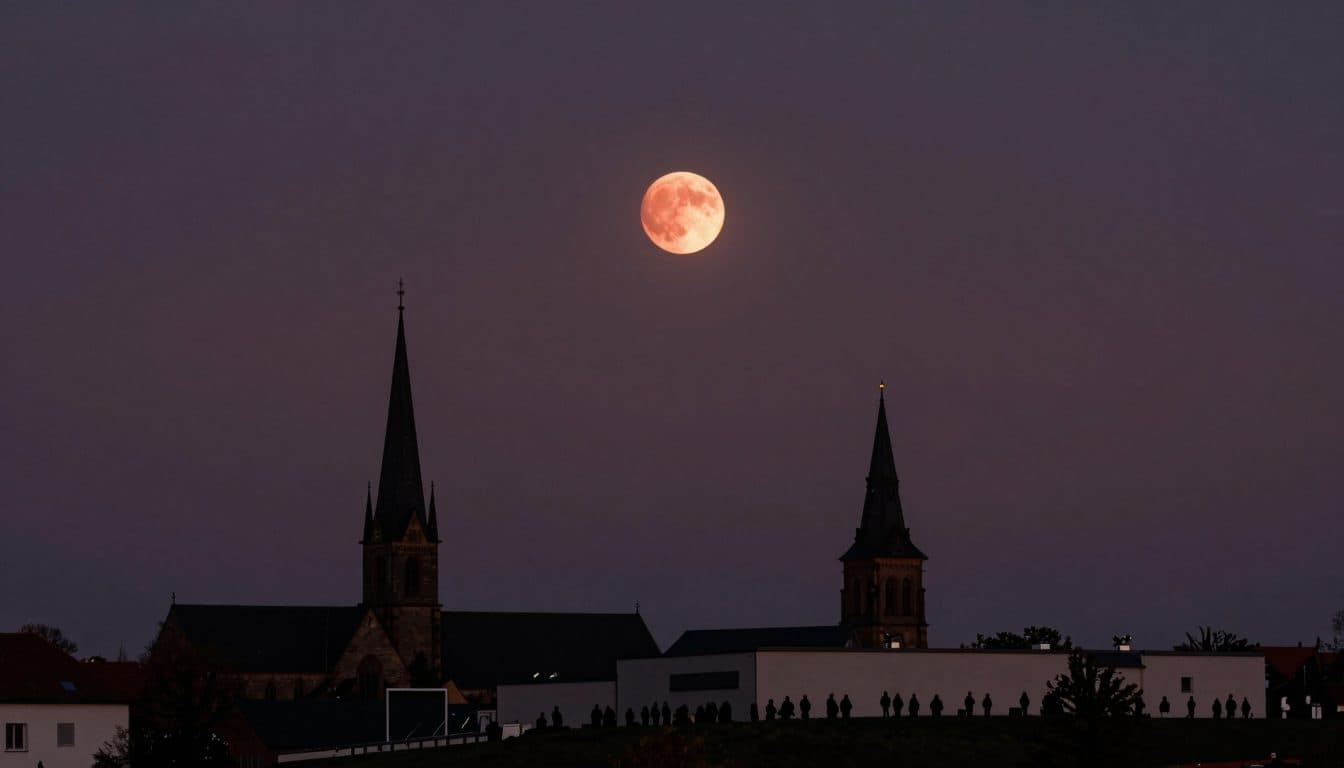
During the spectacle in the sky on Wednesday evening, observers in Germany were able to see a near-total lunar eclipse in which the moon plunged deep into Earth's umbra and appeared reddish.
The celestial event began late in the evening and its central phase was easy to follow from Central Europe. The moon glided through Earth's umbra, with its usual bright surface increasingly darkening. At the peak of the eclipse, the satellite stood only a few degrees above the western horizon, making an unobstructed view to the west crucial.
Why the moon glows reddish
As Uwe Pilz, chairman of the Vereinigung der Sternfreunde (Association of Star Friends) based in Bensheim in southern Hesse, explained to the Deutsche Presse-Agentur, the moon plunged so deep into the shadow that even at the edge it no longer received any direct sunlight. This configuration is the prerequisite for Earth's satellite to appear not completely black, but in a striking copper to rusty red — popularly known as a blood moon.