SpaceX IPO valued at $1.8 trillion set to begin trading Friday
New York, 11 June 2026
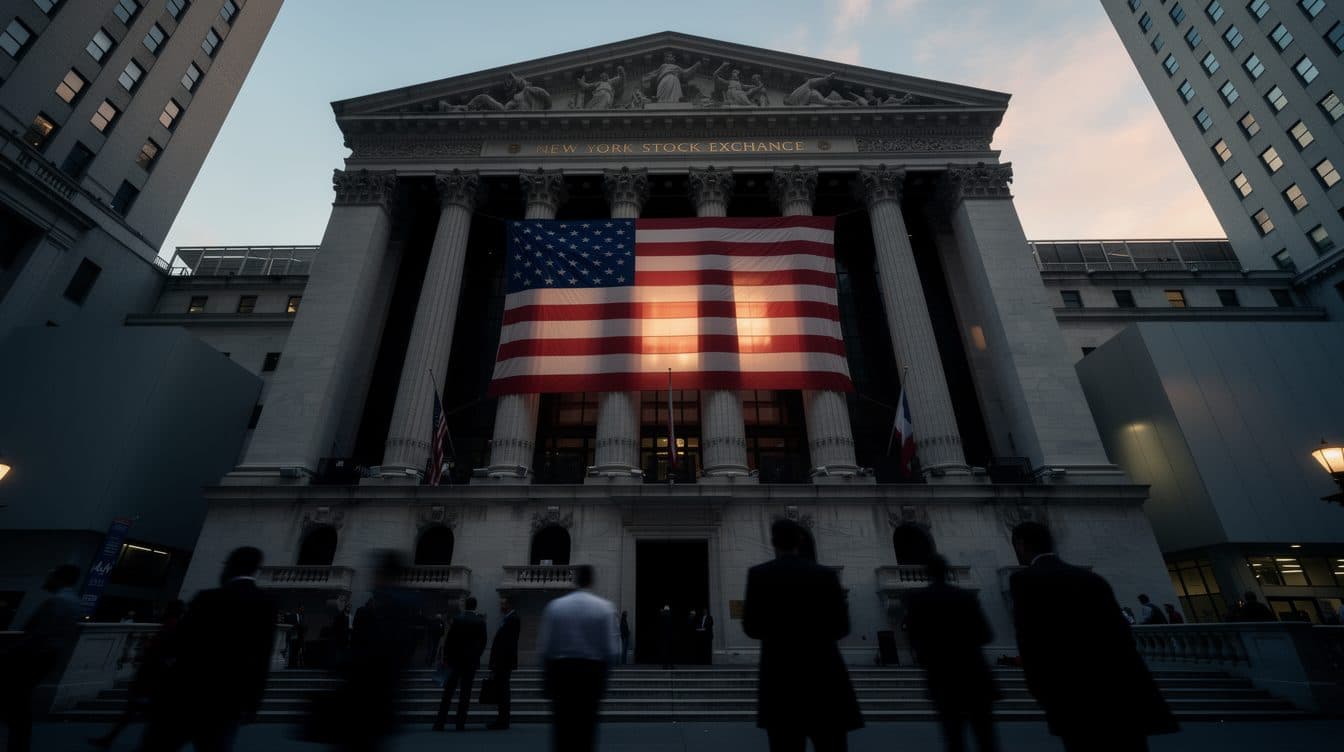
AI-generated image (flux-2/pro-text-to-image via Kie.ai)
Summary
SpaceX is preparing for what analysts describe as the largest initial public offering in history, with trading expected to begin Friday at a $1.8 trillion valuation. Roughly one-fifth of the approximately 555.6 million shares are reserved for retail investors, who have already placed orders totaling $70 billion according to Bloomberg.
New York, 11 June 2026
SpaceX is set to begin trading on Friday in what is expected to be the largest initial public offering ever, raising around $75 billion at an issue price of $135 per share and a target valuation of about $1.8 trillion.
The offering marks the public market debut of a company founded by Elon Musk in 2002. According to the IPO prospectus, the target valuation is more than 90 times the company's annual revenue, underscoring how much of SpaceX's pricing reflects expectations about future growth rather than current earnings.
Starlink carries the business
The bulk of SpaceX's current business comes from Starlink, its satellite internet service. The unit generated roughly 11 billion US dollars in revenue over the past year. As the IPO prospectus notes, "Den Großteil der Erlöse - rund elf Milliarden Dollar - brachte im vergangenen Jahr der Satelliteninternet-Dienst Starlink ein." Starlink ended March with just over 10 million customers and operates through a constellation of approximately 9,600 satellites placed in orbit.
Despite that scale, SpaceX's overall financial picture remains strained. The company posted less than 19 billion US dollars in revenue for the past year and is "tief in den roten Zahlen," or deep in the red. The Starlink business is profitable, but the launch side of the company continues to invest heavily in new vehicles and infrastructure.
Retail investors pile in
Demand from retail investors has been unusually strong. According to Bloomberg, retail orders have already reached 70 billion US dollars. "Nach Informationen des Finanzdienstes Bloomberg kamen von ihnen bereits Order im Volumen von 70 Milliarden Dollar," the report said. Roughly one-fifth of the approximately 555.6 million shares on offer are expected to be reserved for retail investors, well above the 5 to 7 percent typical of traditional IPOs. "Üblicherweise liegt der Anteil bei fünf bis sieben Prozent," the prospectus background notes.
A bank expert quoted in coverage said the stock was multiple times oversubscribed. Juliane Zielonka, founder of Börsenstammtisch, said she is following the listing with excitement, reflecting the unusually broad attention the deal has drawn beyond professional investors.
Musk's trillion-dollar threshold
The IPO also reshapes Musk's personal wealth profile. Bloomberg currently estimates his fortune at approximately 700 billion US dollars. With the listing and the recent absorption of his AI company xAI into SpaceX, Musk is expected to become the first person with a net worth exceeding one trillion dollars.
Musk will retain tight control of the company after the listing. Through a multi-class share structure, he is set to keep a voting share above 80 percent. "Musk behält auch nach dem Börsengang die volle Kontrolle über SpaceX mit einem Stimmrechtsanteil von mehr als 80 Prozent. Basis dafür sind Aktien mit mehr Stimmrechten," according to the prospectus summary.
Index providers scramble
The size of the offering has forced index providers to adapt. Nasdaq and FTSE Russell changed their rules at short notice so that SpaceX shares can enter their indices quickly. MSCI referenced rules it introduced in 2007 for large IPOs. S&P Dow Jones, by contrast, is holding firm on its 12-month waiting period before a stock can be added to the S&P 500. "S&P Dow Jones unterdessen hält dagegen und bleibt dabei, dass die Aktie erst nach zwölf Monaten auf dem Markt in den Auswahlindex S&P 500 einziehen kann."
The valuation puts SpaceX in rarefied territory relative to public-market peers. Nvidia, currently the most valuable public company at nearly $5 trillion, trades at a price-to-sales ratio of about 20, while Apple is at about 10. SpaceX's targeted price-to-sales multiple is far above either, reflecting bets on markets that barely exist today.
One of those bets is satellite connectivity. The prospectus estimates the total addressable market for satellite connectivity at $1.6 trillion across all providers, not just SpaceX. "Laut Börsenprospekt sieht das Unternehmen allein für Satelliten-Konnektivität einen Gesamtmarkt von 1,6 Billionen Dollar - für alle Anbieter allerdings." Amazon is building a competing satellite internet service but, as the prospectus background notes, "Amazon baut einen Konkurrenzdienst auf, hat aber noch deutlich weniger Satelleten."
The AI and connectivity bet
Another is enterprise AI. SpaceX is targeting a share of the market for AI applications in business, which is estimated at more than 22 trillion US dollars in total. "SpaceX will sich ein Stück des Geschäfts mit KI-Anwendungen für Unternehmen sichern, das insgesamt auf mehr als 22 Billionen Dollar geschätzt wird." The company is also exploring orbital data centers, an idea Musk has publicly championed. "Musk plant unter anderem Rechenzentren in der Umlaufbahn - wobei bisher offen ist, ob das technisch funktioniert."
The trajectory of the company since 2002 has been built on a single proposition: cut the cost of getting to orbit. "Der Plan des Tech-Milliardärs war, die Kosten von Raketenstarts drastisch zu senken und irgendwann eine Kolonie auf dem Mars aufzubauen." SpaceX succeeded in building cheaper rockets and, crucially, in making them reusable, further reducing costs. "Doch SpaceX gelang es, günstigere Raketen zu bauen - und sie auch noch wiederverwendbar zu machen, was die Kosten noch einmal senkte."
That capability has made SpaceX practically indispensable for US spaceflight. "Insbesondere seit der Einstellung des Space-Shuttle-Programms ist SpaceX aktuell praktisch unverzichtbar für die US-Raumfahrt und das Militär." Falcon 9 launches carry national security payloads, crewed missions for NASA, and the bulk of commercial payloads heading to low Earth orbit.
Investors are also weighing Musk's track record. At Tesla, fully autonomous driving has not worked as Musk has promised over the past ten years. "Bei dem ebenfalls von ihm geführten Elektroauto-Hersteller Tesla etwa funktioniert das autonome Fahren immer noch nicht so wie von ihm im Laufe der vergangenen zehn Jahre versprochen." Coverage notes that "Musk ist oft zu optimistisch bei seinen Ankündigungen, die manchmal erst Jahre nach von ihm genannten Fristen erfüllt werden," a pattern that some early investors and analysts say must be discounted in valuing the company.
A history of bold promises
Early backers of SpaceX, including Founders Fund, Draper Fisher Jurvetson, and a roster of smaller venture firms that wrote checks in the company's earliest years, are positioned to realize some of the largest paper gains in venture capital history once the stock begins trading. The contrast between those entry prices and the $135 issue price illustrates how concentrated the returns from a single breakout company can be.
The listing also reflects the consolidation under the SpaceX umbrella of Musk's recent ventures. A few months ago, Musk had SpaceX absorb his AI company xAI, into which the online platform X had previously been integrated. "ließ Musk zudem SpaceX seine KI-Firma xAI übernehmen, in der zuvor auch die Online-Plattform X aufging." That combination brings launch capacity, satellite broadband, and large-scale AI compute under one corporate roof, a structure that has no clear precedent on public markets.
Even with that portfolio, analysts describe the IPO as a wager with an uncertain outcome. The price-to-sales multiple is unprecedented for a company of this revenue size, and the path to profitability depends on assumptions about Starlink growth, orbital AI demand, and government launch contracts that could shift with budget cycles. The first trading session on Friday will offer the first real test of how public investors price those assumptions.
A wager with an uncertain outcome
The mechanics of the offering, from the elevated retail allocation to the index-rule adjustments, suggest that the IPO is being treated less as a routine listing and more as a market event in its own right. With $70 billion in retail demand chasing a deal of $75 billion, allocation is expected to be the tightest in years, and the aftermarket will be closely watched by both institutional and retail desks.
For Musk, the listing caps a two-decade push to make SpaceX a central piece of US space and communications infrastructure. For the broader market, it offers a new public reference point for valuing cash-burning growth companies whose products, from reusable rockets to orbital data centers, did not exist as commercial categories a decade ago.
Whether the post-listing performance vindicates the $1.8 trillion target or invites a sharp re-rating will depend on execution in the quarters ahead. Starlink subscriber growth, defense launch revenue, and the pace of any progress toward orbital AI infrastructure will all be parsed closely once the company starts reporting results as a public company.
Questions & Answers
How large is the SpaceX IPO expected to be?
At an issue price of $135 per share, the offering is expected to raise around $75 billion, which would make it the largest IPO to date. The target valuation is about $1.8 trillion.
What share of SpaceX stock is reserved for retail investors?
Roughly one-fifth of the approximately 555.6 million SpaceX shares are expected to be reserved for retail investors, well above the 5 to 7 percent typical of traditional IPOs.
Will Elon Musk keep control of SpaceX after the listing?
Yes. Through a multi-class share structure, Musk is set to retain a voting share of more than 80 percent, keeping full control of the company after the IPO.