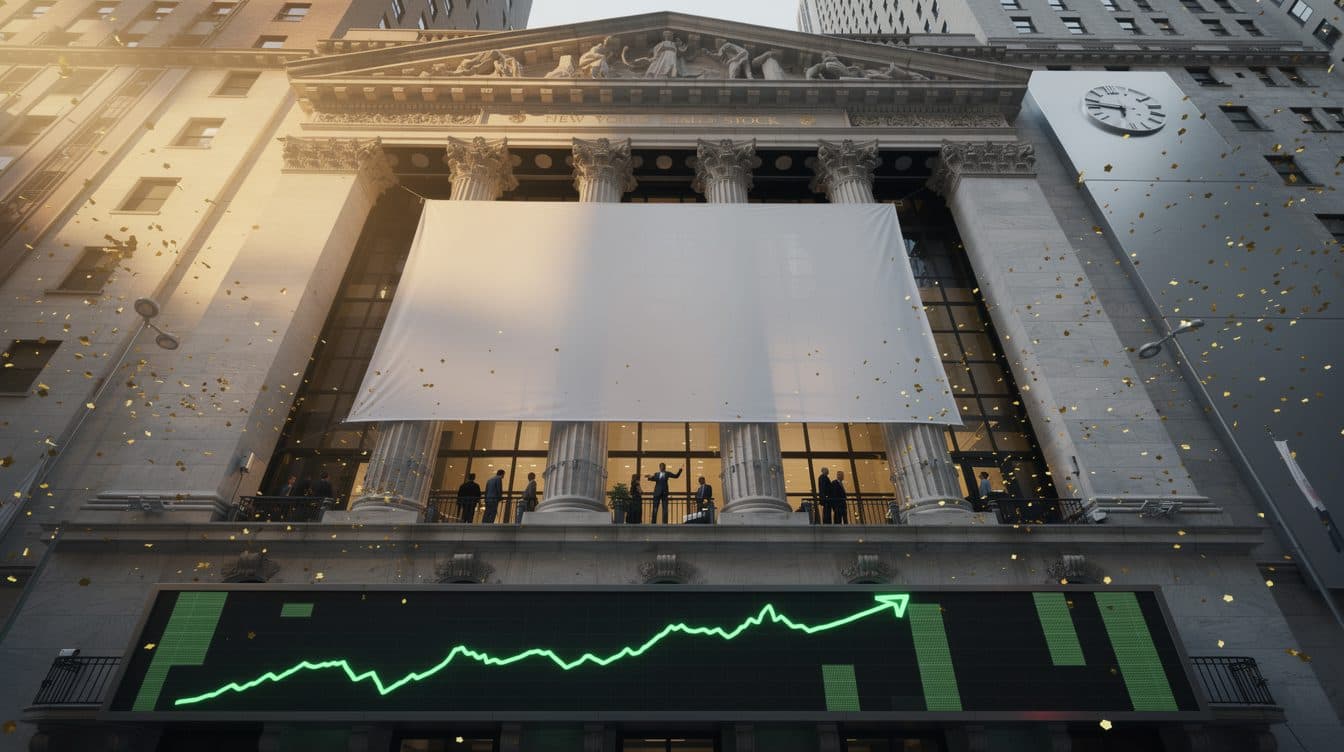
SpaceX raises $75 billion in record IPO, lifting Musk past $1 trillion
New York, 12 June 2026
AI-generated image (flux-2/pro-text-to-image via Kie.ai)
Summary
SpaceX raised approximately $75 billion in its initial public offering, setting a record as the largest IPO ever. The debut valuation of around $1.77 trillion pushes founder Elon Musk past $1 trillion in personal wealth on paper, while he retains more than 80 percent of voting rights.
New York, 12 June 2026
SpaceX raised approximately $75 billion in its initial public offering on Thursday, setting a record as the largest IPO ever and lifting founder Elon Musk past $1 trillion in paper wealth, with trading on the Nasdaq set to begin on Friday.
A record-shattering listing
The Texas-based space company sold around 555.6 million shares at an issue price of $135 each, generating proceeds of roughly $75 billion, or about €64.8 billion. According to a report by dpa-AFX, "SpaceX hat mit seinem Börsengang also wie geplant 75 Milliarden Dollar aufgenommen – ein absoluter Rekord." The figure surpasses the previous record of approximately $29 billion raised by Saudi Arabia's oil company Aramco in 2019. "Beim zuvor größten Börsengang hatte die saudi-arabische Ölfirma Aramco (Aramco (Saudi Aramco)) im Jahr 2019 gut 29 Milliarden Dollar eingenommen," the report noted.
At a debut valuation of approximately $1.77 trillion, SpaceX became one of the ten most valuable companies in the world, worth more than Meta, the parent company of Facebook. "Das von Tech-Entrepreneur Elon Musk gegründete und geführte Unternehmen wird derzeit also tatsächlich mit rund 1,8 Billionen Dollar bewertet und damit in die Liste der zehn wertvollsten Unternehmen der Welt katapultiert," the report stated. On a price-to-sales basis, the IPO valuation is more than 90 times the company's past annual revenue, compared with about 20 for Nvidia and roughly 10 for Apple. "Die Bewertung zum Börsendebüt ist mehr als 90 Mal höher als der vergangene Jahresumsatz – und das ist außergewöhnlich viel," the report added.
Musk crosses the trillion-dollar mark
The IPO made Musk, who owns more than 40 percent of SpaceX, the first person whose net worth exceeds $1 trillion on paper, based on the combined value of his SpaceX and Tesla holdings. "Er wird durch den Börsengang zum ersten Menschen mit einem Vermögen von mehr als einer Billion Dollar," according to the report. Bloomberg currently estimates Musk's wealth at around $700 billion before the listing; the SpaceX debut pushed that figure above the symbolic threshold once Tesla shares are added in. Musk has pledged not to sell any of his SpaceX shares during the first year after the IPO. "Elon Musk hat sogar versprochen, im ersten Jahr nach dem Börsengang keine Aktien zu verkaufen."
Profits still on the horizon
Despite the record proceeds, SpaceX remains deeply unprofitable. The company reported a loss of approximately $4.94 billion in the past year, weighed down by the high cost of developing the Starship rocket and by billions of dollars invested in artificial intelligence computing capacity. Revenue in the same period stood at around $18.67 billion, or roughly €16 billion. "SpaceX verfügt zwar über ein wachsendes Geschäft mit Raketenstarts und seinem Satellitennetzwerk Starlink, schrieb zuletzt wegen hoher Investitionen in KI-Rechenkapazität aber bedeutende Verluste," the report said. Starlink, the company's satellite internet service, is its central revenue driver, generating around $11 billion in the past year on a customer base of just over 10 million at the end of March.
Retail investors flood the order book
Retail investors showed extraordinary appetite for the offering. According to Bloomberg, individual buyers submitted purchase orders worth more than $100 billion through a handful of selected brokers. "Nach Informationen des Finanzdienstes Bloomberg kamen von ihnen Order im Volumen von mehr als 100 Milliarden Dollar," the report noted. Yet retail investors received only just over 20 percent of the issued shares, with the remainder allocated to institutional investors such as asset managers like BlackRock, banks, hedge funds, and passive index funds. "Ihnen wurden aber nur gut 20 Prozent der ausgegebenen Aktien zugeteilt – die meisten gingen also leer aus," the report said, noting that the typical retail allocation in IPOs is between 5 and 7 percent.
Trading will not begin with the 9:30 a.m. New York market open on Friday. Instead, regular trading is expected to start a few hours later, once the banks acting as market makers have organized the expected volume of buy and sell orders. "Der ordentliche Handel mit SpaceX-Titel startet aber nicht mit Börseneröffnung um 9 Uhr 30 New Yorker Zeit, sondern voraussichtlich erst einige Stunden später," the report explained. The shares issued in the offering represent just under 5 percent of SpaceX's total shares outstanding, and SpaceX employees who hold shares will only be able to sell them in stages over the coming months.
Musk keeps firm control
SpaceX's corporate structure gives Musk sweeping control regardless of the public listing. Supervoting shares ensure that he retains a voting rights share of more than 80 percent, even though his economic ownership is closer to 40 percent. "Musk behält auch nach dem Börsengang die volle Kontrolle über SpaceX mit einem Stimmrechtsanteil von mehr als 80 Prozent," the report noted. The setup mirrors governance arrangements that have drawn scrutiny at other Musk-led companies, including Tesla, where fully autonomous driving has still not worked as he has promised over the past ten years. "Bei dem ebenfalls von ihm geführten Elektroauto-Hersteller Tesla etwa funktioniert das autonome Fahren noch immer nicht so, wie von ihm in den vergangenen zehn Jahren versprochen," the report observed.
An unorthodox pricing strategy
The IPO priced differently from most large listings. Rather than initially announcing a price range and narrowing it based on investor demand, SpaceX set the $135 issue price itself in advance. According to the U.S. Securities and Exchange Commission (SEC) filing, the company decided to issue more shares than originally planned because of high demand. "Laut der Börsenaufsicht SEC will das Unternehmen wegen der großen Nachfrage mehr Aktien ausgeben als ursprünglich geplant," the report said. Financial experts have warned investors of risks when buying SpaceX shares amid the broader turbulence in technology stocks. "Finanzexperten haben Investoren deshalb vor Risiken beim Kauf von Aktien gewarnt," it added.
AI ambitions and market jitters
Tech stocks more broadly are characterized by very high volatility, reflecting nervousness over the Iran war and uncertainty about which companies will emerge as winners and losers of the AI boom. "Wegen des Iran-Kriegs und der Unsicherheit, wer zu den Gewinnern und Verlierern des anrollenden KI-Booms gehört, herrscht an den Börsen derzeit eine sehr hohe Nervosität. Insbesondere die Kurse der Tech-Unternehmen sind von grosser Volatilität geprägt," the report said. SpaceX's plans for AI are ambitious: Musk had his AI company xAI acquire SpaceX a few months ago, with the online platform X having previously been merged into xAI, and he is pursuing orbital data centers, though whether that is technically feasible remains open. "Musk plant unter anderem Rechenzentren in der Umlaufbahn – wobei bisher offen ist, ob das technisch funktioniert."
Index providers rush to catch up
Index providers moved quickly to accommodate the new stock. Nasdaq and FTSE Russell changed their rules at short notice to allow SpaceX to be added to major indices soon after listing, while S&P Dow Jones held firm and maintained that the SpaceX stock can only enter the S&P 500 after twelve months on the market. "S&P Dow Jones unterdessen hält dagegen und bleibt dabei, dass die Aktie erst nach zwölf Monaten auf dem Markt in den Auswahlindex S&P 500 einziehen kann," the report said. MSCI referenced rules introduced in 2007 for large IPOs when deciding on SpaceX's index inclusion. "MSCI verwies im Mai auf 2007 eingeführte Regeln für große Börsengänge." Passive index funds were effectively required to buy SpaceX shares because the company is to be included in major indices such as the Nasdaq 100.
From Mars colonies to orbital data centers
SpaceX has built a central position in American spaceflight and military launch services, particularly since the retirement of the Space Shuttle program. "Insbesondere seit der Einstellung des Space-Shuttle-Programms ist SpaceX aktuell praktisch unverzichtbar für die US-Raumfahrt und das Militär," the report noted. The company has lucrative contracts with the U.S. space agency NASA for its reusable launch vehicles, and the Starlink network now consists of around 9,600 satellites in orbit. Amazon is building a competing satellite internet service but currently has significantly fewer satellites than Starlink.
The long-term ambition that Musk set out when he founded SpaceX in 2002 was to drastically reduce the cost of rocket launches and eventually build a colony on Mars. "Der Plan des Tech-Milliardärs war, die Kosten von Raketenstarts drastisch zu senken und irgendwann eine Kolonie auf dem Mars aufzubauen," the report said. The IPO prospectus frames a much larger commercial horizon: SpaceX estimates a total addressable market of $1.6 trillion for satellite connectivity alone, across all providers, and sees the broader market for AI applications for businesses, a segment it wants to tap into via xAI, at more than $22 trillion in total. The news report was broadcast on Deutschlandfunk on 12 June 2026.
Questions & Answers
How much did SpaceX raise in its IPO?
SpaceX raised approximately $75 billion by selling around 555.6 million shares at $135 each, making it the largest IPO ever, ahead of Saudi Aramco's 2019 offering of about $29 billion.
How does the IPO affect Elon Musk's personal wealth?
The debut pushed Musk's net worth, combining his SpaceX and Tesla stakes, past $1 trillion on paper, making him the first person to reach that threshold, and he has pledged not to sell SpaceX shares in the first year.
Why is SpaceX's valuation so high relative to its revenue?
At roughly $1.77 trillion, the company is valued at more than 90 times its past annual revenue of about $18.67 billion, a multiple far above Nvidia's 20 or Apple's 10, reflecting investor expectations for Starlink, AI, and orbital data centers rather than current profits.
SpaceX IPO: $75B record, Musk first trillionaire | allfacts360