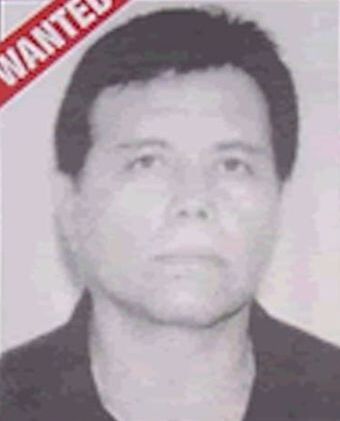
"El Mayo" Zambada: Life Sentence in the US | allfacts360
US Federal Court Imposes Life Sentence on Sinaloa Co-Founder "El Mayo" Zambada
New York, July 20, 2026
Drug Enforcement Administration (DEA) / Wikimedia Commons / Public domain
Summary
A US federal court in New York has sentenced Mexican drug boss Ismael "El Mayo" Zambada, co-founder of the Sinaloa Cartel, to life in prison. US Attorney Joseph Nocella spoke of a final chapter in the fight against the organization.
New York, July 20, 2026
A US federal court in New York sentenced Mexican drug boss Ismael "El Mayo" Zambada, co-founder of the notorious Sinaloa Cartel, to life in prison without the possibility of parole on Monday.
Ismael Zambada, internationally known by the nickname "El Mayo," was, according to US authorities, together with Joaquín Guzmán, later known as "El Chapo," a co-founder of the Sinaloa Cartel, one of the most influential criminal organizations in Mexico. The presiding judge in New York also granted US authorities the right to seize $15 billion in assets. Zambada had pleaded guilty in August 2025 as part of an agreement with the prosecution.
Background: The Sinaloa Cartel and Its Founding Figures
In exchange for the guilty plea, prosecutors waived their demand for the death penalty. The agreement also stipulated that parole was excluded. According to the US Department of Justice, early release is therefore ruled out for the 76-year-old.
The prosecution had described Zambada as the leader of a criminal organization allegedly responsible for the murders of cartel members, police officers, and military personnel. US Attorney Joseph Nocella stated that Zambada had "spent nearly four decades poisoning American communities." The indictment painted the picture of a drug boss who operated in the background for decades and thereby largely eluded public perception—which is why only few photographs of him exist.
Arrest in 2024 in El Paso
With the verdict, a chapter of US drug enforcement that has strained bilateral relations between the US and Mexico since the summer of 2024 comes to an end. Zambada was apprehended by police in 2024 in the Texas border city of El Paso after he had landed in a private aircraft together with a son of the notorious drug boss "El Chapo." The circumstances of this arrest remain disputed to this day.
Following his arrest, Zambada claimed he had been lured into a trap and handed over to US authorities under the pretext of a business meeting. He suspects behind the alleged plot a son of Joaquín, a member of the Guzmán family, who are said to have continued running the Sinaloa Cartel even after the father's conviction. US authorities rejected accusations that the FBI had been involved in a possible conspiracy, but doubts about this account persist.
Tensions Between the US and Mexico
The Mexican government takes the position that US authorities may not carry out independent operations on Mexican soil. It is demanding a full clarification of the circumstances that led to the arrest on Texas soil. According to the report, tensions between the two governments have not eased since then and remain an open point of conflict at the time of the sentencing.
Joaquín "El Chapo" Guzmán is already serving a life sentence in a US prison in the state of Colorado. His son Joaquin, who was arrested together with Zambada in July 2024, is also in US custody. Zambada's conviction is therefore regarded as a further building block in the legal action against the cartel's leadership.
Reactions from the US Department of Justice
At the sentencing, Nocella called it a historic moment: "Today this chapter finally closes." The prosecution described the proceedings as proof that even the most influential actors in international drug trafficking must answer to US courts.
For decades, the Sinaloa Cartel was among the most productive smuggling networks for cocaine, heroin, methamphetamine, and fentanyl into the United States. According to estimates by US drug enforcement agencies, a significant share of the illegal substances consumed in the US was attributable to the network. The seized $15 billion in assets are said to stem from the proceeds of this business.
For a long time, little was known about Zambada's role in the cartel, since, unlike "El Chapo," he rarely appeared in public. In the 1980s, he co-founded the organization with Guzmán and over nearly four decades built it into a transnational empire. It was only through his arrest in 2024 that his person moved more prominently into the public spotlight.
Impact on the Cartel
The US Department of Justice views the verdict as a signal to other leaders of the cartel that prosecution is possible even when the suspects have operated in the shadows for decades. According to the Department of Justice, the seized assets are to be channeled into drug prevention and victim assistance programs.
Observers pointed out that the verdict does not resolve the ongoing tensions with Mexico. The Mexican government had repeatedly demanded a transparent investigation into the arrest and regards the sovereignty of its own territory as violated by the actions of the US authorities. As long as this question remains unresolved, the bilateral relationship will remain strained.
Zambada's defense had pleaded for mitigating circumstances prior to the trial, citing the advanced age of their client. The court did not follow this argument and adopted the sentencing range proposed by the prosecution. The final conviction against the co-founder of the Sinaloa Cartel is thus final and binding.
Open Questions and Outlook
With the conviction, experts assess that the cartel loses a key figure but remains active as a criminal structure. According to US authorities, several sons of "El Chapo" continue to run parts of the network. Combating the Sinaloa Cartel therefore remains a long-term task for international law enforcement, according to Justice Department sources.
The sentencing on Monday fell on a day when other proceedings against high-ranking drug dealers were underway in New York. In recent years, the US Department of Justice had systematically brought charges against alleged heads of Latin American cartels. Zambada's case is regarded as one of the most prominent proceedings in this wave.
Questions & Answers
Who is Ismael "El Mayo" Zambada?
Ismael Zambada, known as "El Mayo," was the co-founder of the Mexican Sinaloa Cartel. According to US authorities, he ran the organization together with Joaquín "El Chapo" Guzmán and was considered its boss.
What sentence did the court impose?
The US federal court in New York sentenced Zambada to life in prison on Monday. According to the US Department of Justice, parole is ruled out.
How did Zambada's arrest come about?
Zambada was arrested in July 2024 in the Texas border city of El Paso after landing in a private aircraft together with a son of "El Chapo." The exact circumstances are disputed and are straining relations between the US and Mexico.