World Bank cuts 2026 global growth forecast to 2.5%, citing Middle East conflict and energy shock
Washington, 11 June 2026
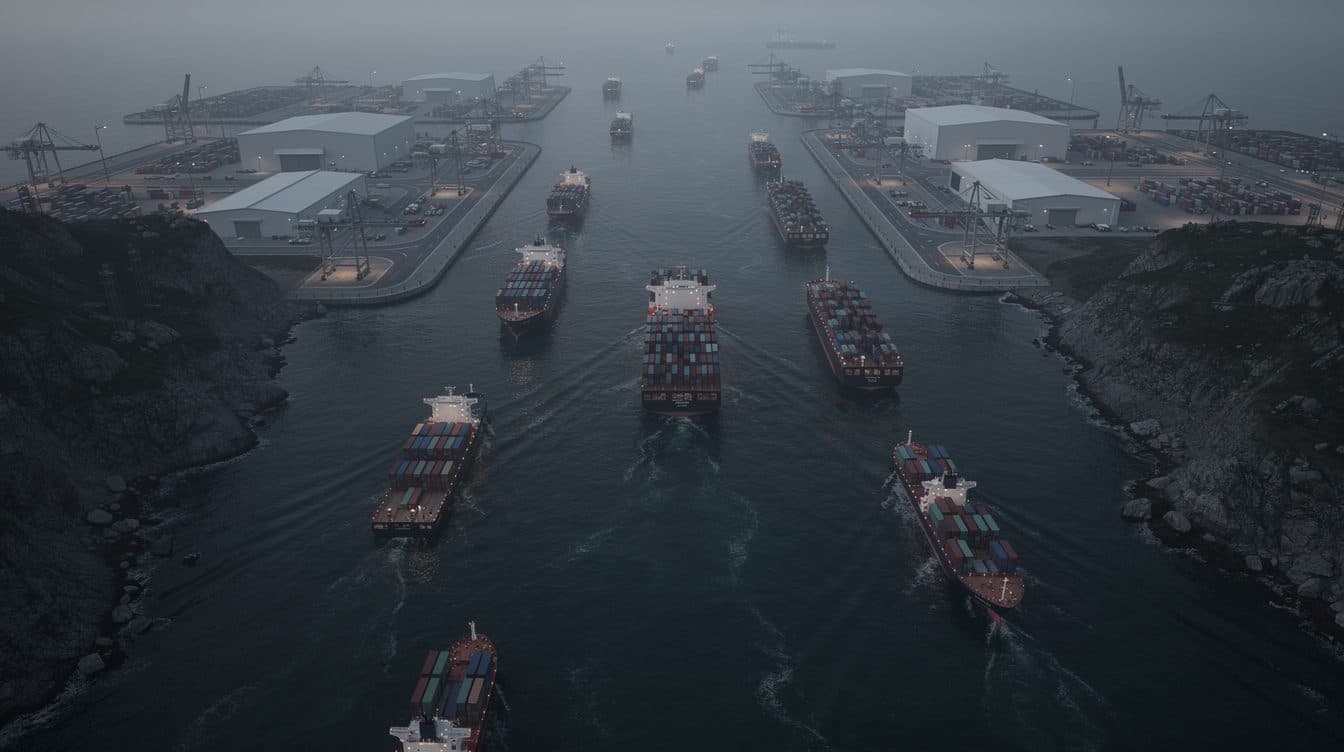
AI-generated image (flux-2/pro-text-to-image via Kie.ai)
Summary
The World Bank has lowered its 2026 global growth forecast to 2.5 percent, warning that renewed US–Iran hostilities and persistent energy-price inflation are dragging the world economy toward its weakest expansion since the COVID-19 pandemic. The institution announced between 50 and 60 billion US dollars in new financing for developing countries and said the figure could rise to 80 to 100 billion dollars if conditions persist.
Washington, 11 June 2026
The World Bank has cut its 2026 global growth forecast to 2.5 percent, projecting the weakest year for the world economy since the start of the COVID-19 pandemic as the conflict between the United States and Iran drives up energy prices and inflation.
In its latest outlook, the World Bank trimmed its projection for global growth in 2026 by 0.1 percentage points, from 2.6 to 2.5 percent, blaming high inflation and rising energy costs that have followed the renewed military escalation in the Middle East. "The World Bank cited high inflation and rising energy prices as the reason for the downward revision." The figure would mark the slowest pace of expansion since the COVID-19 pandemic began to disrupt global output, and it sits well below the 2.9 percent growth recorded in 2025.
Broad-based downgrade hits developing countries hardest
The bank warned that the deterioration is broad-based. "Bei zwei Drittel der Volkswirtschaften wurden die Wachstumsprognosen seit Januar nach unten korrigiert", heißt es nun von der Weltbank. Two-thirds of economies have seen their growth outlooks downgraded since January, the institution said, with conflict-affected and fragile states bearing the heaviest toll. By the end of 2026, the World Bank projects that one quarter of developing countries will be poorer than they were in 2019, and among low-income countries, the share rises to one third. "In fragile and conflict-affected countries, about half are projected to have less money by the end of 2026 than in the year before the start of the COVID-19 pandemic."
Inflation remains a central concern. The bank's experts expect the global inflation rate to reach 4.0 percent in the current year, compared with 3.3 percent in 2025. If supply disruptions last longer than expected and weigh more heavily on the world economy, inflation could climb as high as 4.4 percent, the institution cautioned. Even with that scenario, growth would still remain below the average pace seen during the 2010s.
Energy shock and Strait of Hormuz disruption
Energy markets have been one of the main channels through which the conflict is feeding into the real economy. According to the verified record, "Free shipping and commodity trade in the Strait of Hormuz nearly came to a halt as a result of the conflict." The disruption to one of the world's most important oil shipping lanes has helped push prices higher and has renewed uncertainty for European markets in particular.
The impact was visible on European stock exchanges. The DAX, Germany's benchmark index, closed 0.97 percent lower at 24,195.31 points on Wednesday, June 10, with intraday losses of up to 1.6 percent after remarks by Donald Trump. The MDAX of mid-cap companies fell 1.11 percent to 31,292.79 points. "Persistent price losses in the US technology sector and renewed tensions in the Middle East caused uncertainty for the DAX." Market expert Timo Emden of Emden Research said: 'Trump's heightened rhetoric in connection with the conflict in the Middle East is a reminder that geopolitical risks continue to simmer below the surface.'
European markets feel the impact
Donald Trump posted on his platform Truth Social: 'They took too long to negotiate a great deal for them, now they have to bear the consequences!' The exchange underscored the volatile backdrop against which the bank's economists are revising their numbers. The USA and Iran continued to attack each other despite a declared ceasefire and ongoing negotiations, adding to the unpredictability of the outlook.
The International Monetary Fund has reached a similar conclusion. The IMF had already cut its 2026 growth expectations by 0.2 percentage points to 3.1 percent in April. In a downside scenario in which the war is not contained in duration, intensity, and scope and economic disruptions last beyond mid-2026, the IMF warned that global growth could shrink to just 1.3 percent. For 2027, the IMF still projects growth of 3.2 percent, while the World Bank expects a modest rebound to 2.8 percent in the year after the current downturn.
World Bank mobilizes billions in support
The World Bank is also moving to soften the blow. It announced that it will make between 50 and 60 billion US dollars available to support governments in developing countries and agricultural businesses, on top of the 20 to 25 billion US dollars in emergency assistance it has already provided since the start of the crisis. "Sollten der Konflikt und die wirtschaftlichen Folgen anhalten, könnte die Finanzierung durch die Weltbankgruppe über einen Zeitraum von 15 Monaten auf 80 bis 100 Milliarden US-Dollar erhöht werden", heißt es weiter.
Looking beyond the immediate crisis, the World Bank expects a gradual recovery in 2027 and 2028, when global growth could climb back toward 2.8 percent. That improvement assumes that energy supplies normalize, governments ease monetary policy, and global trade picks up again. Until then, the bank cautioned, poorer countries face the steepest climb, with conflict, debt, and inflation continuing to weigh on living standards and development gains made since the start of the decade.
The message from Washington is sober. The combination of war in the Middle East, elevated inflation, and tighter financial conditions is reshaping the global outlook, and the world's poorest economies are once again at the sharp end of the slowdown. Whether the projected 2.5 percent floor holds will depend, the bank suggested, on whether the conflict can be contained and on whether policymakers move quickly to stabilize energy markets and support the most vulnerable countries.
Questions & Answers
What is the World Bank's new 2026 growth forecast?
The World Bank lowered its 2026 global growth forecast by 0.1 percentage points to 2.5 percent, the weakest pace since the start of the COVID-19 pandemic.
Why did the World Bank downgrade its outlook?
The bank blamed high inflation and rising energy prices caused by renewed US–Iran hostilities and disruption to shipping in the Strait of Hormuz.
How is the World Bank responding to the crisis?
The bank announced 50 to 60 billion US dollars in new support for developing countries on top of 20 to 25 billion dollars already disbursed, and warned that total financing could reach 80 to 100 billion dollars over 15 months if conditions persist.
World Bank 2026 growth forecast cut to 2.5% on Iran conflict | allfacts360