30 Years in Prison for Guo Wengui: New York Court Sentences Chinese Real Estate Magnate for Fraud
New York, June 30, 2026
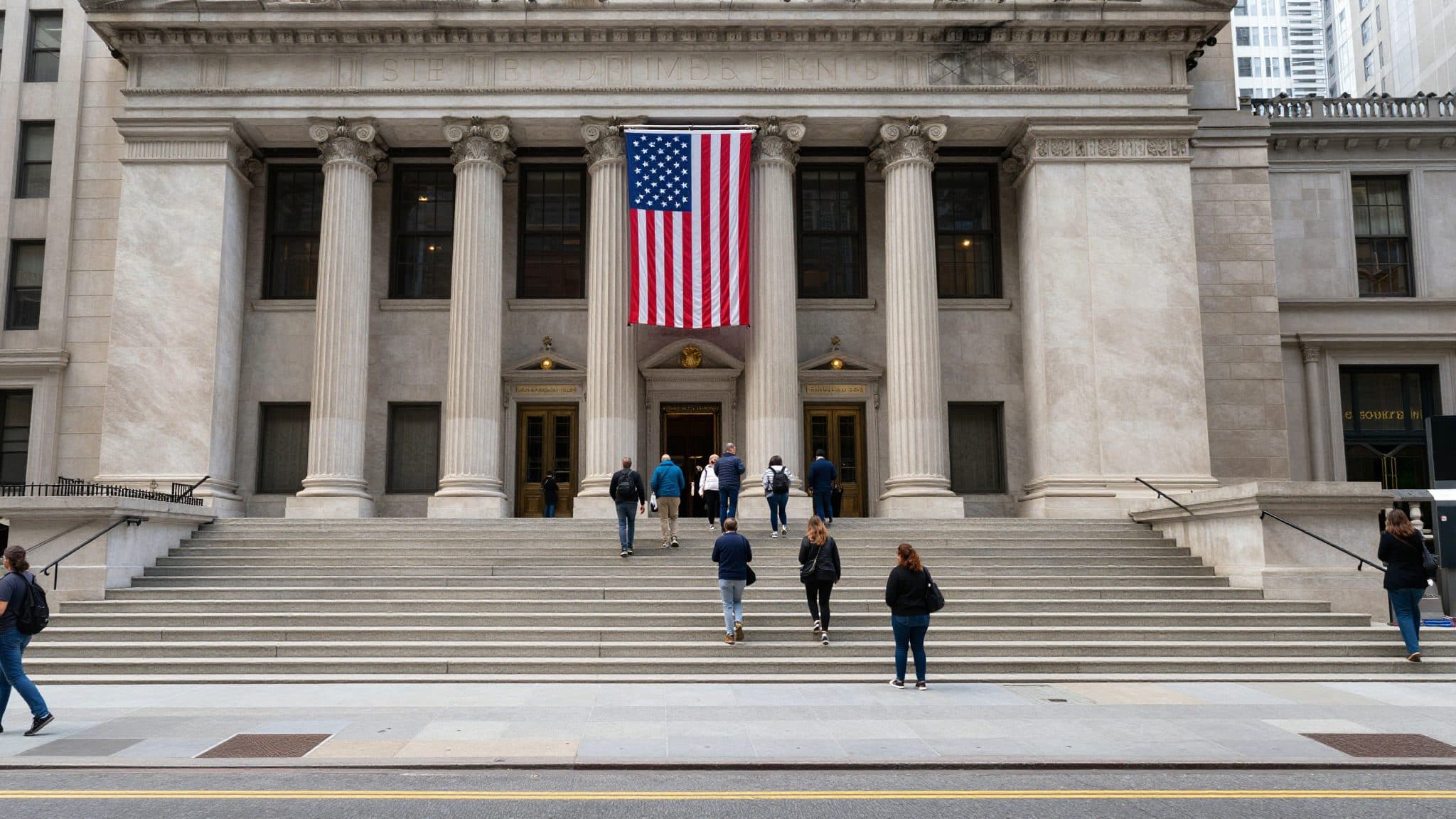
AI-generated image (z-image via Kie.ai)
Summary
A federal court in New York sentenced Chinese real estate magnate Guo Wengui to 30 years in prison on Monday. The jury had previously found him guilty of, among other charges, investment fraud, money laundering, and extortion; the prosecution put the damages at more than one billion US dollars.
New York, June 30, 2026
On Monday, a federal court in New York sentenced Chinese real estate magnate and self-styled democracy activist Guo Wengui – also known as Miles Kwok – to 30 years in prison, after a jury had previously found him guilty of, among other charges, investment fraud, money laundering, and extortion.
The Sentence and the Verdict
Monday's sentencing came nearly two years after the 2024 guilty verdict. At that point, only the length of the sentence remained to be determined, as court documents show. At the announcement in a packed courtroom, the 56-year-old Chinese national was cheered mainly by his own supporters, who filled the seats to the very last chair.
The prosecution had requested a sentence of at least 30 years. In their closing argument, the prosecutors stated: "In this extraordinary case, there can be no justice without an extraordinary sentence." The prosecution also argued that Guo's crimes exceeded those of Sam Bankman-Fried, convicted of crypto fraud, who is currently serving a 25-year prison term.
According to the presiding judge, Guo caused his victims "great financial and emotional harm." Rather than using his clients' capital to work toward democratic change in China, he had funded his "extravagant lifestyle" with it.
From Beijing Tycoon to New York Confession
The prosecution accuses Guo and a co-defendant financier of having moved hundreds of thousands of online followers to invest in various companies and programs with false promises. In total, the damages cited by the prosecution amount to more than one billion US dollars; several hundred million dollars are alleged to have been embezzled.
In addition, the court ordered the forfeiture of assets amounting to roughly 889 million US dollars – about 800 million euros, according to court documents. Coverage of the verdict was provided by, among others, the Wall Street Journal and Politico.
In Beijing, Guo Wengui had operated as a real estate magnate until his flight. Shortly before the start of the 2008 Summer Olympics, the tycoon opened the Pangu Plaza in the north of Beijing. The glamorous building overlooking the Olympic Stadium consisted of a complex with luxury apartments and a hotel – the world's first seven-star hotel, as Guo used to tell visitors.
The luxury complex never became a commercial success. Neither did the apartments sell nor did the tycoon earn much money from the hotel. To boost sales of the apartments, Guo spread stories claiming that, among others, Microsoft founder Bill Gates and actress Angelina Jolie had purchased apartments in Pangu Plaza. Both later denied the claims.
Financial Problems After the 2008 Olympics
Shortly after the end of the 2008 Summer Olympics, a Hong Kong hedge fund had to bail out the businessman with a low nine-figure dollar amount – Guo Wengui had loans to service. When the anti-corruption campaign of state and party leader Xi Jinping gained real momentum in 2015, Guo Wengui fled to New York.
Upon arriving there, the tycoon's first purchase was a penthouse overlooking Central Park. Shortly thereafter, he acquired, among other things, a luxury yacht and an apartment on New York's Fifth Avenue – the wealth came, according to the prosecution, from his investors' funds.
From day one, Guo Wengui publicly declared that he would work from the United States for democratic change in China and leave no stone unturned to bring down the Communist Party. To win over potential clients, Guo posed as an activist who wanted to topple the Communist Party and bring democracy to China.
A Network of Aliases and Online Followers
Through an online platform, Guo is alleged to have extracted more than one billion dollars from unsuspecting investors. His network of pseudonyms was broad: the indictment alone lists six aliases in addition to the name Guo Wengui. The prosecution stated that Guo had used various identities to extract money from followers.
Among his confidants were the brothers Lin Qiang and Lin Di. The great-great-grandsons of Lin Zexu held important positions in the Chinese security apparatus. Shortly before Guo's flight into American exile, the Chinese authorities opened investigations against the Lin brothers and Guo Wengui himself; in addition, a high-ranking politician and one of his closest confidants had been arrested.
Connections in US Government Circles
In the United States, Guo Wengui maintained close contacts in government-adjacent circles. Steve Bannon, for one, was one of his confidants. Bannon had served as an advisor to Donald Trump during his first term as US president. In 2020, Bannon had been arrested on a yacht owned by Guo; Trump later pardoned Bannon.
Guo had already fled China in 2014 to escape prosecution for bribery and embezzlement in his home country. He was later listed by Interpol as a fugitive at the request of the Chinese government. The People's Republic said it was informed of the verdict in New York: a spokesperson for the Foreign Ministry in Beijing stated that China had taken note of the relevant reports.
Reactions from Beijing
Through the online platform and the network of pseudonyms, Guo and his financier are alleged to have lured hundreds of thousands of followers with fabricated promises of high-return investments or luxury services. The funds raised flowed, according to the prosecution, predominantly into the businessman's lavish lifestyle – rather than, as announced, into political projects.
With the now-announced sentence of 30 years, the proceedings against Guo Wengui in the United States are concluded following the 2024 guilty verdict. The combination of prison sentence and asset forfeiture is regarded by observers as one of the harshest rulings against a businessman who fled China on US soil.
Questions & Answers
Who is Guo Wengui?
Guo Wengui, also known as Miles Kwok, was a Chinese real estate entrepreneur who, among other things, built the Pangu Plaza in Beijing and fled to the United States in 2015. In the US he posed as a democracy activist and was convicted in New York in 2024 of, among other charges, investment fraud, money laundering, and extortion.
Why did Guo Wengui receive exactly 30 years in prison?
The prosecution had requested at least 30 years and justified its demand with the scale of the crimes, which it assessed as more severe than the case of crypto fraudster Sam Bankman-Fried, who is serving 25 years. The presiding judge cited the great financial and emotional harm to the victims as well as the financing of an extravagant lifestyle from their funds.
What happened to Guo's assets?
According to court documents, the court ordered the forfeiture of assets amounting to roughly 889 million US dollars. The prosecution puts the total damage from Guo's dealings at more than one billion US dollars.
Guo Wengui Sentenced to 30 Years in Prison – Trial in New | allfacts360