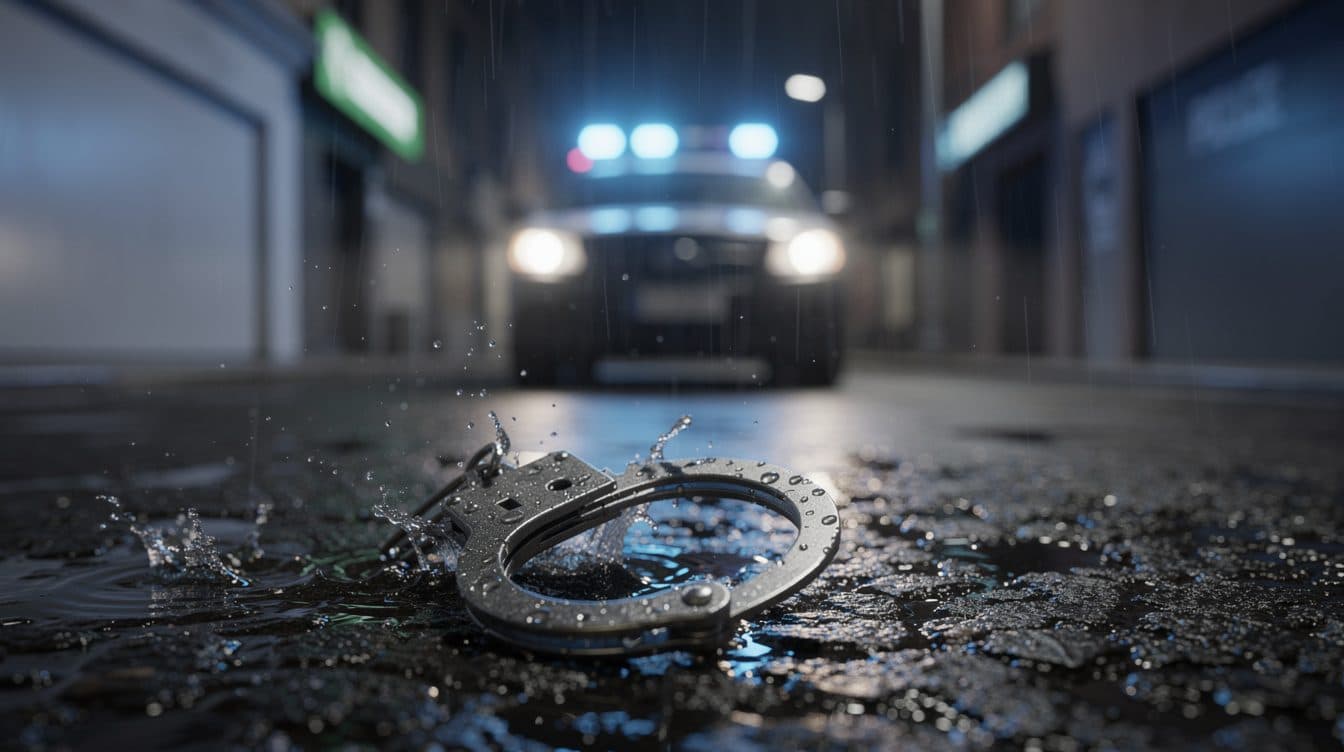
After fatal stabbing in Southampton: Police errors and riots shake Great Britain
London, June 03, 2026
AI-generated image (flux-2/pro-text-to-image via Kie.ai)
Summary
Following the violent death of 18-year-old student Henry Nowak in Southampton, a police error has triggered a nationwide debate about racism and police brutality. Riots broke out in the city on Tuesday evening, and Home Secretary Shabana Mahmood sharply condemned the violence.
London, June 03, 2026
Following the fatal knife attack on 18-year-old British student Henry Nowak in Southampton in December 2025, a serious police error – handcuffing the dying man – has triggered a broad debate about racism, police conduct, and societal division in Great Britain, which culminated in violent riots on Tuesday evening.
The case of 18-year-old Henry Nowak has been moving Great Britain for days. As bodycam footage shown in the trial against the alleged perpetrator revealed, Nowak was stabbed by his football team on his way home in Southampton in December 2025. When police arrived at the scene, 23-year-old Vickrum Digwa, a man from the Sikh community, stated that officers had attacked him and that the white student Henry Nowak had racially insulted him.
The arriving police officers believed the attacker's account and handcuffed the severely injured Nowak, even though he repeatedly stated that he had been stabbed. When asked by the officers where he had been stabbed, the student replied: "I can't breathe" – words that immediately recall the last sentences of African American George Floyd, who was killed in Minneapolis in 2020, and brought the case internationally close to the "Black Lives Matter" debate.
The crime and the failure of the emergency services
Nowak died at the scene. Digwa was found guilty of murder this week in a Southampton court and sentenced to life imprisonment on Monday, with a minimum of 21 years. Judge Mousley addressed the convicted man, saying: "You have brought shame upon your family and your religion." Digwa had handed the murder weapon, a ritual Sikh knife with a 21-centimeter blade, to his mother after the bloody act; police later found it in the family home along with more than 20 other Sikh weapons.
Immediately after the verdict, the police publicly apologized for the conduct of their officers. In a statement, they said that the emergency services had been "lied to" at the scene and in the previously received emergency call. At the same time, the independent police conduct watchdog IOPC announced an investigation into the incident.
Political reactions in London
Prime Minister Keir Starmer described the case as "terrible and shocking" and spoke of a "terrible, shocking case." He had seen the bodycam footage, he said in a video message, and called it "disturbing." "As the father of a 17-year-old, I felt sick watching it," the Prime Minister said. He announced an investigation by the IOPC and stated that there were "serious questions" to be answered – including how "accusations of racism influenced or factored into the decision-making in that specific case." Referring to the footage, he told reporters: "It is impossible to watch this footage and not recognize that these questions absolutely must be answered."
Home Secretary Shabana Mahmood condemned the riots in Southampton on Tuesday evening, which had erupted following a call from the far-right scene. She wrote on the platform X that the scenes were "completely unacceptable" and "disgraceful violence." The police had shown "great courage and calm in the face of disgraceful violence directed at them." Mahmood threatened those responsible with the full force of the law: there was no justification for using the tragedy as a pretext to incite violence and unrest.
The chairman of the right-wing populist party Reform UK, Nigel Farage, saw a reversed "George Floyd moment" occurring. On the platform X, he denounced an alleged two-tiered culture "where the rights and privileges of white people count for less than those of ethnic minorities," and called for an end to "anti-white prejudice." He accused Prime Minister Starmer of having shown solidarity with the "Black Lives Matter" movement after the death of George Floyd – but after Nowak's death, Starmer had remained silent.
Riots in Southampton
Liberal Democrat MP Max Wilkinson subsequently accused Farage of "exploiting a tragedy to divide communities in Great Britain." This was "divisive, dangerous, and fundamentally un-British," Wilkinson said. The victim's father had also spoken in a similar way in court, as reported by the British news agency PA: "We do not want his death to be used to create more division, hatred, or tension." The family stated: "We want the streets to be safer and the British government to finally recognize knife crime as a national emergency."
Mahmood also warned against "this murder leading to communities turning on each other." Far-right activist Tommy Robinson, who according to his own statements played a disreputable role in fueling racist riots during the summer of 2024 in Great Britain, published an angry video statement after the verdict. In it, he claimed that it was the belief in diversity that had killed Henry Nowak: as soon as it was about "racism," Henry was the perpetrator. He called for a protest in front of the police headquarters in Southampton.
Following Robinson's call, about 2,000 people gathered in the southern English port city on Tuesday evening, as reported by the British news channel Sky News. Videos circulating on social media show demonstrators throwing trash cans, traffic cones, and other objects at police officers. Officers in protective gear used shields to push back the agitated crowd. According to initial reports, two people were arrested, and no injuries were initially reported.
Fear of a new summer of riots
US tech billionaire Elon Musk also weighed in on his platform X, writing: "Unbelievable. I am happy to fund a wrongful death lawsuit against these disgusting outgrowths of law enforcement." The statements illustrate how far the ripples of the case extend beyond Great Britain.
Observers fear a new "summer of riots" like in 2024, when racially motivated riots occurred in the UK for weeks. The British government is under pressure to quickly address both the issue of police misconduct and the growing knife crime in cities.
The Henry Nowak case connects several highly political themes: the question of racial discrimination in law enforcement agencies, the threat of armed violence on British streets, the instrumentalization of tragedies by extremist actors on both the right and the left, and the relationship between the police and migrant or religious minorities. Prime Minister Starmer is attempting to respond with a mixture of empathy for the victim's family, clear condemnation of the violence, and the announcement of an independent investigation.
International reactions and consequences
At the same time, concerns are growing that the debate about racism and "reverse racism" could further deepen the already strained relations between British urban communities. Political observers point out that conspiracy theories and targeted disinformation about the case are already circulating on social media, which could provide fertile ground for further unrest.
The IOPC investigation is therefore seen as crucial for whether trust in the police can be restored. If it is confirmed that the officers treated the severely injured student as the perpetrator solely based on his skin color and the attacker's claim, this would have far-reaching consequences for the training and operational guidelines of the British police, according to legal experts.
Regardless of the outcome of the investigation, the case has already been described in the British media as one of the most politically charged police scandals of recent years. The combination of a fatal knife attack, a blatant police error, and a subsequent wave of violence has sparked a discussion about the state of British society and its institutions that extends far beyond the individual case.
Questions & Answers
Who was Henry Nowak and how did he die?
Henry Nowak was an 18-year-old white British student who was fatally stabbed on his way home from his football team in Southampton in December 2025. The perpetrator, 23-year-old Vickrum Digwa from the Sikh community, was sentenced to life imprisonment this week.
What mistake did the police make?
As seen in bodycam footage, the arriving police officers handcuffed Nowak, who was severely injured and calling for help, instead of providing first aid, after believing the attacker's account that Nowak had racially insulted him.
How is the British government reacting to the case and the riots?
Prime Minister Keir Starmer called the incident "terrible and shocking" and announced an investigation by the IOPC watchdog. Home Secretary Shabana Mahmood condemned the violence in Southampton as "completely unacceptable" and threatened those responsible with the full force of the law.
Southampton: Police errors after death of Henry Nowak | allfacts360