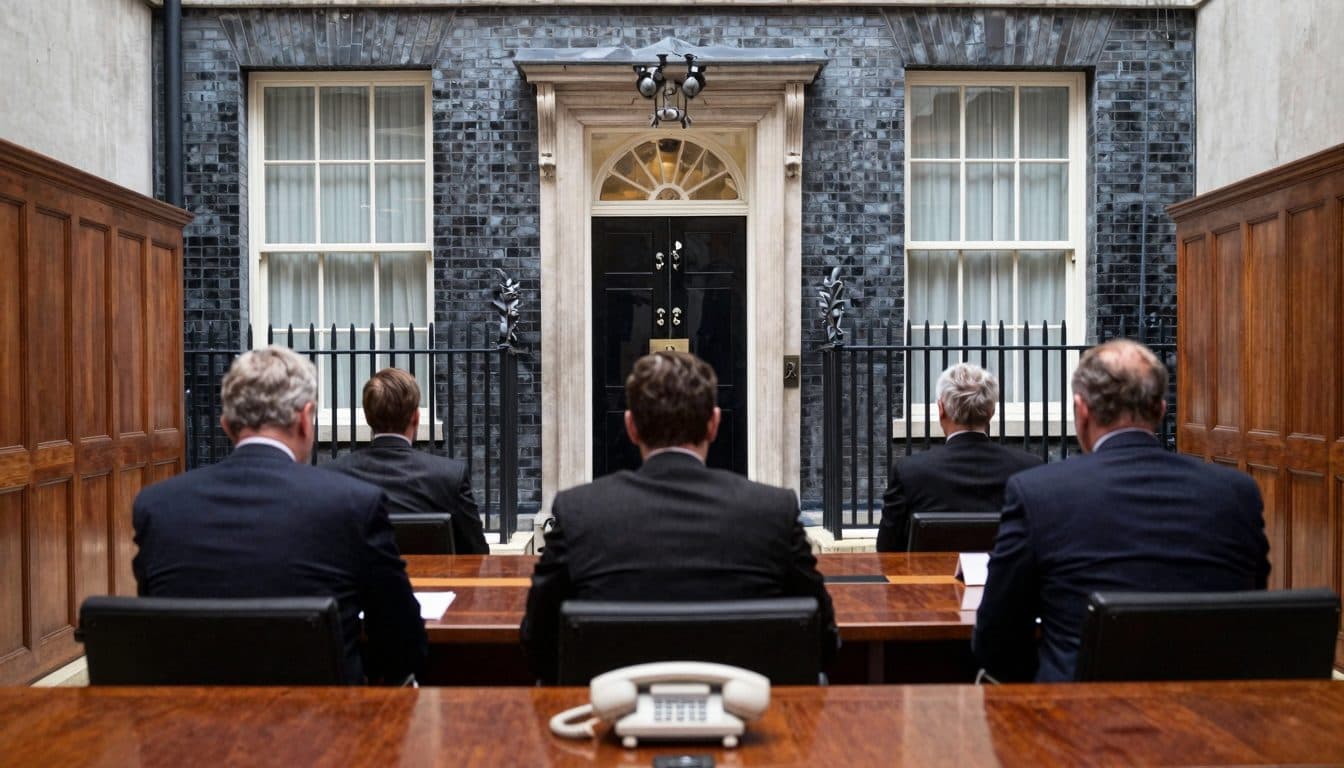
Andy Burnham Forms New Cabinet: Phone Call with Trump as First Official Act
London, 21 July 2026
AI-generated image (z-image via Kie.ai)
Summary
Andy Burnham was appointed British Prime Minister by King Charles III on Monday and immediately held a phone call with US President Donald Trump. His newly assembled cabinet brings numerous changes at the top of key ministries.
London, 21 July 2026
Andy Burnham was appointed the new British Prime Minister by King Charles III on Monday and presented his cabinet in that role, with his first official act being a phone call with US President Donald Trump.
Government Formation and Appointment
Former Mayor of Greater Manchester Andy Burnham was tasked with forming a government by King Charles III at Buckingham Palace on Monday. The 56-year-old Labour politician had already been elected as the new leader of his party the previous Friday. Burnham thus succeeds Keir Starmer, who had resigned in June following poor results in regional and local elections. According to available information, Burnham is the seventh British Prime Minister within the last ten years.
On the day of his appointment, Burnham presented his new cabinet. As Downing Street announced, he first held a phone call with US President Donald Trump. Trump subsequently wrote on Truth Social that the conversation had gone "very well" and announced they would "meet in the not-too-distant future to discuss issues of common interest." The topics of the call had been "North Sea oil, trade, the military alliance, the clearing of mines in the Strait of Hormuz and many other topics."
First Phone Call with Trump
According to a statement from Downing Street, Burnham told the US president that the reindustrialisation of the entire country was a priority for him as prime minister. He also reaffirmed that the security of the United Kingdom and its allies was a central concern of his political agenda. Trump shortly afterwards expressed the hope that Burnham, as prime minister, would again permit oil and gas extraction in the North Sea. Trump had previously voiced doubts about Burnham, calling him a "mayor of a small town" and "extremely liberal."
Talks with Paris and Kyiv
Burnham also made contact with other heads of state and government on Monday. He held a phone call with French President Emmanuel Macron, which, according to the British account, concerned among other things the continuation of support for Ukraine. Both spoke out in favour of jointly continuing to lead the so-called Coalition of the Willing. Macron and Burnham also agreed on efforts towards de-escalation in the Middle East and the reopening of the Strait of Hormuz. On the platform X, Macron wrote that he wished the relations between Great Britain and France would give new impetus to British EU policy.
In addition, Burnham also spoke with Ukrainian President Volodymyr Zelensky, according to a spokesperson. In his inaugural speech, he declared his intention to make the reform of care provision a focus of his term in office. The financing of long-term care was a problem that had remained unsolved for years in the United Kingdom. Burnham announced an open debate with the public on the future bearing of the costs. He stated: "Der derzeitige Status sei nicht zu rechtfertigen und müsse in Ordnung gebracht werden". Furthermore, he announced the construction of new social housing, a reform of the education system and a strengthening of industry.
New Cabinet: Changes at the Nerve Centres
The cabinet sees an extensive personnel overhaul. Former Energy Minister Ed Miliband surprisingly took over the Foreign Office. Miliband had already led the Labour Party from 2010 to 2015; his brother David Miliband had also served as Foreign Secretary under Prime Minister Gordon Brown. Former Foreign Secretary Yvette Cooper moved to the top of the Ministry of Health. The previous Health Secretary Wes Streeting, who had briefly challenged Burnham in the party's internal leadership contest, was appointed Defence Secretary.
Former Defence Secretary John Healey was appointed by Burnham as the new Chancellor of the Exchequer. Healey had left his predecessor Starmer's cabinet a few weeks earlier in protest at his course. According to available information, he described his appointment as "the greatest honour" and announced his intention to build a new economy. Shabana Mahmood remained Home Secretary. Angela Rayner, who had previously resigned as Deputy Prime Minister following a tax affair and was subsequently cleared of suspicion of tax evasion, returned as Housing Secretary. She had already held the post under Starmer from 2024 to 2025.
International Reactions to the Inauguration
Alex Norris was appointed as Justice Secretary. Jonathan Reynolds took over the Ministry of Economics, Miatta Fahnbulleh became Energy Secretary and Angela Eagle took over the Environment Ministry. Lucy Powell was appointed Education Secretary, Lisa Nandy remained Culture Secretary. Anneliese Midgley was designated chair of the parliamentary Labour group. By contrast, the former deputy prime minister and justice secretary David Lammy as well as the former finance minister Rachel Reeves had to give up their seats. Lammy told the PA news agency: "Ich wäre stolz gewesen, weiterhin im Kabinett zu dienen. Aber ein neuer Premierminister hat das Recht, sein eigenes Team zusammenzustellen" Reeves is leaving the cabinet as a loyal supporter of the former prime minister.
Internationally, the reactions to the inauguration were cautiously positive. German Federal Chancellor Friedrich Merz congratulated Burnham on Monday lunchtime and invited him to visit Berlin soon. He described the United Kingdom and Germany as close allies and partners and highlighted the deep connection between the two countries. European Commission President Ursula von der Leyen also offered her congratulations and stated she looked forward to a stronger partnership with Great Britain.
Domestic Reform Agenda and Outlook
In his inaugural speech, Burnham declared that Great Britain would continue to support Ukraine in the war against Russia. With regard to care, he said: "Der derzeitige Status sei nicht zu rechtfertigen und müsse in Ordnung gebracht werden". The reform of care provision, the construction of new social housing, the strengthening of industry and a reform of the education system form, in his words, the focal points of his agenda. With the phone call with Trump and the subsequent contacts with Macron, Zelensky and other partners, the new prime minister simultaneously signalled foreign-policy capacity for action.
The appointment of Ed Miliband as Foreign Secretary was described in British media as surprising. Miliband had previously served as Energy Secretary and had led the Labour Party between 2010 and 2015. With Streeting as Defence Secretary and Healey as Chancellor, Burnham staffed two key portfolios with politicians who had previously shown distance from his predecessor Starmer's course. The dismissals of Lammy and Reeves simultaneously mark a break with the former party leadership circle.
With regard to the United States, Trump pointed to the mine clearance in the Strait of Hormuz as a topic of conversation. Macron and Burnham had likewise agreed, according to the British account, on efforts to reopen the strait. Trump had last been received by King Charles III for a state visit in September 2025. The question of the extent to which the future British government will reopen the country to oil and gas extraction in the North Sea is regarded as an open point of contention between London and Washington.
Overall, Burnham is taking office with a clear break from the previous government. Several close confidants of Starmer are leaving the cabinet, while prominent lateral entrants such as Miliband and Streeting are taking on new responsibilities. The coming weeks will show whether the new prime minister can push through the announced reforms in care, education and housing domestically and translate the foreign-policy signals sent to Washington, Paris and Kyiv into concrete policy.
On the day of the appointment, 21 July 2026, Deutschlandfunk reported on the inauguration and the initial personnel decisions in its programme. Burnham's government formation thus counts as the central domestic political turning point in Great Britain this summer.
Questions & Answers
Who is Andy Burnham and how did he become Prime Minister?
Andy Burnham is a 56-year-old Labour politician and former Mayor of Greater Manchester who was elected as the new party leader on the Friday before his appointment and was named Prime Minister by King Charles III on Monday, 21 July 2026.
Which ministries has Burnham newly staffed?
Burnham appointed Ed Miliband as Foreign Secretary, John Healey as Chancellor of the Exchequer and Wes Streeting as Defence Secretary; Yvette Cooper moved to the top of the Ministry of Health, while Shabana Mahmood remained Home Secretary and Lisa Nandy remained Culture Secretary.
What did Burnham discuss with Trump, Macron and Zelensky?
On the day of his appointment, Burnham held phone calls with US President Trump on trade, North Sea oil and the reopening of the Strait of Hormuz, with French President Macron on support for Ukraine and the Coalition of the Willing, and with Ukrainian President Zelensky.
Burnham Cabinet 2026: Trump Call and New Ministers | allfacts360