Starmer resignation: Burnham as Labour successor | allfacts360
Keir Starmer resigns as Labour leader and Prime Minister – Andy Burnham positions himself as successor
London, 22 June 2026
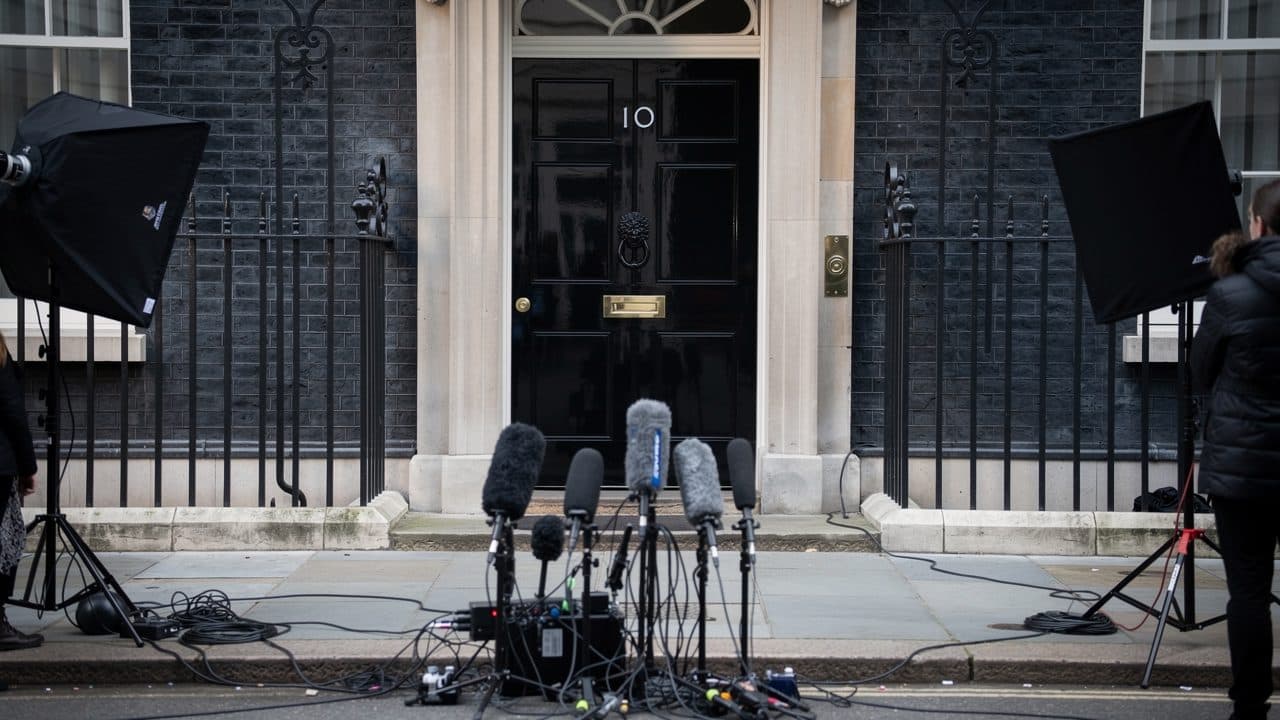
AI-generated image (flux-2/pro-text-to-image via Kie.ai)
Summary
British Prime Minister Keir Starmer announced his resignation as leader of the Labour Party on Monday in front of Downing Street. Andy Burnham, who had returned to the House of Commons via a by-election just days earlier, is considered the most likely successor.
London, 22 June 2026
British Prime Minister Keir Starmer announced his resignation as leader of the Labour Party on Monday morning in front of Downing Street in London, thereby clearing the way for an orderly succession.
Resignation statement in front of Downing Street
In front of the official residence of the British head of government, Starmer declared shortly before 9:30 a.m. local time that he would step down as party leader of the Labour Party. „Die Frage, die sich meine Partei derzeit stellt, ist, ob ich am besten geeignet bin, uns in die nächsten Parlamentswahlen zu führen. Ich habe die Antwort meiner Fraktion auf diese Frage gehört und nehme diese Antwort mit Würde entgegen“, he said. He also announced: „Aus diesem Grund werde ich als Parteichef der Labour Party zurücktreten.“
Starmer pointed to persistently poor approval ratings and said he was drawing the consequences. When asked by a reporter whether it had been unions and allies who had increasingly turned away from him, he confirmed it. The pressure on the Prime Minister had grown massively after costly local elections in May and the resignation of several cabinet members who had criticized his leadership style.
Already on Friday, Starmer had said he wanted to hold an intra-party contest over the succession after his party rival Andy Burnham had won the by-election in Makerfield in north-west England. With the seat in the House of Commons, the 56-year-old had only just obtained the prerequisite for a candidacy for the party leadership. A previous attempt in February had been blocked by the Labour leadership.
Personal words and record
After his resignation statement, Starmer turned away from the podium and instead embraced his wife, rather than walking toward the famous door with the number 10. He announced that he wanted to devote himself more to his family in the future: „Meiner fantastischen Frau Vic der beste Ehemann zu sein … und meinen wunderschönen Kindern der beste Vater.“ During his time in office, he said, he had raised wages, strengthened workers' rights and shortened hospital waiting lists. „Bei jeder Entscheidung, die ich getroffen habe, ging es darum, das Land, das ich liebe, an die erste Stelle zu setzen.“
Starmer also informed King Charles III of his decision. He said he would ask his party's National Executive Committee (NEC) to draw up a timetable for handling his succession. According to Starmer, a new party leader should be in place by the time Parliament reconvenes in September. He said he wanted to continue carrying out his duties as Prime Minister until the parliamentary summer recess in order to ensure an orderly transition. The formal appointment as Prime Minister must be made by King Charles III.
Succession timetable
Andy Burnham is considered the clear favourite for the succession. The sitting mayor of Greater Manchester had been on his way to London at the time of the resignation statement to be sworn in to his new mandate as a member of Parliament. Arriving at Euston station, he confirmed his candidacy on platform X. Shortly afterwards, he declared: „Keir hat unserem Land große Dienste erwiesen. Seine Entscheidung markiert den Beginn eines Übergangs, und es ist wichtig, dass dieser Prozess geordnet und verantwortungsvoll abläuft.“
Burnham paid tribute to the „gewaltigen Dienst“ that Starmer had rendered the country, but at the same time said: „Ich sage meiner eigenen Partei, dass dies die letzte Chance für Veränderung ist.“ He pointed to the wishes of the population: „Die Menschen wollen Fortschritt beim Wirtschaftswachstum, den Lebenshaltungskosten, staatlichen Leistungen, Wohnungen und den Chancen für die kommende Generation sehen.“
Meanwhile, former Health Secretary Wes Streeting withdrew from the race for the Labour leadership. He pledged his support to Burnham. Streeting, who had resigned a few weeks earlier in protest against Starmer, is thus clearing the way for Burnham to become the new party leader and Prime Minister without a formal vote.
Burnham's political career
If Burnham remains the only candidate for the Labour leadership, the handover of duties as party leader could be completed by around 18 July, the PA news agency reported. If there are several applicants, hearings and an election are to take place over the summer. According to the NEC, the nomination period for candidates runs from 9 to 16 July; candidates require the support of at least 20 percent of the parliamentary group, i.e. 81 MPs. A possible contested vote is to be concluded by the MPs' return on 1 September. If Burnham succeeds Starmer in the coming weeks, he would be the fifth British Prime Minister within a period in which only one general election – in 2024 with a landslide Labour victory – has taken place.
Burnham was born in 1970 in Aintree near Liverpool and grew up in the village of Culcheth. His father was a telecommunications technician, his mother a medical assistant. At the age of 14, he joined the Labour Party, shaped by the miners' strike of 1984/85 under the Conservative Prime Minister Margaret Thatcher. In 2001, he was first elected to the House of Commons. Blair's successor, Prime Minister Gordon Brown, appointed him Secretary of State at the Treasury; he later became Culture Secretary and then Health Secretary in Brown's government. In 2017, however, he turned his back on national politics and ran for mayor of Greater Manchester with its 2.8 million residents. He was re-elected twice, most recently with a majority of almost two-thirds. Burnham focused on the issues of public transport, health and housing.
Burnham became known for a bus reform with cheap fares, which earned him the nickname „King of the North“ in the media. He describes himself as a proponent of an „business-friendly socialism“ and is a critic of Brexit. He studied English at Cambridge and later said he had sometimes felt like an impostor there because of his working-class background. During the COVID-19 pandemic, he publicly clashed with the then Conservative Prime Minister Boris Johnson because he demanded more support for businesses and employees in the region.
Reactions and political environment
The political starting position for the change is fragile. Reform UK has been leading the polls in the UK for months; Labour lost significant ground in the local and regional elections in May. Shortly after Starmer's resignation statement, the head of the right-wing populist party Reform UK, Nigel Farage, called for a new election: „Das Land liege am Boden, seine Partei stehe bereit und die Menschen im Land würden es auch tun“, he said, announcing: „Wir sind bereit, radikale Veränderungen herbeizuführen.“ While Starmer was speaking outside on Whitehall, demonstrators played Beethoven's „Ode to Joy“.
Political scientist Jonathan Tonge of the University of Liverpool told the BBC that Burnham would not risk an early general election because of the clear parliamentary majority of over 400 MPs. „In Manchester habe er private Investoren angezogen und das Wirtschaftswachstum sei besser gewesen als andernorts“, Tonge said. „Man wisse schließlich nicht, was für ein Premierminister Burnham wohl werden könnte“, he added. Tim Bale of Queen Mary University of London attested that Burnham had a better personal lineup than Starmer: „Als Bürgermeister von Greater Manchester muss man sagen, dass Burnham besser darin ist, die richtigen Leute zu ernennen und verschiedene Interessengruppen an einen Tisch zu bringen, um Dinge voranzubringen.“ At the same time, Bale warned: „Wenn Burnham sich nicht als entschlossener und risikofreudiger als Starmer erweist, wird all das keine Rolle spielen.“
Both politicians – Burnham and Starmer – are regarded as belonging to the moderate wing of the Labour Party; at the same time, Burnham is counted as part of the left wing of the party and is described as an approachable politician for „ganz normale Leute“. New Statesman journalist Tom McTage said on morning radio that Starmer had once been unable to name his priorities in a single sentence – a core problem for the party. ZDF correspondent Wolf-Christian Ulrich described Starmer's resignation as an „emotionaler Moment“ and added that the Prime Minister had „am Ende wahrscheinlich über sich selbst gestolpert“; his own party no longer followed him, and he was very unpopular in the country.
Outlook for the coming weeks
The Labour Party is now preparing for an orderly handover. If no rival candidacy emerges, Burnham could be confirmed as party leader as early as mid-July and take over the office of Prime Minister shortly afterwards. Otherwise, the intra-party contest would continue over the summer and be concluded by the beginning of September. With Burnham, the seventh British Prime Minister within a decade would take office – after a period of domestic upheaval that leaves the country deeply divided.
Questions & Answers
Who is Keir Starmer and why is he resigning?
Keir Starmer has been British Prime Minister and leader of the Labour Party since July 2024. He announced his resignation in London on Monday, saying he was drawing the consequences from persistently poor approval ratings.
Who is Andy Burnham and why is he considered the successor?
Andy Burnham is 56 years old, was mayor of Greater Manchester for nine years and returned to the House of Commons via the by-election in