Austria's Generalprokuratur Warns Justice Reform Would Worsen Status Quo
Vienna, 18 July 2026
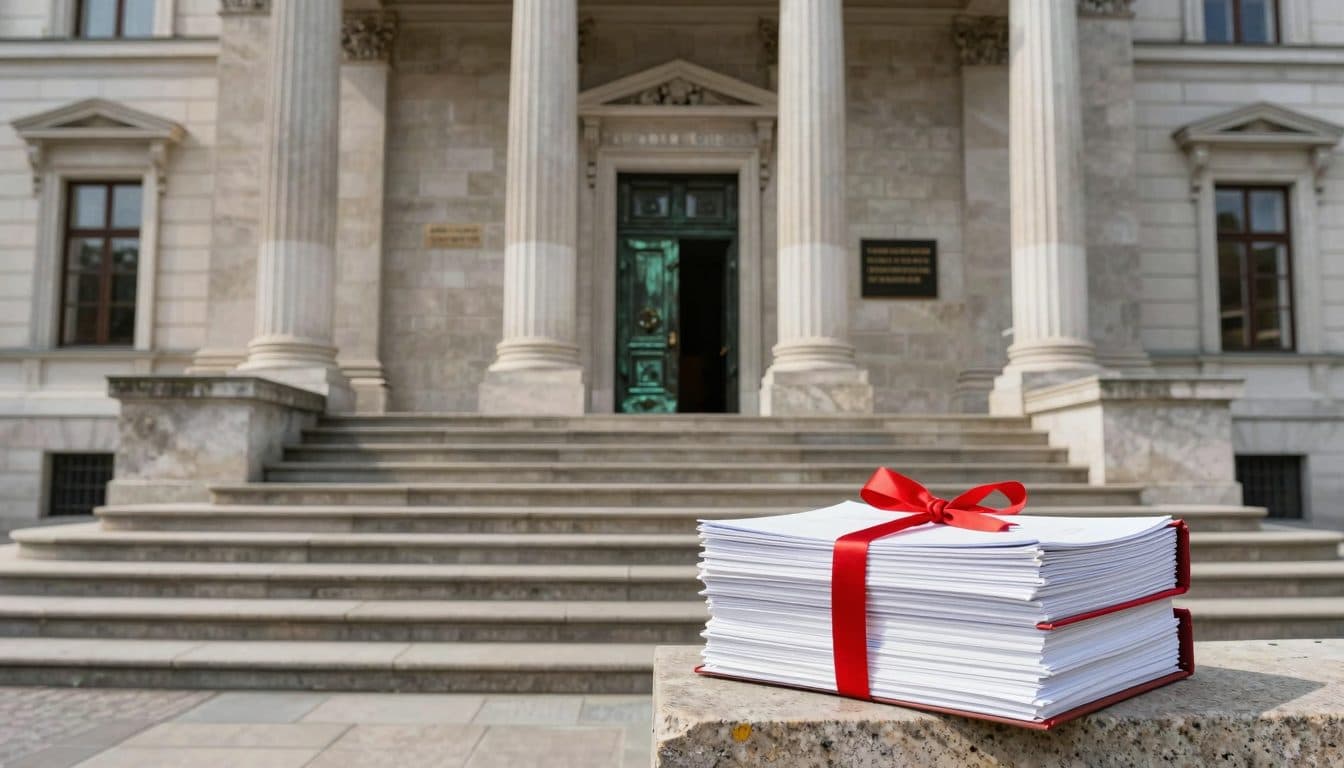
AI-generated image (z-image via Kie.ai)
Summary
Austria's Generalprokuratur has issued a pointed critique of the three-party coalition's draft law to create a new Bundesstaatsanwaltschaft, arguing that the…
Vienna, 18 July 2026
Austria's Generalprokuratur has issued a pointed critique of the three-party coalition's draft law to create a new Bundesstaatsanwaltschaft, arguing that the reform would represent a "massive Verschlechterung" compared with the existing arrangements.
What's new since 17 July
Update from 18 July 2026: Austria's Generalprokuratur has publicly broken with the government's draft to create a new Bundesstaatsanwaltschaft, warning that the reform would amount to a "massive Verschlechterung" — a massive deterioration — compared with the current system. The intervention adds the country's highest prosecutorial office to the chorus of institutional voices raising concerns about the coalition's judicial overhaul.
The criticism, first reported in Austrian media, centres on a draft presented at the end of June by the governing three-party coalition. The bill would establish a Bundesstaatsanwaltschaft as a new federal authority and transfer to it the full professional and disciplinary supervision (Fach- und Dienstaufsicht) that currently rests with the Justice Minister. The stated aim of the reform is to create a "politisch unabhängige Weisungsspitze" — a politically independent leadership structure for federal prosecutors.
The Draft and Its Stated Aim
The Generalprokuratur disputes that the draft achieves that goal. In its assessment, the selection process for federal prosecutors appears, "jedenfalls dem Anschein nach" — at least on the face of it — to be a party-political selection, contradicting the reform's stated objective of independence. The office argues that the problems identified will not be resolved by the Nationalrat but merely shifted, "wenn nicht gar verstärkt" — if not actually amplified.
A central concern is the role of the Nationalrat in the appointment process. According to the Generalprokuratur, the parliament would be able to reject the proposals of the selection committee "unbegrenzt oft" — an unlimited number of times. Critics within and outside the coalition say this gives political actors a recurring veto that could undermine the merit-based character of the appointments.
The Greens, one of the three governing parties, have already signalled that they see further need for amendments. For them, the current draft is a "No-Go". Their position highlights the fragility of the coalition's legislative arithmetic and raises the prospect of renewed negotiations before the bill can proceed.
The Greens' Red Line
The Generalprokuratur's warning is particularly significant because of the office's institutional position. Established at the Oberster Gerichtshof (Supreme Court of Justice, OGH), the Generalprokuratur is currently the highest public prosecutor's office of the Republic. Unlike ordinary prosecutors, it does not act as a prosecutor and does not conduct investigations. Instead, it functions as a kind of guardian of the law — a Rechtswahrerin.
In that capacity, the Generalprokuratur can file so-called nullity complaints to safeguard the law (Nichtigkeitsbeschwerden zur Wahrung des Gesetzes), even against final judgments. It also issues statements on certain nullity complaints. These powers give the office a unique oversight role at the apex of the Austrian justice system, distinct from the day-to-day work of prosecution.
The Role of the Generalprokuratur
The draft law envisages that the Generalprokuratur will be absorbed into the new Bundesstaatsanwaltschaft. Proponents argue that consolidating prosecutorial functions under a single roof will streamline oversight and clarify lines of authority. Opponents, including the Generalprokuratur itself, counter that the absorption risks diluting the specific guardian-of-the-law function that the current office performs.
Beyond the institutional critique, the Generalprokuratur has raised a concrete operational warning. It states that there is a danger that the Bundesstaatsanwaltschaft will not be able to perform its tasks — either in the area of professional supervision or in safeguarding the law — "in der erreichten Qualität auch allem Anschein nach unabhängig" — with the quality currently achieved and apparently independently. In other words, the office fears a drop in both standards and independence.
The exchange has revived a long-running debate in Austrian legal policy about how to balance democratic accountability with prosecutorial independence. Supporters of the reform argue that concentrating supervision in a single federal authority, rather than leaving it with the Justice Minister, is the cleanest way to depoliticise the chain of指令. Critics reply that the draft's appointment mechanism achieves the opposite.
For the coalition government, the Generalprokuratur's intervention complicates an already delicate legislative timetable. The Greens' public reservations, combined with the Generalprokuratur's formal criticism, suggest that the bill in its current form is unlikely to pass without changes. Whether those changes will be cosmetic or substantive remains to be seen.
Why the Intervention Matters
Legal commentators note that the Generalprokuratur's role in the public debate is unusual. Because the office does not prosecute and does not investigate, its public interventions tend to be reserved for matters touching on the integrity of the legal order. Its decision to speak out on the draft signals that it views the reform as a structural rather than a technical issue.
The Bundesstaatsanwaltschaft, once created, would take over the Fach- und Dienstaufsicht that currently lies with the Justice Minister. That transfer is the core of the reform: it removes the minister from the day-to-day supervision of federal prosecutors and places it in a dedicated federal body. The Generalprokuratur's argument is that, as drafted, the new body's leadership would still be selected through a process vulnerable to party-political influence.
The dispute also has a parliamentary dimension. The Nationalrat's ability to reject the selection committee's proposals without limit is, in the Generalprokuratur's reading, a structural weakness. Even if the committee's work is merit-based, an unlimited rejection power allows the parliament to substitute political preferences for professional criteria. The Greens' call for Nachbesserung — improvement — appears to target precisely this mechanism.
Looking ahead, the coalition faces a choice between revising the draft to address the Generalprokuratur's concerns, pressing ahead and risking institutional friction, or shelving the reform. Each option carries political costs. The Justice Minister has not yet publicly responded to the Generalprokuratur's assessment in detail, but the government's working majority in the Nationalrat will be tested if the Greens withhold their support.
For ordinary readers, the controversy is a reminder that reforms touching on the justice system are rarely purely technical. The question of who supervises prosecutors — and how those supervisors are chosen — goes to the heart of how the rule of law is organised. Austria's Generalprokuratur, by entering the debate, has made clear that it considers the current draft a step backwards rather than forwards.
Questions & Answers
What is the Generalprokuratur and what does it do?
The Generalprokuratur is currently the highest public prosecutor's office of the Republic, established at the Oberster Gerichtshof (Supreme Court of Justice). It does not act as a prosecutor and does not conduct investigations, but functions as a kind of guardian of the law, able to file nullity complaints to safeguard the law even against final judgments.
What does the government's draft law propose?
The three-party coalition's draft, presented at the end of June, would create a new Bundesstaatsanwaltschaft and transfer to it the full professional and disciplinary supervision of federal prosecutors that currently rests with the Justice Minister.
Why does the Generalprokuratur call the draft a "massive Verschlechterung"?
The Generalprokuratur argues that the selection of federal prosecutors appears, on the face of it, to be party-political, and that the Nationalrat could reject the selection committee's proposals an unlimited number of times. It warns that the Bundesstaatsanwaltschaft may not be able to perform its tasks with the quality and independence currently achieved.