Berlin Regional Court Sentences Palliative Care Doctor to Life Imprisonment for 15 Murders
Berlin, 08 July 2026
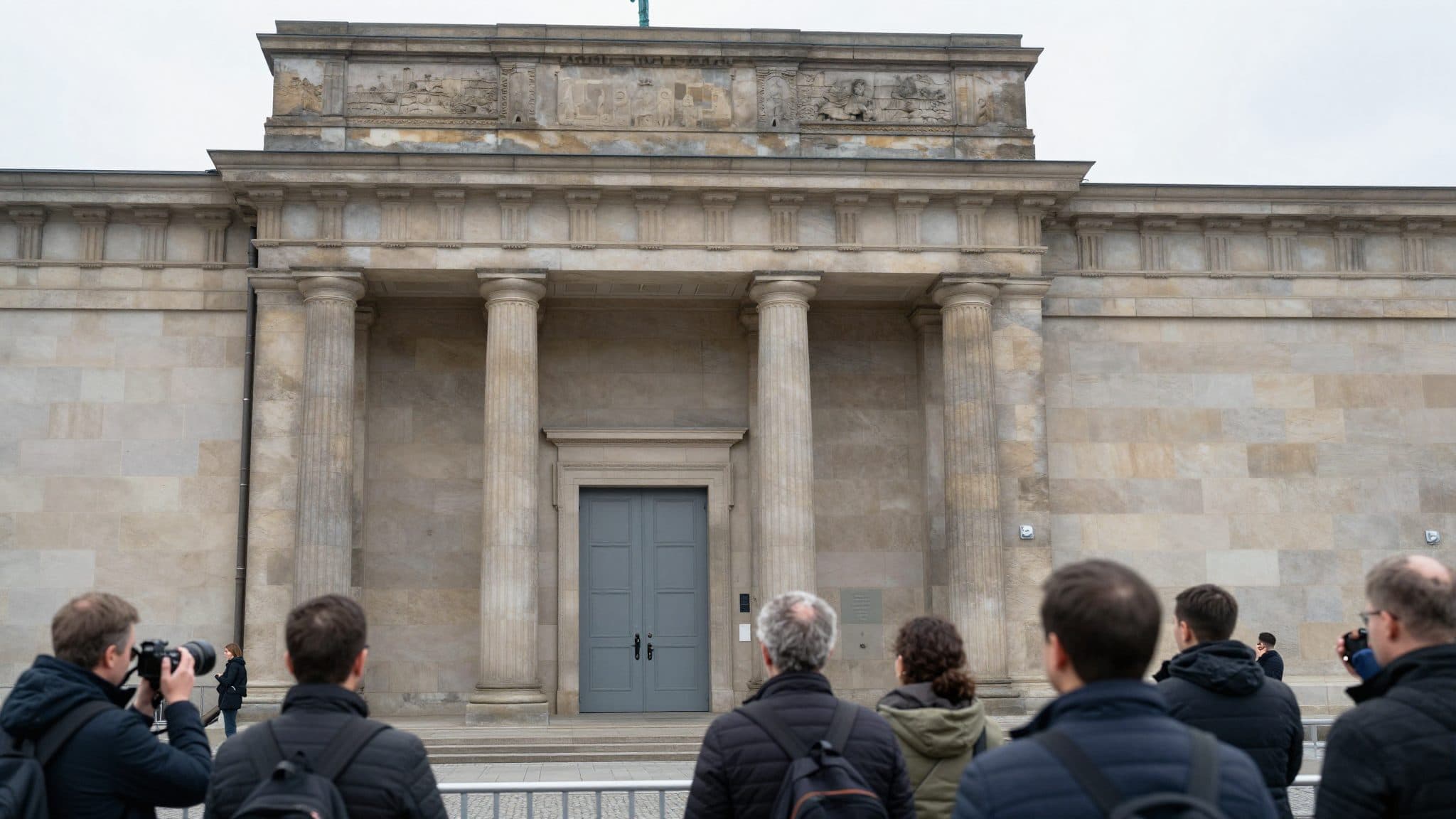
AI-generated image (z-image via Kie.ai)
Summary
The Berlin Regional Court has sentenced a 41-year-old palliative care doctor to life imprisonment for 15 murders and ordered preventive detention. The public prosecutor's office is simultaneously investigating 76 additional suspected cases and expects to file another indictment later this year.
Berlin, 08 July 2026
On Wednesday, 8 July 2026, the Berlin Regional Court sentenced a 41-year-old palliative care doctor to life imprisonment for 15 murders, established the particular severity of guilt, and ordered subsequent preventive detention.
After a trial lasting almost one year, the criminal chamber for serious offences, presided over by a judge who referred to the defendant as a serial killer, handed down the sentence. According to reports, the presiding judge stated that the 15 proven killings were possibly "nur die Spitze des Eisbergs". The public prosecutor's office stated that it is investigating 76 additional suspected cases and expects to file another indictment later this year.
At the same time, the court imposed a lifetime ban on the practice of medicine against the physician. The defendant, who according to the indictment is alleged to have killed twelve women and three men during house calls between September 2021 and July 2024, had been in pretrial detention since the beginning of August 2024. According to investigators, tips from the nursing service for which he had worked since 2020 eventually led to the 41-year-old coming under increasing focus. According to reports, the investigations were triggered by fires that the physician is alleged to have set in order to cover up his crimes.
Background to the Crimes
Without medical indication and without the knowledge of those affected, the doctor, who held a doctorate, administered a lethal mixture of various medications to the seriously ill patients that led to respiratory paralysis, according to the indictment. The victims were between 25 and 94 years old. The 255-page indictment listed the youngest victim as a 25-year-old and the oldest as a 94-year-old woman. All 15 killed were severely ill, but their death was not imminent.
Over 57 court days, the criminal chamber for serious offences heard more than 200 witnesses, including colleagues, neighbours, relatives of the alleged victims, and police officers. A homicide unit of the Berlin State Criminal Police Office evaluated hundreds of patient files. Patients, relatives, and colleagues had previously described the doctor as empathetic; witnesses characterised him as "den Netten, Lieben, Hilfsbereiten".
Until shortly before the end of the trial, the 41-year-old had remained silent regarding the charges. On 25 June 2026, he then surprisingly confessed to twelve of the 15 acts attributed to him. In his statement before the court, he said: "Ich bin erst jetzt in der Lage, mein Handeln zu erklären und übernehme die Verantwortung für meine Taten". In intercepted telephone conversations that were played during the trial, he had previously told his wife that he had been killing "immer, schon lange".
Statements by the Defendant
In his so-called final statement, the defendant announced: "Ich werde mich in dem kommenden Verfahren deutlich früher einlassen". With a view to the bereaved, who were sitting in court as joint plaintiffs, he added: "Vielleicht ist das ein Trost für die Angehörigen". He explained that he had talked himself into believing he was doing the right thing and sparing patients "Leid und Siechtum": "Bei allem habe ich gedacht, das sei das Beste für alle".
The joint plaintiffs' representatives nevertheless described the confession as "bemerkenswert oberflächlich" and as a "Schlag ins Gesicht der Angehörigen". A mother and joint plaintiff wept in the courtroom over her 25-year-old daughter. The mother of one of the killed, tearfully said of her daughter: "Nie hat sie gesagt, dass sie nicht mehr leben wollte". The son of a 72-year-old who died on Christmas Eve reported: "Sie hatte Pläne, wollte mit ihrer Schwester an die Ostsee reisen – meine Mutter wollte weiterleben".
Reactions of the Joint Plaintiffs
To the relatives and colleagues, the convicted man addressed the words: "Ich entschuldige mich für das viele Leid, das ich über sie gebracht habe". Nevertheless, the court followed the application of the public prosecutor's office, which had requested the maximum penalty for murder in 15 cases, the establishment of the particular severity of guilt, as well as preventive detention. The defence had previously expected that their client would be sentenced to life imprisonment, but opposed the finding of particular severity of guilt and the preventive detention.
The case could be one of the largest nationwide. Until now, a murder series in Lower Saxony was considered the likely largest in German post-war history: Niels Högel was sentenced to life imprisonment in 2019 for 85 murders. In that case, the nurse had attracted attention because he had suspiciously often appeared as a rescuer during resuscitation attempts in crisis situations that he himself must have caused. Criminal psychologist Axel Byrsch explained in this regard: "Serienmörder sind noch schwieriger zu entlarven".
Largest Murder Series in Germany
According to further reports, he may have been seeking a "Machtgefühl" with his acts. An earlier publication in connection with the Högel case also referred to a "Gier nach Spannung". In the Berlin case, the 41-year-old had studied medicine at Frankfurt's Goethe University between 2004 and 2013 and obtained his doctorate there; his doctoral thesis is titled "Warum töten Menschen?" and examines homicide offences between 1945 and 2008 in Frankfurt am Main. He later completed two specialist medical trainings, moved to Berlin in 2020, is married, and is the father of a primary-school-aged son.
The public prosecutor's office had originally investigated for arson resulting in death and finally filed charges in 15 cases in April 2025. Parallel to the ongoing proceedings, the man is suspected of having killed patients in more than 70 additional cases. In the 76 additional suspected cases, the public prosecutor's office expects another indictment later this year. In a telephone statement made from pretrial detention, the defendant had also announced: "Ich weiß, dass ich zu einer lebenslangen Haftstrafe verurteilt werde".
Control Mechanisms and Open Questions
Against the background of the case lies the question of control mechanisms in palliative and outpatient care. After the verdict, observers pointed out that perpetrators in care situations remained undetected for particularly long because the environment places trust in the staff. At some clinics, such as the Berlin Charité, specialised positions already exist to report irregularities in patient care at an early stage.
With the verdict, the court follows the application of the public prosecutor's office in full. The 41-year-old German will most likely serve his sentence in a correctional facility, followed by the ordered preventive detention. The legally final sanction is therefore not yet conclusive, as the investigations into the additional 76 suspected cases are running in parallel and, according to the public prosecutor's office's assessment, are likely to culminate in a new trial.
The verdict was broadcast on 8 July 2026 both on Deutschlandfunk's programme and on rbb Inforadio. The case had previously been reported on, among others, by dpa, APA, and in numerous other German and Austrian media outlets.
For the bereaved, the chamber has signalled that the coming to terms with the case is not concluded with the verdict. Should the public prosecutor's office file charges in the 76 additional suspected cases, relatives must prepare themselves for another lengthy trial. The joint plaintiffs' representatives had criticised the late confession as insufficient, among other reasons because it came only after almost a year of proceedings and in the face of an overwhelming body of evidence.
Questions & Answers
What was the Berlin palliative care doctor convicted of?
The Berlin Regional Court sentenced the 41-year-old to life imprisonment for 15 murders, established the particular severity of guilt, ordered preventive detention, and imposed a lifetime ban on the practice of medicine.
How many patients is the doctor alleged to have killed?
In the trial, 15 acts between September 2021 and July 2024 were proven; the public prosecutor's office is simultaneously investigating 76 additional suspected cases and expects to file another indictment later this year.
How was the doctor ultimately brought to justice?
Tips from the nursing service for which he had worked since 2020 brought him into the focus of investigators; the trigger was fires that he allegedly set to cover up his crimes, after which the Berlin State Criminal Police Office evaluated hundreds of patient files.
Berlin Palliative Care Doctor: Life Imprisonment After 15 | allfacts360