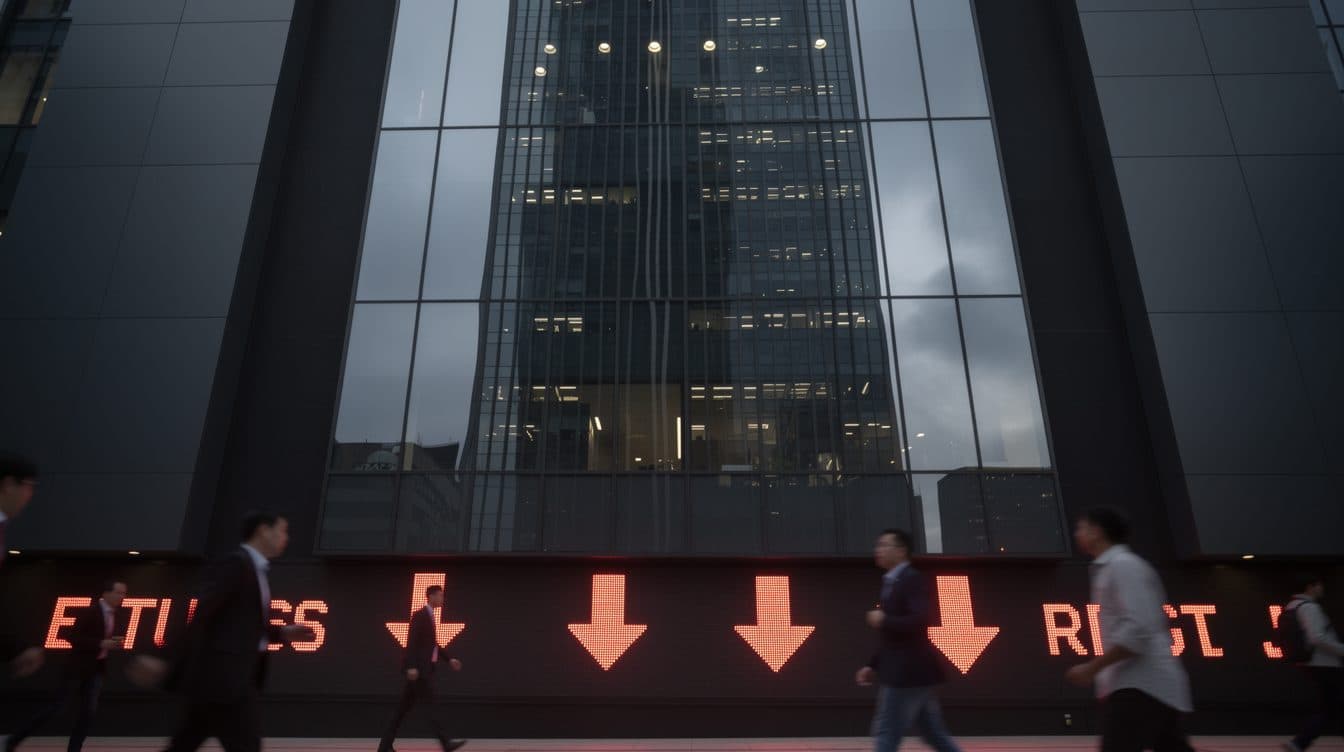
BMW cuts forecast and announces austerity course – shares plunge
Munich, June 16, 2026
AI-generated image (flux-2/pro-text-to-image via Kie.ai)
Summary
BMW has drastically lowered its annual forecast and announced a sweeping austerity program. The DAX-listed stock plummeted by more than eleven percent in early trading, hitting its lowest level since autumn 2020.
Munich, June 16, 2026
The Munich-based automaker BMW surprisingly slashed its forecast for the current 2026 fiscal year on Tuesday evening and announced additional cost-cutting measures, prompting the company's shares to fall by more than eleven percent to 60.08 euros in early trading on Wednesday.
Background: Profit margin cut drastically
The BMW Group now expects an operating return on sales before interest and taxes of only 1 to 3 percent for its automotive division, the company announced in Munich after the close of trading on Tuesday. Management had previously projected a margin of 4 to 6 percent. The group also now spoke of a "significant" decline in pre-tax earnings compared to 2025, instead of a "moderate" decline as before.
In automotive cash flow, BMW now expects only more than 2.5 billion euros, after the company had previously forecast more than 4.5 billion euros. Under the new outlook, vehicle deliveries in 2026 are likely to decline slightly, rather than remain at the prior-year level. Looking at a twelve-month horizon, the picture is less dramatic with a decline of 13 percent.
China's auto market in downturn
The main reason cited for the profit warning is the drastically deteriorating market conditions in China. According to recent data from the China Passenger Car Association (CPCA), only around 1.5 million vehicles were sold in China in May – a drop of 22 percent compared to the same month last year. Between January and May, sales fell by just under 20 percent compared to the same period of the previous year.
According to state media, more than 400 million of China's 1.4 billion inhabitants are considered part of the middle class. German auto expert Beatrix Keim said with regard to Chinese consumers: „Chinesische Kunden sind extrem preissensitiv und reagieren auf solche Änderungen sehr stark." The group known as "New Energy Vehicles" (NEVs) – comprising electric cars and plug-in hybrids – has in particular suffered since the start of the year from reduced purchase incentives.
Competitors under pressure
The Volkswagen Group also confirmed the difficult situation in China: „Der chinesische Automobilmarkt steht unter zunehmendem Druck," Volkswagen said in a statement from Beijing. „Die Volkswagen Group China kann sich diesem Trend nicht entziehen." The Wolfsburg-based company expects the overall market for new vehicles to fall to below 21 million vehicles. Industry experts view this as the first decline since December 2022.
BMW's top management announced "further structural and efficiency measures" in response, intended to "intensify and accelerate" existing cost-cutting efforts. A company manager stated: „Gleichzeitig werden wir unsere aktuellen Strukturen und Prozesse an die sich drastisch verschärfenden Marktbedingungen anpassen. Unsere unternehmerische Verantwortung gebietet es deswegen, dass wir unsere laufenden Maßnahmen nochmals deutlich intensivieren und beschleunigen."
Cost-cutting measures and job cuts
According to BMW, the measures are expected to have a positive effect in subsequent years, but will initially weigh on earnings in the second half of 2026 as a one-time charge. „Wir passen unsere Pläne entsprechend an," the company stated. Earlier this year, BMW had already announced a slight decline in headcount for 2026; with around 155,000 employees worldwide, this would affect several thousand jobs.
The profit warning triggered a veritable sell-off on the stock market. The DAX-listed BMW stock initially fell by more than eleven percent to 60.08 euros in early Wednesday trading, reaching its lowest level since autumn 2020. Over the course of the year to date, the stock has already lost more than 30 percent of its value. It later gave up around six percent to 63.55 euros. At the most recent closing price, BMW is worth just under 42 billion euros, placing it in the middle of the 40-stock DAX.
Market reaction and analyst assessments
BMW is thus one of the biggest losers in the Stoxx 600 Auto & Parts sector index since the end of 2025. Henning Cosman, an analyst at the British investment bank Barclays, immediately spoke of a "thick margin warning" from Munich. Even though BMW's stock had still risen significantly in the second half of 2025, the picture for 2026 now looks devastating.
Domestic competitors are also under pressure. Mercedes-Benz set aside around two billion euros in provisions for severance payments, while the VW Group is expected to cut around 50,000 jobs by 2029. With a decline of just over 20 percent since the start of the year, Mercedes-Benz is doing somewhat better than BMW; Volkswagen is valued at just under 44 billion euros, and Mercedes-Benz at around 46 billion euros.
Despite the crisis, BMW's management is confident when it comes to the medium-term product strategy. Electric vehicles board member Milan Nedeljkovic emphasized the positive prospects of the new electric car generation: „Mit der Neuen Klasse bringen wir in den nächsten beiden Jahren das stärkste BMW-Portfolio der Geschichte auf die Straße," he said. The "Neue Klasse" is thus intended to put the group back on a growth trajectory.
According to the CPCA, Chinese passenger car exports recently rose by around 75 percent in May, driven by an export increase of 19.4 percent, which benefited, among other things, from global investments in artificial intelligence (AI). Analysts had expected industrial production to rise by 4.3 percent, after 4.1 percent in April; in fact, it rose by 4.5 percent. Retail sales, an important barometer of consumer activity, fell by 0.6 percent.
Outlook: Neue Klasse as beacon of hope
CPCA Secretary General Cui Dongshu pointed to the clear causes of the crisis: „Die Gründe sind klar," he said. Domestic investment is also weakening: fixed-asset investments fell by 4.1 percent in the first five months of the year, and property investments plunged by 16.2 percent year-on-year.
In parallel with the decline of foreign manufacturers, the market share of Chinese automakers in the passenger car market rose to more than 60 percent. In May alone, sales of foreign brands fell by 39 percent, while NEVs were only in single-digit negative territory. Estimates had previously assumed that the number of middle-class households would rise significantly by 2030.
Just one month earlier, the then BMW CEO Oliver Zipse had emphasized at the annual general meeting that the austerity course was an "active decision." A few weeks later, however, the group had to significantly lower its forecast – an indication of how quickly the situation on the Chinese market – and thus for Germany's export-strong manufacturers – has deteriorated.
Questions & Answers
How much has BMW lowered its forecast for 2026?
BMW now expects an operating return on sales of only 1 to 3 percent for its automotive division, instead of the previously announced 4 to 6 percent. The company also now expects cash flow in the automotive business of only more than 2.5 billion euros, instead of more than 4.5 billion euros.
Why did BMW have to cut its annual forecast?
The group cites the drastically deteriorated market conditions in China as the main reason, where passenger car sales fell by just under 20 percent between January and May compared to the same period of the previous year. Reduced purchase incentives for electric cars and plug-in hybrids are also weighing on business.
What cost-cutting measures has BMW announced?
The company announced further "structural and efficiency measures" intended to "intensify and accelerate" existing cost-cutting efforts. With around 155,000 employees worldwide, several thousand jobs would be affected according to earlier statements, with the measures weighing on earnings in the second half of 2026 as a one-time charge.
BMW profit warning 2026: stock crashes, cost-cutting | allfacts360