Brandenburg Plans Salary Increase of Up to 20 Percent for Civil Servants – Additional Burden of 420 Million Euros
Potsdam, 01 July 2026
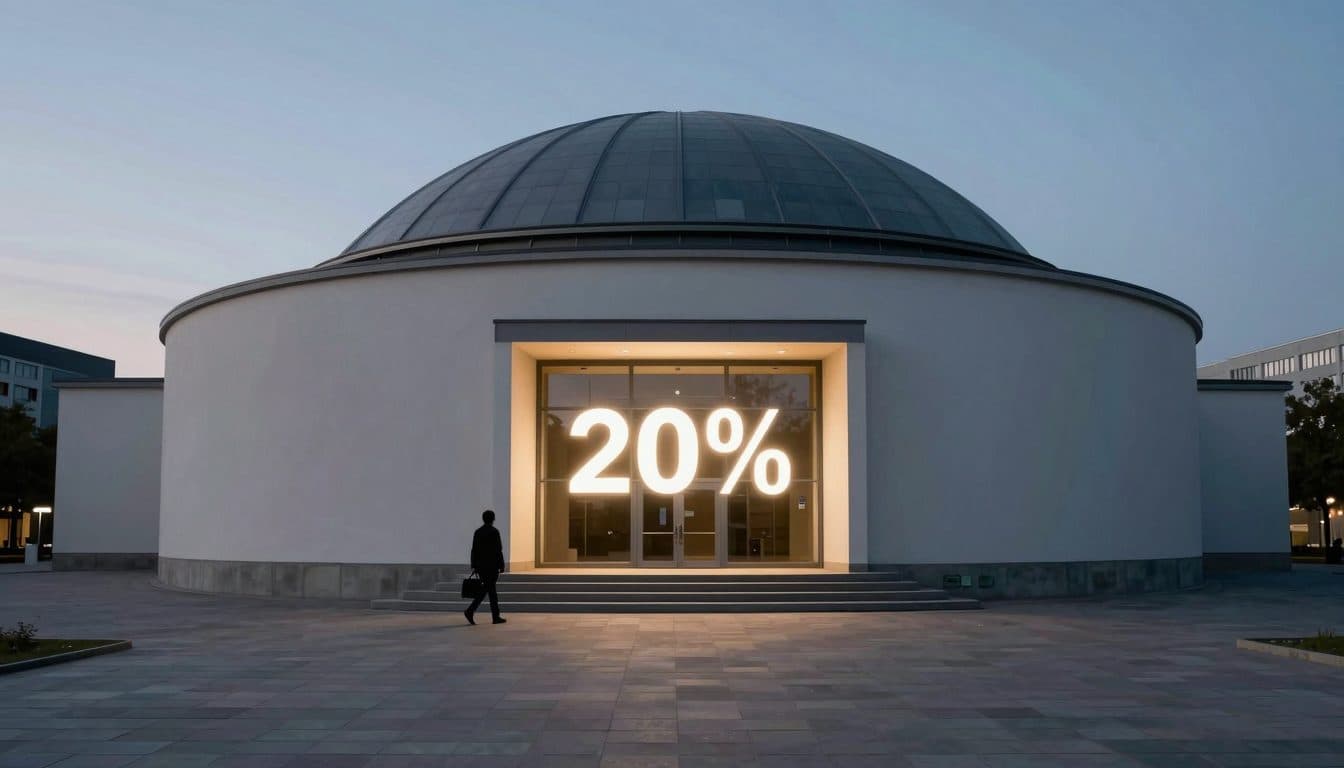
AI-generated image (z-image via Kie.ai)
Summary
The state government of Brandenburg and the unions have agreed on an increase in civil servant salaries of up to around one-fifth. The additional expenditure for the current year amounts to around 420 million euros, and the increase is to take effect retroactively from January 1.
Potsdam, 01 July 2026
The state government of Brandenburg and the unions have agreed on an increase in civil servant salaries of up to around one-fifth, which is to take effect retroactively from January 1 of the current year.
The agreement provides for a significant increase in the remuneration of Brandenburg's civil servants. According to the state government, this represents a pioneering role nationwide, comparable to Schleswig-Holstein, which had already decided on an increase for the years 2025 to 2027 at the beginning of June. Finance Minister Daniel Keller (SPD) said on this: "Sie kommen jetzt zu ihrem Recht."
Background: Karlsruhe Ruling as Trigger
The increase responds to a 2025 decision by the Federal Constitutional Court in Karlsruhe, which had ruled the remuneration of numerous Berlin civil servants unconstitutional. The judges had formulated criteria that now also play a central role in the recalculation of Brandenburg's salaries. "Wegen dieses Gerichtsurteils sollen Brandenburgs Beamte mehr Geld bekommen," it says in the report on which the agreement is based.
Specifically, an increase of up to around 20 percent is planned. Of the additional funds, 310 million euros alone fall on salary group A, which includes, among others, teachers and police officers. Overall, the state government puts the additional budgetary burden for the current year at around 420 million euros. Of this, four-fifths is earmarked for salaries and one-fifth for pensions.
The increase is to take effect retroactively from January 1 of the current year according to the plans. However, this is contingent on the approval of the red-black cabinet as well as the state parliament. Finance Minister Keller hopes, according to his own statements, that the decisions will be made in December.
Finances: 420 Million Euros Additional Burden
Parallel to the salary increase, an extension of the weekly working hours from 40 to 41 hours is planned. According to the state government's plans, this is to be limited in time, with exceptions still to be regulated in detail. The background is the state's strained budgetary situation.
In the recalculation, according to Finance Minister Keller, the development of nominal wages after deducting inflation plays a particularly important role. In eastern Germany, wage growth has been stronger than in the west since 1996, an effect that continues to intensify. The state sees this as evidence that the planned increase is objectively warranted.
Working Hours: 41 Hours Instead of 40
The financial situation remains, according to the state government's presentation, very strained. The scope for additional expenditure is limited, which is why the extension of working hours is planned as a flanking measure. Observers assess the combination of higher pay and more weekly hours as a political compromise between the interests of employees and the constraints of budgetary consolidation.
Special features arise for teachers. Since the second half of the school year, most teachers in Brandenburg have been teaching an additional hour per week for budgetary reasons. However, according to the available plans, there is no obligation to actually stand in front of the class for another hour.
The unions, which were involved in the negotiations with the state government, see the agreement as an important step toward implementing the Karlsruhe ruling. The state's pensioners also benefit from the increase, as one-fifth of the additional funds flows into the pension area. This appropriately takes account of the lifetime achievements of civil servants, it is said from negotiation circles.
Teachers: Special Case in the School Service
The state government points out that remuneration in Brandenburg had to be reassessed following the Karlsruhe ruling. The judges had found that the salaries of numerous Berlin civil servants had been unconstitutional for years – a finding that has a radiating effect beyond Berlin. Brandenburg draws the consequences from this, according to its own presentation, and adjusts its salary tables accordingly.
In the explanation of the planned measure, it says: "Was ist genau geplant?" The answer is differentiated. Not only a blanket increase in all salary groups is planned, but a structured adjustment that is oriented toward the specifications of the Federal Constitutional Court. The recalculation is to be carried out transparently and comprehensibly.
The increase affects all salary groups, with group A binding the largest share of the additional expenditure. The background is that the largest personnel bodies of the state are employed in this group, with teachers and police officers. An adjustment of this magnitude thus has a direct effect on the performance capacity of public administration and schools.
Procedure: Approval from Cabinet and State Parliament
The agreement between the state government and the unions is also subject to parliamentary approval. If the cabinet and the state parliament approve the plans in December, the higher salaries could still be paid out in the current year – retroactively from January 1. This would make Brandenburg, after Schleswig-Holstein, the second federal state to concretely implement the Karlsruhe specifications in higher salaries.
The time limitation of the 41-hour week remains a politically sensitive point. If the budgetary situation eases, a return to the 40-hour week would be conceivable. Until then, exceptions are provided, the design of which is still being negotiated. Teachers who already teach an additional lesson now should not be doubly burdened as a result.
Overall, a picture emerges in which higher salaries, more working hours, and a strained budgetary situation are brought together in a political compromise. The state government sees this as a balance between constitutional requirements, the interests of employees, and the fiscal framework conditions. The final decision now lies with the cabinet and the state parliament in Potsdam.
Questions & Answers
Who is Daniel Keller and what role does he play in civil servant remuneration?
Daniel Keller is the Finance Minister of the state of Brandenburg and a member of the SPD. He negotiated with the unions on the increase in civil servant salaries and gave the quote "Sie kommen jetzt zu ihrem Recht."
Why will Brandenburg civil servants receive up to 20 percent more money in the future?
The increase goes back to a 2025 ruling by the Federal Constitutional Court in Karlsruhe, which had ruled the remuneration of numerous Berlin civil servants unconstitutional. The specifications from Karlsruhe are now being transferred to Brandenburg.
What does the planned 41-hour week mean for employees?
The weekly working hours are to increase temporarily from 40 to 41 hours, with exceptions provided. Teachers who already teach an additional lesson per week now should not be additionally burdened as a result.
Brandenburg Civil Servants: Salary Increase of Up to 20 | allfacts360