Breach of Trust Trial Against Former Linz Mayor Luger Resumes for Second Round
Linz, July 3, 2026
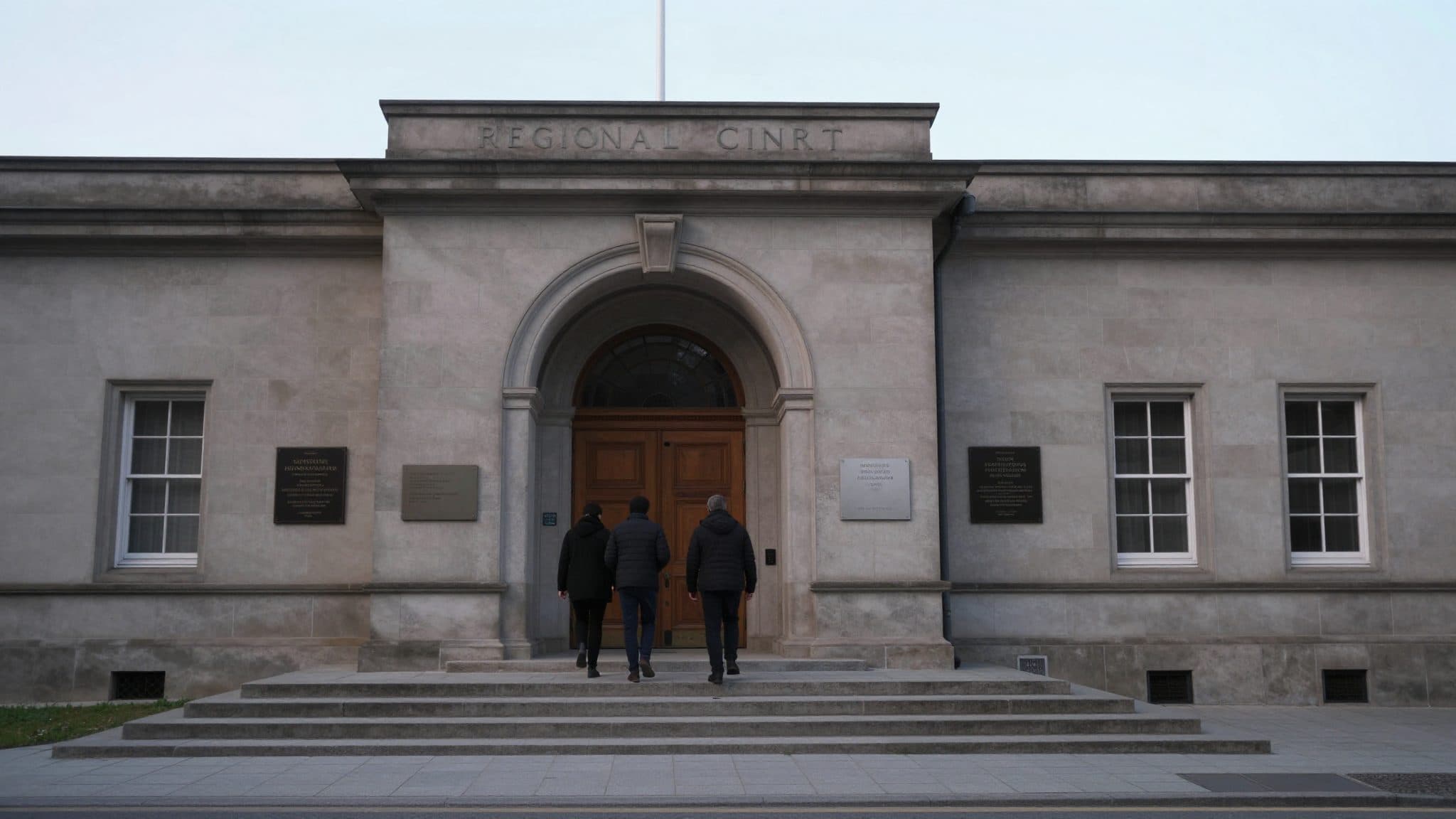
AI-generated image (z-image via Kie.ai)
Summary
In the breach of trust trial against former Linz Mayor Klaus Luger, the second day of hearings at the Linz Regional Court has concluded. The judge announced the verdict for the midday hours, after the prosecutor once again laid out the charges against Luger in connection with the Brucknerhaus affair.
Linz, July 3, 2026
In the breach of trust trial against former Linz Mayor Klaus Luger, the second day of hearings took place at the Linz Regional Court, at which the judge announced the verdict for the midday hours.
At the beginning of the second day of hearings, the prosecutor repeated the already known core of the indictment. According to this, Luger had, in 2017, during the selection process for the artistic directorship of the Linz event company LIVA – and thus also for the intendant position of the Brucknerhaus – tipped off his preferred candidate, Dietmar Kerschbaum, in advance with the questions of the hearing commission. This accusation is at the center of the so-called Brucknerhaus affair, which has occupied the city of Linz for years and ultimately led to criminal proceedings against the former city leader.
Indictment and Status of the Proceedings
Luger himself had entered the courtroom ten minutes before the trial began, greeted the crowd, and endured the ongoing camera recordings. In his opening statement, he declared that he did not plead guilty as charged. At the same time, however, he admitted: "Die Vergabe des Gutachtens war ein großer Fehler, den ich eingestehe." Throughout the later course of the questioning, he repeatedly emphasized that, from today's perspective, he considered commissioning the legal expert opinion to be a mistake.
At the core of the second day of hearings was the question of why Luger had commissioned a legal expert opinion in the first place and what motives played a role. The prosecutor pointed out that the expertise was "überwiegend im Eigeninteresse," but had been paid for by the LIVA, which was funded with public money. According to the indictment, the costs amounted to 19,061.15 euros, which Luger later repaid to LIVA.
The Role of the Legal Expert Opinion
The judge inquired repeatedly and asked, among other things: "Ist besprochen worden, welche Inhalte das Gutachten haben soll?" Luger replied that the legal recommendations of the expert opinion had given him certainty "in welchem Rahmen ich mich verhalten soll." When asked why he had sent the documents to Kerschbaum, Luger explained that he had wanted to know: "Was ist jetzt zu tun?" The later LIVA head and Brucknerhaus intendant Kerschbaum had been known to him as an applicant, and he had perceived the situation as complex.
During the questioning, the first whistleblower report that had been received in the LIVA system also came up. Luger said it had been the first report in the whistleblower system, and that they had had "null Erfahrung" in how to handle it under corporate law. To the judge's remark that he had received this report, he countered: "Im Nachhinein gesehen hätte ich mich für befangen erklären müssen, als ich die Whistleblower-Meldung gelesen habe." He also reportedly said: "Das war blöderweise ich."
Whistleblower Report and Conflict of Interest
Asked about his actions at the time, Luger explained that the expertise had contained "nachvollziehbare juristische Empfehlungen," and that it had thus been "sehr klar gewesen, in welchem Rahmen ich mich zu bewegen habe" for him. The prosecutor countered that of the 17 pages of the expert opinion, 15 dealt with criminal law explanations. The judge commented on the course of the hearing with the words: "Es wird immer spannender hier."
A central point was the role of the questioned lawyer Thomas Moser, who testified as a witness. According to his own statements, Luger had attended a personal meeting with the lawyer, at which the content of the whistleblower report – the passing on of the hearing documents – was discussed. The proposed law firm took on the case, but did not know that the ex-politician himself was responsible for passing on the documents to Kerschbaum. Only later, in August 2024, did the "Oberösterreichische Nachrichten" publish a chat history between Luger and Kerschbaum, which revealed that Luger himself had sent the hearing documents to Kerschbaum.
Chat History as Key Evidence
Moser explained in court that at the time he had suggested commissioning an expert opinion on the legal situation, due to the complexity and because he himself no longer practiced as a lawyer, but referred to another law firm. The lawyer asked Luger during the meeting: "Wissen Sie, wer es war?" Luger had replied: "Ja, das weiß ich." When asked what he had done then, Luger said according to the record: "Ich habe mir ein Wort gedacht, das ich hier nicht aussprechen will. Danach hab ich den Rechtsanwalt Moser angerufen."
In his statement, Luger had already made clear: "Ich möchte jedoch nochmals betonen, dass die Beauftragung des Gutachtens ein großer Fehler war, den ich auch eingestehe." He maintained this line throughout the entire questioning. When asked by the judge why he had sent documents to Kerschbaum, he said he had found himself in a dilemma and believed that was "auch der beste Weg, um mein Dilemma zu lösen." In retrospect, he should have declared himself conflicted when he read the whistleblower report, the ex-mayor continued.
The defense argued that Luger "das aber gar nicht gebraucht" – i.e., getting the hearing questions in advance. His defense counsel also pointed out that if the compliance allegations against Kerschbaum – also denounced by whistleblowers and which later led to his dismissal – had not been true, Kerschbaum would have been "verbrannt" as intendant. Luger himself justified his hesitation at the time by saying that LIVA had no supervisory board "wo die Verschwiegenheit so oft aus politischen Gründen missbraucht wurde."
Closing Arguments and Verdict Announcement
In her closing argument, the prosecutor stated that the defendant was an "Amtsträger mit besonderer Verantwortung." She countered Luger that although the commissioning of the expert opinion had formally gone through LIVA, its content had served his own interest. She rejected a diversion – i.e., an out-of-court settlement of the proceedings – on the grounds that "generalpräventive Belange" already stood in the way of such a thing. Luger had previously had to pay a fine of 20,000 euros, as can be seen from the case files.
During the course of the hearing, it became apparent that the judge wanted to unravel the facts in several steps. She asked Luger, among other things, whether he had never wondered why the whistleblower report concerned him specifically. Luger replied: "Darüber habe ich mir keine Gedanken gemacht, ich habe die Inhalte des Gutachtens ja nicht beauftragt." Whether this statement could be reconciled with Luger's other statements remained the subject of judicial consideration.
The Brucknerhaus affair had gained new explosiveness in 2024 through the publication of the chat history in the "Oberösterreichische Nachrichten." It emerged that Luger himself – and not, as initially assumed, other persons – had forwarded the hearing documents to Kerschbaum. This revelation ultimately led to the filing of the breach of trust indictment against the then-mayor, who resigned from his office after the affair.
Outlook on the Verdict
At the end of the second day of hearings, the judge announced that the verdict was expected at midday. This means that the trial at the Linz Regional Court is likely to conclude on the same day. The proceedings are considered one of the most politically sensitive criminal trials in recent Linz city history, as it reaches directly into the appointment of the intendant of the renowned Brucknerhaus.
In her final plea, the prosecutor had emphasized that Luger had deliberately had the expertise paid for through LIVA in order to maintain the appearance of an official commission. At the same time, he had violated the duty of confidentiality towards the hearing commission by providing Kerschbaum with the questions in advance. The defense countered that Luger had found himself in an exceptional situation and had relied on legal advice.
The verdict of the Linz Regional Court was expected in the midday hours. This means that the trial, which has lasted two days of hearings, concerning the commissioning of the expert opinion, the amount of the costs, and Luger's role in the hearing proceedings, could come to a conclusion on the same day. Regardless of the outcome of the proceedings, the Brucknerhaus affair remains a defining part of recent Linz city history.
Questions & Answers
What is the breach of trust trial against Klaus Luger about?
Former Linz Mayor Klaus Luger is accused of having, in 2017, tipped off an applicant for the LIVA management and Brucknerhaus intendant position in advance with the questions of the hearing commission, and of having financed an expert opinion created in his own interest through LIVA.
What evidence plays a central role in the proceedings?
A central role is played by a chat history between Luger and Dietmar Kerschbaum published in August 2024, which suggests that Luger himself sent the hearing documents to Kerschbaum.
How does Klaus Luger justify his actions at the time?
Luger explained in court that he had found himself in a dilemma and had relied on
Luger Trial Linz: Brucknerhaus Affair in Court | allfacts360