Bürgenstock Talks Between USA and Iran: Trump Threats Interrupt Negotiations
Lucerne, 21 June 2026
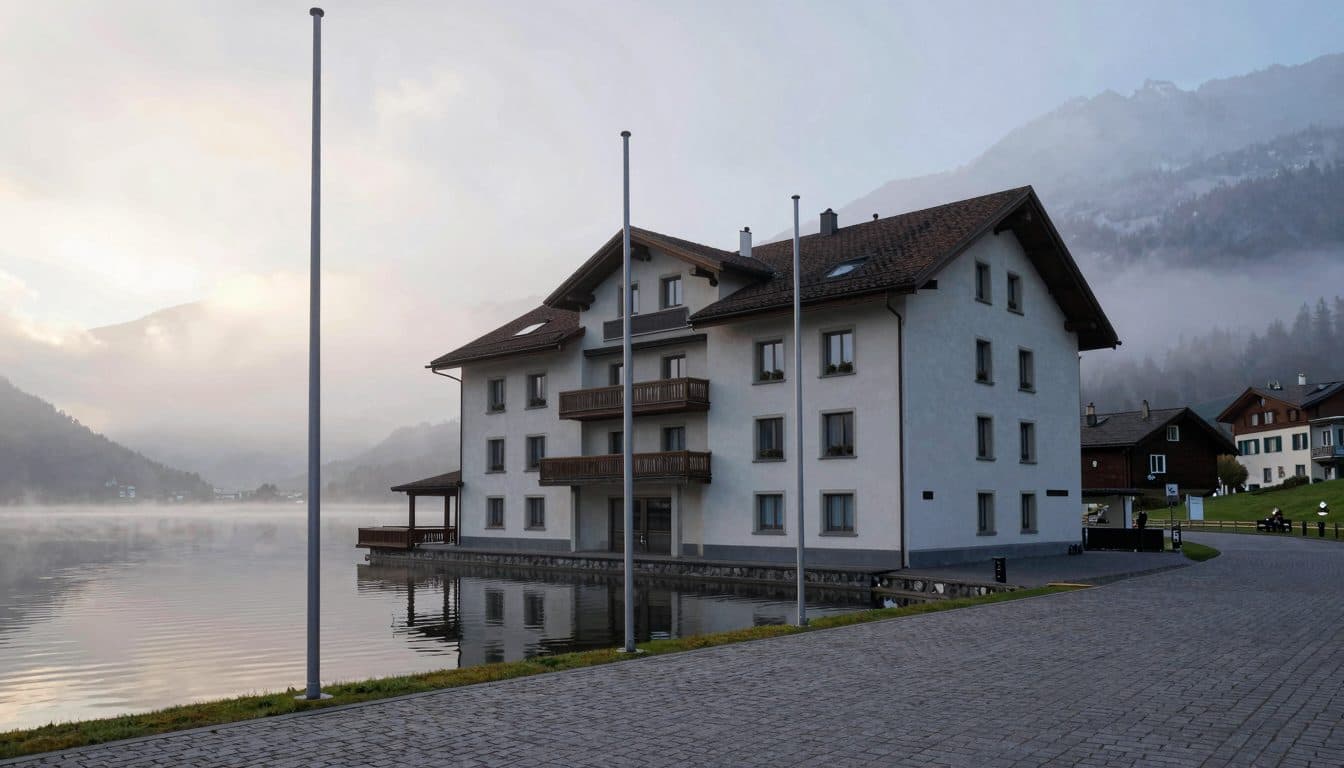
AI-generated image (z-image via Kie.ai)
Summary
The direct talks between the USA and Iran at the Bürgenstock have temporarily plunged into crisis due to threats from US President Donald Trump. According to a report, the Iranian side is considering breaking off the negotiations, although progress had reportedly been made beforehand.
Lucerne, 21 June 2026
The direct negotiations between the USA and Iran over a resolution of the Middle East conflict were temporarily suspended on Sunday at the Swiss luxury resort Bürgenstock following threats from US President Donald Trump directed at Tehran.
Background: 14-Point Declaration as the Basis for Negotiations
The meeting on 21 June 2026 was actually intended to result in the signing of that 14-point declaration of intent which the Americans and Iranians had already negotiated. This agreement was meant to pave the way for ending the latest Middle East war. Instead, the talks plunged into a severe crisis after only a short time.
As the Iranian news agency Isna reported, the meeting was interrupted after 80 minutes for internal consultations. The trigger was the publication of a message from the US president that was perceived as insulting. The talks, conducted with the mediation of Qatar and Pakistan, had „nach 80 Minuten Gespräch und einer Unterbrechung infolge der Veröffentlichung einer beleidigenden Nachricht des US-Präsidenten in eine schwierige Phase eingetreten“.
Shortly after the start of the negotiations, Trump warned on his online platform Truth Social: „Der Iran muss unverzüglich verhindern, dass seine hochbezahlten, an ihn angeschlossenen Gruppen im Libanon Probleme verursachen.“ If this did not happen, he threatened: „Wenn sie das nicht tun, werden wir den Iran erneut sehr hart treffen“, as Fox News quoted him.
Trump's Threats on Truth Social
In another post on Truth Social, Trump wrote that Iran must immediately prevent its „hoch bezahlten Stellvertreter“ in Lebanon – by which he meant Hezbollah – from stirring up unrest. He also stated according to Fox News: „Wenn ihr sie schließt, habt ihr kein Land mehr.“ Another threat read: „Ihr werdet nicht einmal mehr in euer verdammtes Land zurückkehren können.“
The Iranian side reacted with anger. According to the official news agency Irna, Trump's message was perceived as „beleidigend“. At the same time, the Iranian armed forces declared, according to Foreign Ministry spokesperson Ismail Baghai: „Wir nehmen diese Äußerungen nicht ernst, dennoch wäre es ratsam, wenn sie mehr Zurückhaltung übten.“ The armed forces remained ready to „auf andere Weise zu reagieren“.
Reactions from Tehran
Despite the tensions, some confidence was initially signalled from the Iranian delegation. Baghai said: „Allein in den vergangenen Stunden haben wir bereits große Fortschritte erzielt, und ich gehe davon aus, dass wir weitere Fortschritte machen werden.“ Topics of the talks included a ceasefire in Lebanon, the unimpeded oil exports of Iran, and the release of frozen Iranian assets.
Iranian Parliament Speaker Mohammad Bagher Ghalibaf, who is leading the delegation, struck a combative tone on the platform X. He wrote: „Unabhängig davon, wie viel sie reden, wir sind diejenigen, die handeln.“ This statement illustrated the tense mood on the Iranian side and the willingness to break off the negotiations if necessary.
On the American side, Vice President J.D. Vance sought to smooth things over. Referring to Trump, he said: „Der Präsident hat uns aufgefordert, ein neues Kapitel aufzuschlagen und unser Verhältnis zum iranischen Volk neu auszurichten.“ With this, Vance signalled Washington's willingness to continue the talks despite the harsh rhetoric.
Vance Reassures, Pezeshkian Urges Reason
Iranian President Pezeshkian also spoke out through the presidential office. One had to choose dialogue and not remain in a state of war, he said – „zumal die wirtschaftliche Sicherheit des Landes für die Regierung oberste Priorität hat“. This statement underscored the importance Tehran attaches to solving the economic problems.
From Washington, it was stated that there was hope that the meetings would lead to a „umfassenden und dauerhaften Einigung führen zu allen Punkten im Rahmenabkommen“, on which Washington and Tehran had agreed. The goal was to reach a final agreement between the USA and Iran within 60 days, which would also include provisions on dealing with Tehran's controversial nuclear programme.
Qatar's role in the negotiations is of central importance. According to the Gulf emirate, the first round of talks to resolve the Iran conflict began at the Swiss Bürgenstock on Sunday afternoon. Qatar and Pakistan acted as mediators to soften any direct confrontation between the delegations.
Mediator Qatar and the Goal of an Agreement Within 60 Days
The immediate reactions to Trump's threats made clear how fragile the negotiation process is. While one side set out the conditions for military action, the other pointed to the negotiation successes of the past hours. The interruption of the talks for internal consultations indicated that the Iranian side wanted to reassess its further course of action.
Observers regarded the day as a litmus test for the willingness of both sides to stay at the table despite mutual threats. A failure of the talks would have far-reaching consequences for stability in the Middle East, particularly in Lebanon, where Hezbollah is considered one of the main factors of conflict. In addition, the negotiations over the Iranian nuclear programme would be at stake.
At the end of the day, it remained open whether the interrupted talks at the Bürgenstock could be continued. According to reports, the Iranian side was considering breaking off the negotiations. At the same time, diplomatic channels were working to rescue the process. An official cancellation of the meeting was not initially announced.
Overall, the course of 21 June 2026 showed that the diplomatic efforts to resolve the Middle East conflict and find a solution in the Iranian nuclear dispute are in a highly sensitive phase. The combination of direct negotiations and public threats made clear how narrow the line between diplomacy and escalation currently is.
For the coming days, it was expected that the negotiating delegations could meet again in Switzerland or at another location. Whether the 14-point declaration would actually be signed remained unclear at the time of the news broadcast on 21 June 2026 in the Deutschlandfunk programme. The coming hours were considered decisive for the further course.
Questions & Answers
What role do Qatar and Pakistan play in the conflict?
Qatar and Pakistan acted as mediators between the USA and Iran and provided the framework for the direct talks at the Bürgenstock, which began on Sunday afternoon.