Deschamps ahead of semifinal against Spain: A coach departs, the team remains
Arlington, July 13, 2026
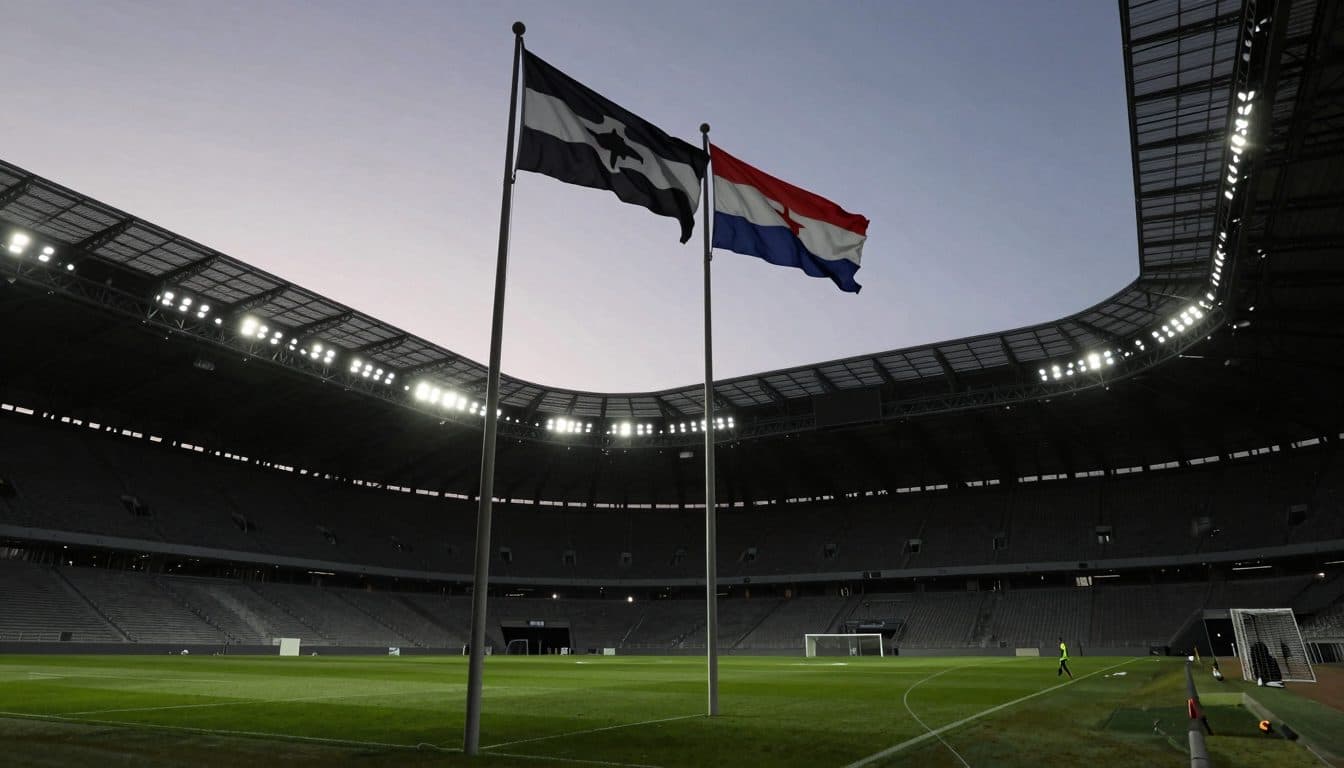
AI-generated image (z-image via Kie.ai)
Summary
France's national coach Didier Deschamps is set for his 26th World Cup match as coach and his third consecutive semifinal, this time on Tuesday (9:00 p.m.) against Spain in Arlington. The 57-year-old, who is stepping down after the tournament, is looking ahead to the outright record for the most World Cup appearances as head coach – and to a team that leading experts are lavishing with praise.
Arlington, July 13, 2026
France's national coach Didier Deschamps will contest his 26th World Cup match as head coach on Tuesday (9:00 p.m., ZDF and MagentaTV) in Arlington near Dallas, in the blockbuster semifinal against Spain, and would thereby claim the outright record for the most World Cup matches as coach.
What is new since the last update
Update of July 13, 2026: Ahead of the semifinal against Spain, Didier Deschamps once again described his team as a sworn unit and bowed before his superstar Kylian Mbappé. Compared to the previous version of this article, the focus is now on Deschamps' own words before the game, the voices of Jürgen Klopp and Mats Hummels as TV pundits, the specific look at the round of 16 against Paraguay, and the historic record context. The personal tragedy that has been known since the last report – the death of Deschamps' mother during the group stage – remains part of the background.
The coach before the final big stage
France's fans are eagerly anticipating the duel with the European champions of Spain, which many consider a premature final of this tournament. For Les Bleus, it would be the third consecutive reaching of a World Cup final, and for the coach, the provisional pinnacle of a tenure that ends in the summer. Even before the French team's first appearance in North America, Mbappé had announced his intention to give Deschamps "the greatest World Cup of all time" as a farewell gift.
Before kickoff, the coach found clearly appreciative words for his captain. "I am proud to have this team," said Deschamps, adding that the players wearing France's jersey had an obligation to the fans and to the people back home. "Everyone fights for the group," said Deschamps. Captain Mbappé, with his demeanor on and off the pitch, was a true "role model" – on and off the pitch.
Personal pain, human gestures
The summer had begun heavily for Deschamps on a personal level. During the group stage, his mother had passed away; the coach had returned to France for the funeral before rejoining the squad. Mbappé showed great empathy during his goal celebration and expressed words of condolence to his coach – a gesture that generated considerable sympathy in France.
Praise from Klopp and Hummels
Not only because of these human moments is the 57-year-old considered the architect of a collective that has impressed leading football minds. Jürgen Klopp, who is covering the tournament as a TV pundit, drew a comparison using the Bayern dribbler Michael Olise: "If you toss the ball to Olise, he takes it and gives it back to you four weeks later." Under Deschamps, that is definitely not the case. "They don't do that on their own," explained Klopp, referring to the strong interplay of France's attacking stars and their willingness to also work defensively. "Someone must have told these players to do that."
Mats Hummels, serving as a TV pundit at MagentaTV, was similarly impressed: "He knows how to lead teams," said the former German international. Klopp and Hummels alike pointed to a coach who bears the nickname "the General" in France – commitment, discipline, but also heart and camaraderie are his hallmarks.
This togetherness was reflected in the tournament's progression. After a patient opening against Senegal (3-1) and a convincing display against Iraq (3-0), the team showcased champagne football in the round of 16 against Sweden (3-0), with Mbappé and Olise outstanding. The round of 16 against Paraguay, which Deschamps' team won 1-0, also required discipline: with a cool head, refusing to be provoked, and admirably patient, the team overcame the overly physical Paraguayans. Relief was followed by a gesture that went viral: after the heated victory, Deschamps stuck out his tongue in relief.
From the Paraguay drama to the Morocco victory
The path to the semifinal thus far underscores the balance between control and further playing development. It speaks well of Deschamps that, given his formidable squad, he also initiated a playing evolution of his eleven. After the quarterfinal, in which France defeated Morocco and Mbappé hugged winger Désiré Doué, attention turned to the duel with Spain on Tuesday.
Against the Spanish team, which entered the tournament as reigning European champion, France goes into the match as a two-time world champion (1998, 2018). Meanwhile, the current squad has nothing in common with the French ensemble that clashed with former coach Raymond Domenech at the 2010 World Cup, staged a training strike, and read out a statement to the press – only to become a laughingstock. Instead, over 14 years, Deschamps has step by step molded a team according to his vision: defensively solid, patient in build-up play, and ice-cold in front of goal.
Record, history, and motto
Historically, the match represents another milestone for Deschamps. He has been France's national coach since 2012 and currently shares the record for the most World Cup matches as head coach with Helmut Schön. Starting Tuesday, he will hold that record outright. Only Vittorio Pozzo has previously won two World Cup titles as a coach (1934 and 1938 with Italy); alongside Deschamps, only Franz Beckenbauer and Mario Zagallo have won the World Cup both as players and as head coaches.
For Deschamps himself, the motto remains clear. His credo: "The game itself doesn't interest him all that much – only winning." At the same time, he emphasized what matters to the 57-year-old: human closeness and togetherness. The players, he explained, have an obligation to the fans and to the people back home. His emotions – whether the relief after the Paraguay match or the grief over his mother – have impressively reflected what matters to the coach.
A memorable date: July 14
France can additionally count on a symbolic day on Tuesday: on July 14, the day of the semifinal, the Republic celebrates its national holiday, Bastille Day. A victory over Spain would be the biggest step yet toward a third consecutive World Cup final appearance – and a fitting farewell for a coach who has shaped his team over 14 years. The final is scheduled for Sunday in East Rutherford.
There is also great anticipation over who will succeed Deschamps after the tournament. According to reports, Zinedine Zidane is said to be ready to take over as coach of Les Bleus. Until then, however, the focus is on the duel with Spain, which is meant to provide the next proof that under the General from France, the sum total is greater than that of brilliant individual stars.
Questions & Answers
Who is Didier Deschamps, and why is the semifinal against Spain particularly significant for him?
Didier Deschamps has been the head coach of the French national team since 2012 and will leave the team after the 2026 World Cup. The match against Spain on Tuesday is his 26th World Cup appearance as head coach and would give him the outright record for the most World Cup matches as a coach.
How has France developed under Deschamps?
From a world champion squad won as a player (1998), Deschamps shaped over 14 years a defensively stable and free-flowing eleven that also won the World Cup title as a coach in 2018 and is now appearing in the World Cup semifinal for the third time in a row.
What role does Kylian Mbappé play in the team and at this tournament?
Mbappé leads the team as captain, plays as a striker for Real Madrid, and is described by Deschamps as a true "role model" on and off the pitch; before the tournament, he had announced his intention to give Deschamps the greatest World Cup of all time as a farewell.
Deschamps ahead of semifinal France – Spain: The General | allfacts360