Dresden University of Fine Arts Warns Against Radical Cuts
Dresden, 17 July 2026
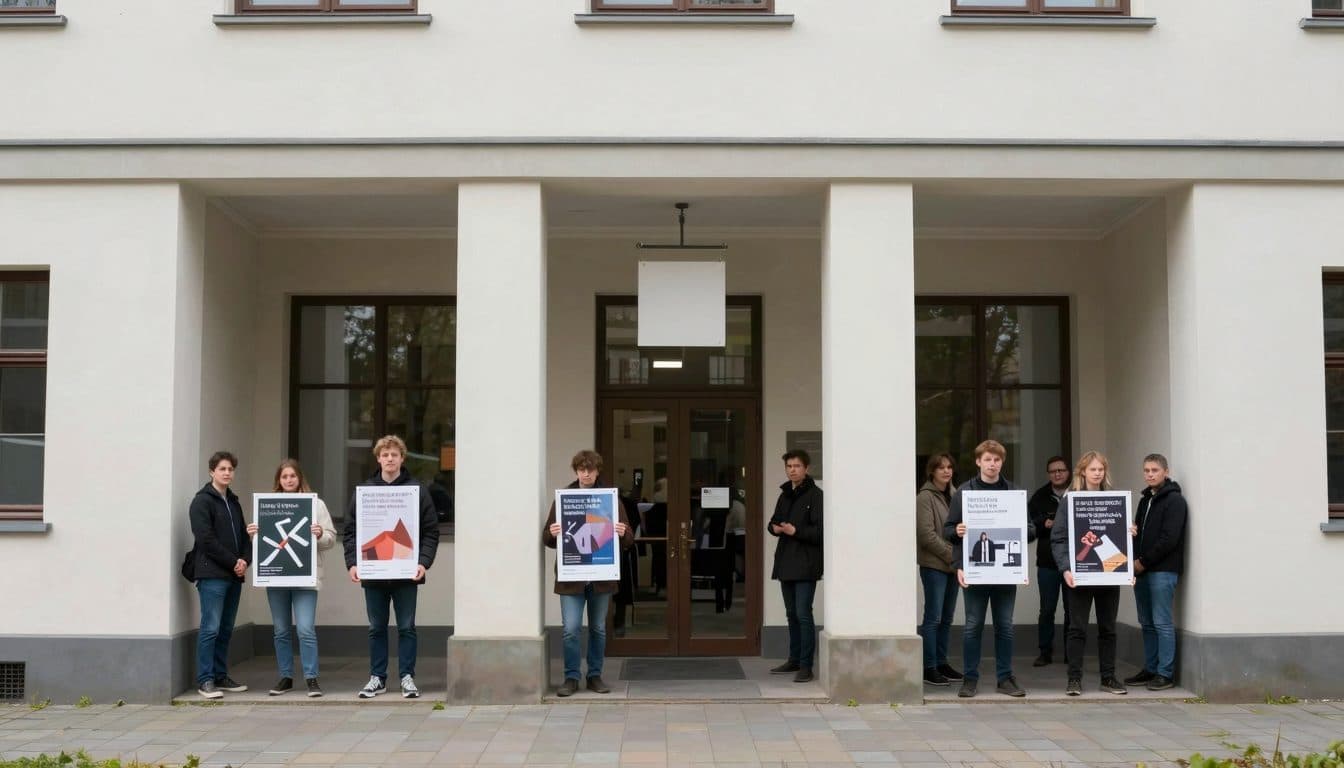
AI-generated image (z-image via Kie.ai)
Summary
The Dresden University of Fine Arts anticipates losses of half a million euros each for 2027 and 2028 and warns against cuts to teaching and research. Rector Oliver Kossack, in an interview with MDR KULTUR, spoke of the university's precarious position and structural challenges.
Dresden, 17 July 2026
The Dresden Academy of Fine Arts (HFKD) has commented on the draft of the Saxon state biennial budget for 2027/2028 with a stark warning: The economic plan foresees a loss of half a million euros each year, in addition to foreseeable cuts in current expenditure and investments.
Biennial Budget with Gaps
As early as the beginning of July, the Saxon state government had presented the draft for the 2027/2028 biennial budget. Embedded within it are the funding levels for the universities in the free state. The HFKD is now for the first time publicly quantifying the shortfall: In both years, a deficit of 500,000 euros is looming, which, according to the university, can no longer be covered solely from its own reserves. From 2029 onwards, this will also no longer be possible, as the university further stated.
"Even when money is tight, we can maintain the broadly based research landscape with universities and research institutions and strengthen key areas," explained the responsible Science Minister after the presentation of the biennial budget. At the same time, he acknowledged that funding is limited. The total Saxon budget therefore reaches 53.5 billion euros, a record value.
Rector warns against far-reaching cuts
According to Rector Oliver Kossack, the precarious financial situation of the HFKD is further intensifying. In a conversation with MDR KULTUR, he spoke of a "precarious position" for the university. They were no longer talking about cuts that could be absorbed through organizational adjustments, emphasized Kossack: "We are facing structural challenges that would fundamentally change the study operations." In daily university life, one must now "reallocate every euro," the rector further stated.
The HFKD points out in a statement that the described budgetary situation exists in a similar way at other Saxon universities. With this, the university extends its warning beyond its own situation to the entire Saxon university system. The school demands that politics compensate for the structural underfunding of recent years, as subsidies for current expenditure and investments have hardly grown since the 2010s.
Statement from the University
If the planned austerity measures were to take effect, this would have immediate consequences for personnel and study operations. According to the university, cuts in personnel expenditure are also to be expected: "This naturally has a direct impact on student support, the quality of teaching, artistic practice, research, and also knowledge transfer," states an HFKD announcement. The university is currently in discussions with external partners and the Science Ministry to find solutions.
Not only are Saxon universities under pressure, but schools in the state are as well. In parallel to the budget debate, the issue of heat stress in classrooms is sparking discussion. According to the general secretary of the board, Amy Kirchhoff, schools are not being considered in the current debate, even though children and young people have to learn in dilapidated buildings with room temperatures over 30 degrees. Portals like "School Heatmap," where schools can register their temperatures, documented classroom temperatures of up to 45 degrees this summer.
Heat and heat protection in schools
GEW chairperson Finnern called for a change of course in this context. Instead of "helpless heat protection plans" with ventilation recommendations, the modernization of schools with a focus on heat protection must be driven forward, she said. "We are falling behind again because we are not a voting group," she declared in a statement to the media outlet Correctiv. Dealing with heat is a major mental and health burden for students.
Irrespective of this, a harsher austerity round in the education sector is also up for discussion in Berlin. Berlin's Senator for Transport, Bonde, showed openness to cuts in the free public transport ticket for students in an interview with the "Tagesspiegel." "Currently, it would be the case that the elimination of the subsidy for the free student ticket would lead to savings of a total of 106.4 million euros in the years 2026/2027," she said. "We need to be honest. What infrastructure do we need in the city, and what do we spend on consumption-related items?"
Austerity debate in Berlin
"For the socially underprivileged, it is completely undisputed that the offer should remain. For well-off groups, I am questioning it," Bonde continued. "It needs to be examined whether all students really need a free student ticket and school meals," Bonde told the "Tagesspiegel." Thus, the Berlin debate on school and infrastructure spending is intensifying, independent of the situation in Saxony.
Meanwhile, the Dresden Academy of Fine Arts is inviting to its summer festival and annual exhibitions. On Thursday, 17 July, the exhibitions of Faculty I (Fine Arts) and Faculty II (Conservation, Stage and Costume Design, Theatre Design, Art Therapy) will open, along with a program at the locations Güntzstraße 34 and Pfotenhauerstraße 81/83. Opening hours are from 11 am to 6 pm, and admission is free. Against the backdrop of the budgetary situation, the showcase of artistic work at the university currently appears in a particularly sensitive light.
It remains possible that the Saxon state government will adjust the budget during the ongoing budgetary deliberations. Until then, the HFKD intends to continue its dialogue with external partners and the Science Ministry to limit the consequences for teaching and research. With a view to the state as a whole, the university maintains that the reported problems affect not only its own institution but the entire higher education landscape of Saxony.
Questions & Answers
Who is Oliver Kossack?
Oliver Kossack is the Rector of the Dresden Academy of Fine Arts (HFKD). In an interview with MDR KULTUR, he commented on the budget situation and warned against radical cuts.
Why is the HFKD lacking funds?
According to the university, subsidies for current expenditure and investments have hardly grown since the 2010s, while the economic plan for 2027 and 2028 foresees a loss of 500,000 euros each year.
What are the consequences of the threatened cuts for students?
The university anticipates cuts in personnel expenditure, which would directly impact support, teaching, artistic practice, and research, and intends to seek solutions with external partners and the Science Ministry.
HFKD Dresden: Rector warns against cuts for 2027/2028 | allfacts360