EU ban on destroying unsold fashion takes effect: What companies must now consider
Brussels, 19 July 2026
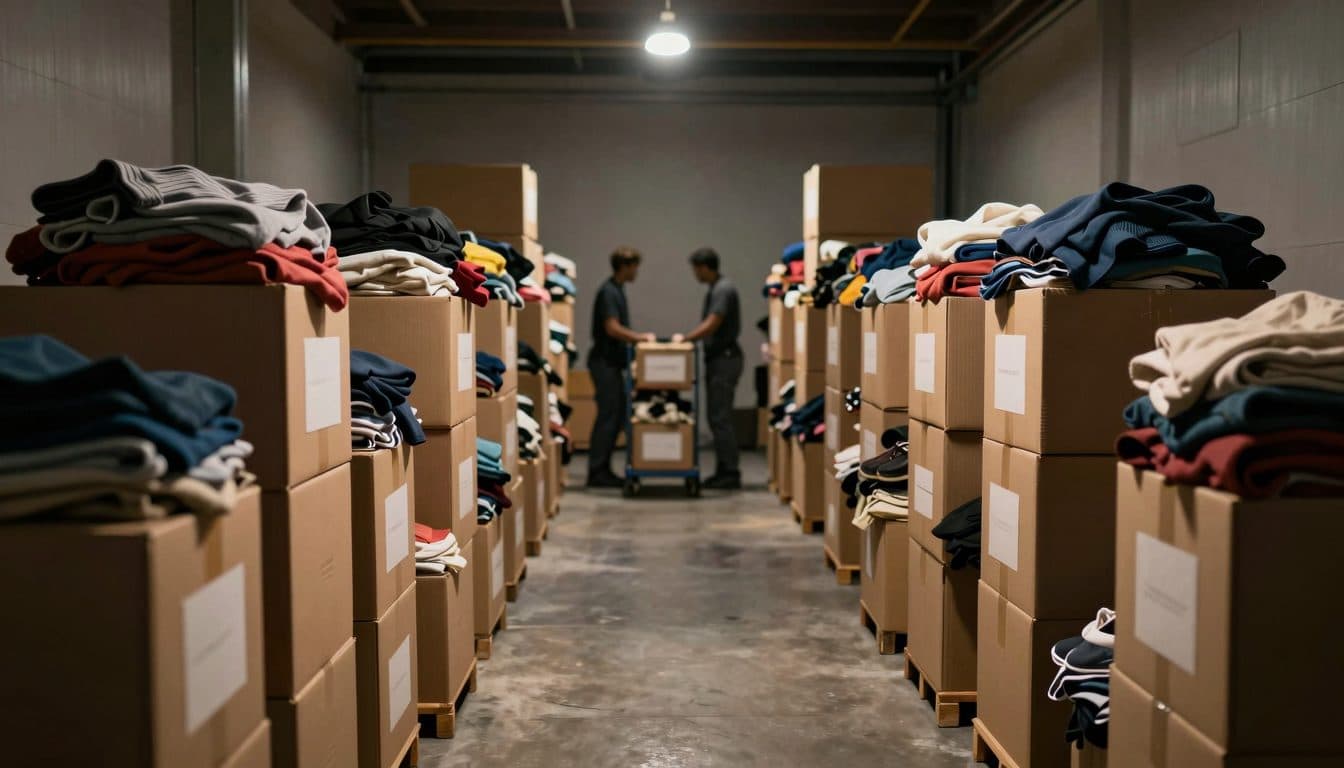
AI-generated image (z-image via Kie.ai)
Summary
A new EU regulation prohibits large companies from destroying unsold clothing and shoes as of now. Smaller firms must comply with the requirements only from 2030; at the same time, environmental groups are warning of loopholes and retail associations of additional burdens.
Brussels, 19 July 2026
A new EU regulation prohibits large companies in the European Union from destroying unsold clothing and shoes as of the day of publication, according to a decision by the EU Commission that was already adopted in 2023 as part of an Ecodesign Directive.
Among other things, the aim of the regulation is to produce less waste. According to the Commission, an estimated up to nine percent of unsold textiles in Europe are destroyed before they are ever worn. These discarded stocks cause around 5.6 million tonnes of CO2 emissions per year, according to the EU Commission.
Figures: How much fashion is destroyed
In Germany alone, almost 20 million returned items are disposed of every year. Under the new regulation, affected companies must resell or donate unsold goods in the future instead of destroying them. Disposal of the goods is only permitted under certain circumstances, for example if they have been damaged.
The regulation provides for exemptions when the goods are dangerous, damaged, contaminated, or cannot be reused or further processed. Donation offers made to several social economy organizations based in the EU that are not accepted within a deadline may also be destroyed.
Exceptions and transition periods
For smaller companies, the new requirements will only take effect from 2030. According to the text of the regulation, this is intended to enable a gradual adjustment to the obligations without disproportionately burdening small retailers and brands.
The German Retail Association (HDE) takes a mixed view of the situation. Chief Executive Stefan Genth said that, according to Chief Executive Stefan Genth, the supply of reduced-price goods could increase, for example through outlets, remainder markets, or second-hand channels. This would lead to ecological benefits, as less like-new clothing is destroyed and products are more frequently resold or donated.
At the same time, Genth warned that not all unsold goods can easily be resold or donated. Damaged packaging, high logistics costs, lack of demand, or low product value often stand in the way. According to HDE information, retailers face additional costs for storage, sorting, preparation, remarketing, and documentation obligations, along with legal uncertainties and practical hurdles when donating or selling second-hand.
Criticism from industry
The Federation of the German Textile and Fashion Industry criticized the law as out of touch with reality. It burdens domestic industry with bureaucracy and does not address the actual fast-fashion problems. Within the HDE as well, it was said that retailers would nevertheless face a significant additional burden.
Thomas Lange, Chief Executive of the fashion association GermanFashion, demanded that non-European providers have to contribute to the same extent as European manufacturers to the costs of collecting, sorting, and recycling old textiles. For many European clothing companies, the regulation will have little impact because unsold goods are generally not destroyed anyway, Lange said. The real challenge lies in the large volumes of cheap ultra-fast-fashion products that consumers order directly from non-European providers.
Reactions from environmental groups and academia
Lange also stressed that clothing is a valuable product whose destruction should be avoided. While he thus underscored the fundamental aim of the regulation, he considered its practical reach in everyday life to be limited.
The response from academia was also mixed. Jonas Stracke said that functioning structures for collection, sorting, and recycling are needed for greater sustainability. Without these prerequisites, the destruction ban remains "a paper tiger" and unfortunately makes no real contribution to the circular economy in practice.
Environmental organizations see significant weaknesses. Moritz Jäger-Roschko of Greenpeace warned that companies can easily circumvent the rules, for example through false declarations of products. Without consistent checks, nothing will change in practice. The NGO is therefore calling for stricter monitoring and sanction mechanisms.
Silke Düwel-Rieth of the WWF drew a similar line: It will only become effective when the requirements are consistently monitored and enforced by the responsible authorities. A law is only as good as its enforcement, Düwel-Rieth added.
Consequences for consumers and authorities
Stracke also pointed to the upcoming time pressure for the second stage. From 2030, smaller companies will also have to market or donate their stocks, provided no exception applies. This will significantly increase the need for collection and recycling infrastructure once again.
The regulation is also indirectly noticeable for consumers. Genth expects that more goods will be offered through remainder markets, outlets, and second-hand channels. This could change the range in these distribution channels and possibly prices as well.
National implementation in Germany is the responsibility of the relevant market surveillance authorities of the federal states. In the future, they will have to check whether large retailers can document the destruction of unsold goods and justify it in line with the exceptions. Exactly how the checks will be designed has not yet been finally settled.
Overall, it is becoming apparent that with the destruction ban, the EU is putting another building block of its circular economy strategy into force. Whether the targeted reduction in textile waste actually materializes depends, in the assessment of all actors consulted, crucially on whether functioning collection and recycling structures are built up in parallel and violations are consistently sanctioned.
The news was broadcast on 19.07.2026 on the program Deutschlandfunk.
Questions & Answers
Which companies are affected by the new EU regulation?
The regulation applies from the day of publication to large companies in the European Union. For smaller companies, the new requirements only take effect from 2030.
What exceptions to the destruction ban are provided for?
The regulation permits disposal, among other things, when the goods are dangerous, damaged, or contaminated, or cannot be reused and cannot be further processed. Donation offers to EU social economy organizations that are not accepted may also be destroyed.
Why are environmental groups criticizing the new law?
Greenpeace and the WWF warn that companies could easily circumvent the rules, for example through false declarations. Without consistent checks, nothing will change in practice, according to Silke Düwel-Rieth of the WWF.
EU textile destruction ban 2026: Rules, exemptions | allfacts360