EU Commission relaxes debt rules for energy transition | allfacts360
EU Commission wants to relax debt rules for energy transition
Berlin, June 03, 2026
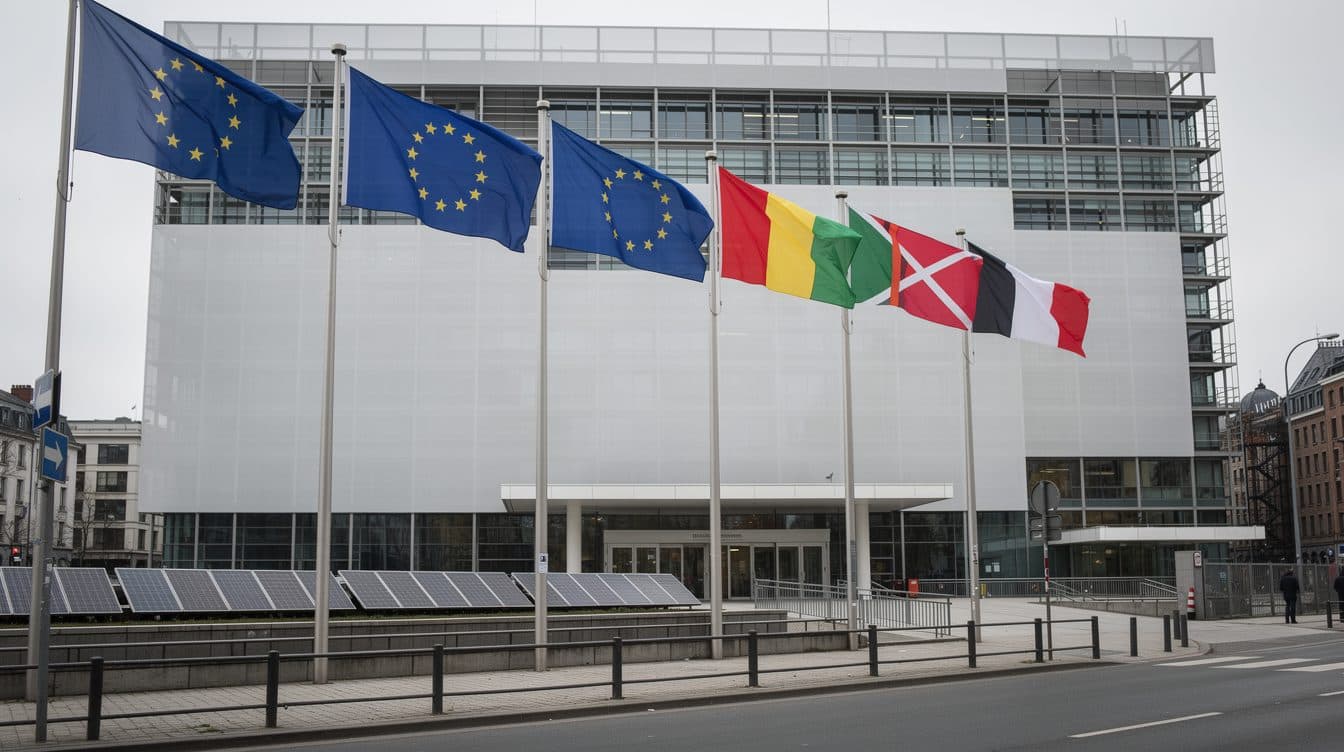
AI-generated image (flux-2/pro-text-to-image via Kie.ai)
Summary
The EU Commission proposes to allow investments in the energy transition under the existing defense exception clause of the EU debt rules in the future. For Germany, this could mathematically enable additional investments of around 27 billion euros.
Berlin, June 03, 2026
The European Commission has proposed to further relax the current EU debt rules to allow member states to incur more debt for investments in the energy transition.
What the Commission Proposes
The Brussels authority's proposal stipulates that spending on the energy transition will in future fall under an existing exception clause of the EU debt rules, which was originally created for defense spending. According to the draft, a leeway of up to 0.3 percent of gross domestic product (GDP) per year should be allowed for use in the current year as well as in 2027 and 2028. Over the three years, this means an upper limit of a total of 0.6 percent of GDP for energy transition spending.
The background is the escalating situation in global energy markets. The EU Commission points to the instability in the Middle East and the de facto blockade of the Strait of Hormuz, one of the most important trade routes for crude oil. As a result, crude oil prices have risen significantly, burdening companies and consumers in Europe. The Commission wants to enable investments through the relaxation that reduce dependence on imported fossil fuels.
Leeway Between Defense and Energy
The fact that the leeway for defense and energy compete under the same exception clause is one of the politically sensitive points of the proposal. Since last year, EU member states have been allowed to exceed debt limits for defense investments upon request. Germany and around 15 other EU countries are already using this option and can thus spend up to an additional 1.5 percent of GDP on defense over four years without having to fear a deficit procedure. In the future, part of this corridor should also be available for energy projects.
For Germany, the innovation would result in an additional investment volume of around 27 billion euros, calculated on the basis of the 2025 GDP. Other estimates assume more than 25 billion euros. This would allow the Federal Republic to invest more heavily in photovoltaic systems, heat pumps, the electrification of consumption, and the expansion of energy grids.
Justification: Energy Market Crisis
The EU Commission justifies the step with a renewed energy crisis. In its spring forecasts, it points to a slowdown in European growth and an increase in inflation for 2026, both driven by rising energy commodity prices. Generalized and open-ended aid, based on the experience of the 2022 energy crisis, has proven to be expensive for public budgets and not very effective, according to Brussels.
According to Executive Vice-President and Commissioner for Economic Affairs Valdis Dombrovskis, blanket support measures for fossil fuels are to be explicitly excluded. When asked whether possible measures could also include tax cuts on energy or reductions in excise duties, Dombrovskis replied with a clear "No." The Commission insists that the measures must be time-limited, targeted, and compatible with the goals of the energy transition.
What Can Be Financed with the Money?
According to the Commission's wishes, eligible measures would include incentives for the purchase of electric vehicles, the replacement of gas and oil heating systems with heat pumps, the installation of photovoltaic systems and home storage, as well as investments in energy grids and the electrification of consumption. Spending incurred since February 2026 that reduces dependence on imported fossil fuels will also fall under the regulation.
Italy and Spain have been vocal in recent months in advocating for more flexibility in debt rules. Italian Prime Minister Giorgia Meloni had called for a special regulation modeled on the defense clause in a letter to Commission President Ursula von der Leyen. Italian Economy Minister Giancarlo Giorgetti described the current proposal as "unthinkable" just a few months ago. Spain is demanding that certain energy and transformation expenditures for the green transition be treated differently from ordinary state expenditures.
Italy and Spain as Drivers
It is currently unclear whether a member state can use the clause exclusively for energy expenditures or whether a connection to defense expenditures, the original purpose of the National Escape Clause (NEC), must be maintained. Dombrovskis clarified that the clause does not impose spending obligations but merely opens up additional leeway.
In Brussels, there are concerns that the original goal of the debt exception, the rearmament of the EU, could be lost sight of. The Commission estimates that additional defense investments of around 500 billion euros will be necessary in the coming years, partly due to Russia's war of aggression. Defense and energy spending would thus share the same fiscal leeway.
With the extended flexibility, the European Commission wants to expand the so-called NEC scope, which was introduced in 2025 to enable higher military spending without triggering new European fiscal procedures. The expansion is intended to cover exclusively investments and interventions that strengthen energy resilience and reduce dependence on imported fossil fuels. The energy leeway will remain under the existing cap of 1.5 percent of GDP, which is already provided for the defense clause.
Open Questions and Outlook
In its European Semester 2026 recommendations to Italy, the Commission had still urged consolidation of public finances, accelerated implementation of the national recovery and resilience plan, strengthening of research and innovation, and the continuation of the energy transition. The current proposal visibly shifts the balance without fundamentally abandoning the consolidation path.
The EU debt rules stipulate that a member state's total debt must not exceed 60 percent of economic output and the annual deficit must remain below 3 percent of GDP. With the expanded exception clause, governments gain additional leeway without having to immediately violate these thresholds.
Whether the proposal will hold in its presented form is open. It still needs to be debated in the Council and the European Parliament. Observers expect partly intensive negotiations, as not all member states want to share the spending corridor between defense and energy.
Overall, the Brussels initiative aims to make Europe more crisis-proof. The combination of military threat from Russia, tense energy supply in the Middle East, and rising consumer prices has once again made the continent's economic and geopolitical vulnerability clear, according to the Commission.
For consumers in Germany, the regulation could become noticeable in the medium term in the form of cheaper or more subsidized climate-friendly technologies, such as heat pumps, PV systems, or e-cars. In the short term, however, energy prices are unlikely to change much.
Questions & Answers
What exactly has the EU Commission proposed?
The EU Commission wants to extend the existing exception clause of the EU debt rules, which was created for defense spending, to investments in the energy transition. Accordingly, up to 0.3 percent of GDP would be allowed this year as well as in 2027 and 2028, totaling 0.6 percent of GDP over three years.
How much money could Germany mobilize additionally?
Based on Germany's 2025 GDP, an additional leeway of around 27 billion euros for energy transition investments would be possible, with other estimates assuming more than 25 billion euros.
What measures are to be financed with the money?
According to the Commission, eligible measures would include incentives for electric cars, the replacement of gas and oil heating systems with heat pumps, photovoltaic systems, home storage, as well as investments in energy grids and the electrification of consumption.