CEAS reform enters into force: this is how EU asylum policy | allfacts360
EU Common European Asylum System CEAS reform enters into force after a decade of negotiations
Brussels, 12 June 2026
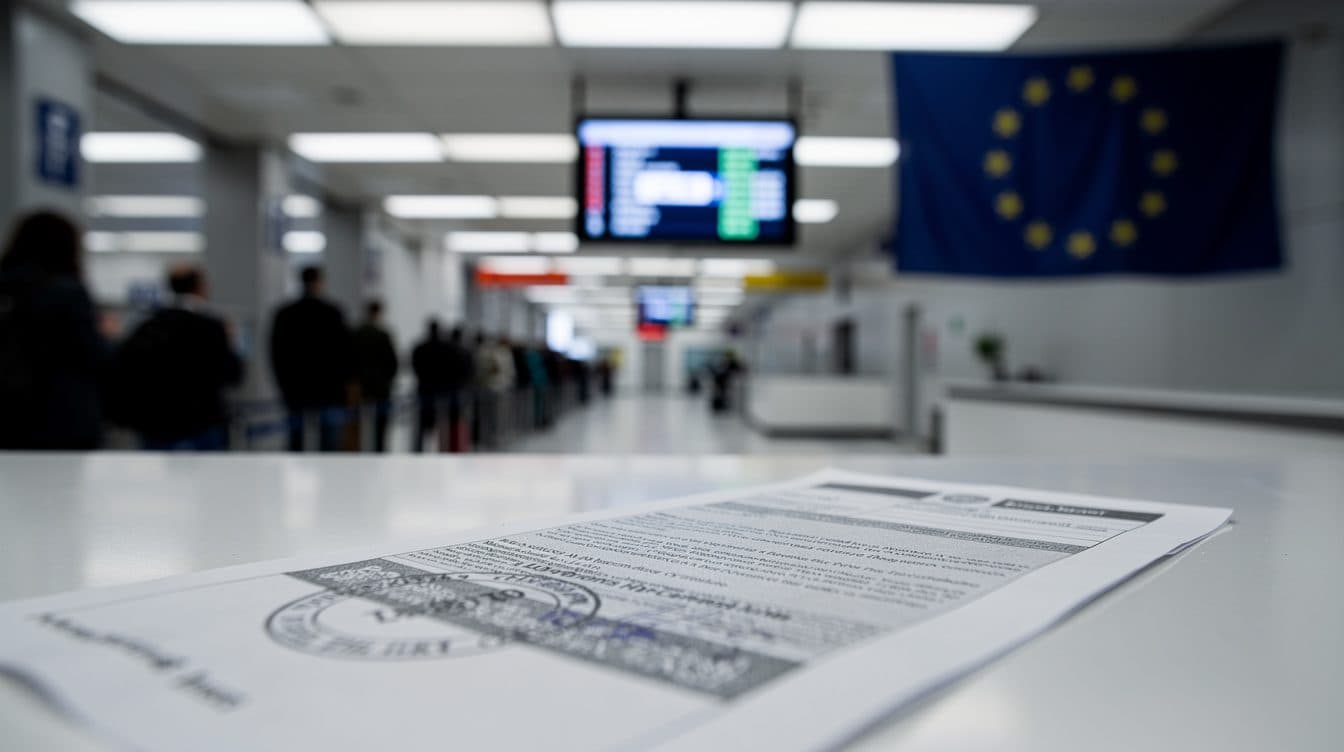
AI-generated image (flux-2/pro-text-to-image via Kie.ai)
Summary
On 12 June 2026, the reform of the Common European Asylum System entered into force, introducing accelerated border procedures, a binding but flexible solidarity mechanism, and a new screening system. Numerous Member States, including Germany, Austria, Hungary, Poland, and the Czech Republic, are not yet fully prepared to implement all the measures.
Brussels, 12 June 2026
The reform of the Common European Asylum System (CEAS) entered into force on 12 June 2026 in the 27 Member States of the European Union, introducing border procedures, a binding solidarity mechanism, and a mandatory screening system for all migrants in an irregular situation.
What's new since the 12 June 2026 entry into force
Update of 12 June 2026: the new Common European Asylum System (CEAS) is officially applicable in the Twenty-Seven as of this Thursday, following more than five years of negotiations and two and a half years after its formal adoption in April 2024. The reform, which consists of one directive and nine directly applicable regulations, addresses the weaknesses of the Dublin system exposed during the large migration movements of 2015 and 2016, according to the European Commission.
The stated objective is to relieve national asylum systems, reduce secondary migration within the EU, and establish uniform procedures at the external borders. As the Commission stated: "Die wichtigsten Teile des Gemeinsamen Europäischen Asylsystems sind, dass der Außengrenzschutz besser wird und dass die Asylverfahren an den Außengrenzen effizient umgesetzt werden."
The border procedure, the cornerstone of the reform
One of the most significant changes is the introduction of a border procedure for applicants with low prospects of protection. People from countries with a recognition rate below 20 percent, those who provide false information about their identity, or those considered a security risk will be subject to an accelerated procedure or, at the external border, to a border procedure. These procedures have a maximum duration of twelve weeks, extendable to sixteen in exceptional cases.
During the border procedure, applicants are legally considered not to have entered the territory of the EU, they remain in camps, and they cannot move freely within the Community area, although they may leave it. Unaccompanied minors are exempt from this procedure.
Mandatory screening and procedure allocation
The new system also provides for a mandatory screening procedure within a few days for all persons arriving at the external border or intercepted on the territory of a Member State. This screening includes identity verification, a preliminary medical examination, and the identification of special needs or vulnerabilities, along with the recording of fingerprints and biometric data in the Eurodac database.
Following the screening, applicants are assigned to an ordinary, border, or accelerated procedure. Nationals of countries with recognition rates above 20 percent, such as Sudan, Afghanistan, or Haiti, will access the ordinary procedure, while the rest will be channelled into the rapid or border modalities.
The solidarity mechanism: relocations, money, or personnel
The central solidarity component provides for the transfer of up to 30,000 people per year from the main first-arrival countries to less pressured Member States, as well as financial contributions totalling 420 million euros or the deployment of personnel. In practice, the goal is to relocate at least 21,000 people annually.
Germany, for example, is obliged to maintain 374 places in accommodation for fast asylum procedures at airports such as Frankfurt, Munich, or Düsseldorf, some of which are still under construction. The figure was confirmed by sources at the federal Ministry of the Interior.
In Austria, which is currently exempt from solidarity obligations, an asylum terminal in Schwechat is still being built until 2027. There are currently containers for about 40 people at that site, according to data from the Der Standard report.
Political reactions: between "milestone" and "political bluff"
The Austrian Interior Minister, Gerhard Karner (ÖVP), described the reform as a "Meilenstein" (milestone), although he warned that it is not a "Wundertüte" (bag of miracles). The European Commissioner for Migration, Magnus Brunner (ÖVP), described it as "Das ist der Start einer entschlossenen, aber auch fairen Asylpolitik" ("the start of a determined but also fair asylum policy") and considered it a key piece "für unsere große europäische Migrationswende" ("for our great European migration turning point").
Commissioner Brunner stated that "Die Mitgliedstaaten sind auf sehr gutem Weg" ("the Member States are on a very good track") in implementation. However, migration expert Gerald Knaus described the solidarity mechanism to the APA as a "politischen Bluff" ("political bluff"), noting that Greece has received substantial funds in the past and has still allowed people to move northwards.
Lukas Gahleitner-Gertz, from the Asylkoordination organisation, called it "Solidarität a la carte", given that states can choose between relocations, financial contributions, or the deployment of personnel, and considered that the reform does not represent a paradigm shift, but "sondern viel stärker eine Vertiefung des bisherigen Systems" ("but rather much more a deepening of the existing system").
Migration researcher Judith Kohlenberger, a board member of Integrationshaus, assessed that the reform contains "Licht und Schatten" ("light and shade") and warned that border procedures can generate "haftähnlichen Bedingungen" ("detention-like conditions") and hinder access to legal assistance. She also raised the open political question: "Was, wenn das, was man sich davon versprochen hat – nämlich den Aufstieg der Rechtsaußenparteien zu stoppen – nicht eintritt?" ("What if what was promised from it – namely stopping the rise of the far-right parties – does not come to pass?").
Médecins Sans Frontières (MSF) described the pact as "krank machend" ("making people sick") for protection applicants, joining the criticism of human rights organisations warning of the increase in deprivation of liberty for refugees. Karsten Dietze, migration expert at Save the Children Germany, stated: "Im Grenzverfahren wird so getan, als wären Personen, die in die EU eingereist sind, nicht eingereist" ("In the border procedure, it is acted as if persons who entered the EU had not entered").
Human rights criticism and debate in Germany and Austria
At the national level, the German SPD is pushing to eliminate border controls. SPD security expert Daniel Baldy, from the Mainz district, welcomed the entry into force of CEAS: "Das bedeutet auch, dass Grenzkontrollen zeitnah abgebaut werden müssen, wie es an der luxemburgischen Grenze ja bereits eingeleitet wurde" ("This also means that border controls must be dismantled promptly, as has already been initiated at the Luxembourg border"). Greens MP Julian Joswig, from the Moselle/Rhine-Hunsrück district, considered, on the contrary, that whoever continues to control "stellt nationale Symbolpolitik über europäisches Recht" ("places national symbolic politics above European law").
The German Ministry of the Interior reminded SWR in writing that temporary controls at German land borders will be maintained until 15 September 2026 and that "Diese Grenzkontrollen sind aus den bisherigen migrations- und sicherheitspolitischen Gründen weiterhin notwendig" ("these border controls remain necessary for the current migration and security policy reasons"), although their continuation after mid-September will depend on the effectiveness of the new system.
Austria also approved, alongside the CEAS reform, a family reunification quota in May as part of the so-called Asylum and Migration Pact Adaptation Act (AMPAG), which critics consider illegal and which does not form part of the European framework. In this country, subsidiary protection will henceforth be granted only when the threat comes from an "Akteur" (actor), and in cases such as the risk of famine, a new residence title with associated disadvantages will be issued. Appeals against negative decisions in accelerated procedures will no longer have automatic suspensive effect, with those affected having to apply separately for a "Recht auf Verbleib" (right to remain).
"Return Hubs" and the externalisation of migration
The reform also envisages the future creation of "Return Hubs" in third countries outside the EU, with Uganda, Rwanda, Libya, Mauritania, and Ethiopia frequently mentioned. Brunner stated: "Unser Ziel ist es, dass wir in diesem Jahr Vereinbarungen zum Aufbau von 'Return Hubs' mit Drittstaaten treffen können" ("Our goal is to be able to conclude agreements this year for the establishment of 'Return Hubs' with third states"). According to observers, this is the symbol of the European will to increasingly externalise the migration challenge.
Regarding litigation, Gahleitner-Gertz anticipates "massive Auswirkungen" ("massive repercussions") on procedural rights, with shortened appeal deadlines, and foresees numerous lawsuits and immediate shortages of resources in authorities and courts. Coverage of the package runs in parallel with the CJEU decision that declared German cuts to asylum benefits partially illegal.
Context data show that, according to Frontex, in the first five months of 2026, 40 percent fewer people entered the EU irregularly than in the same period the previous year, with around 39,000 crossings without valid documents. In Germany, first asylum applications fell in May 2026 to their lowest level in thirteen years, two years before which the figure had exceeded one million.
Questions & Answers
What is the Common European Asylum System (CEAS) and when does it enter into force?
CEAS is the set of European asylum and migration rules formally agreed in