EY Forecast: Austrian Construction Industry Hits Its Low Point in 2026
Vienna, July 20, 2026
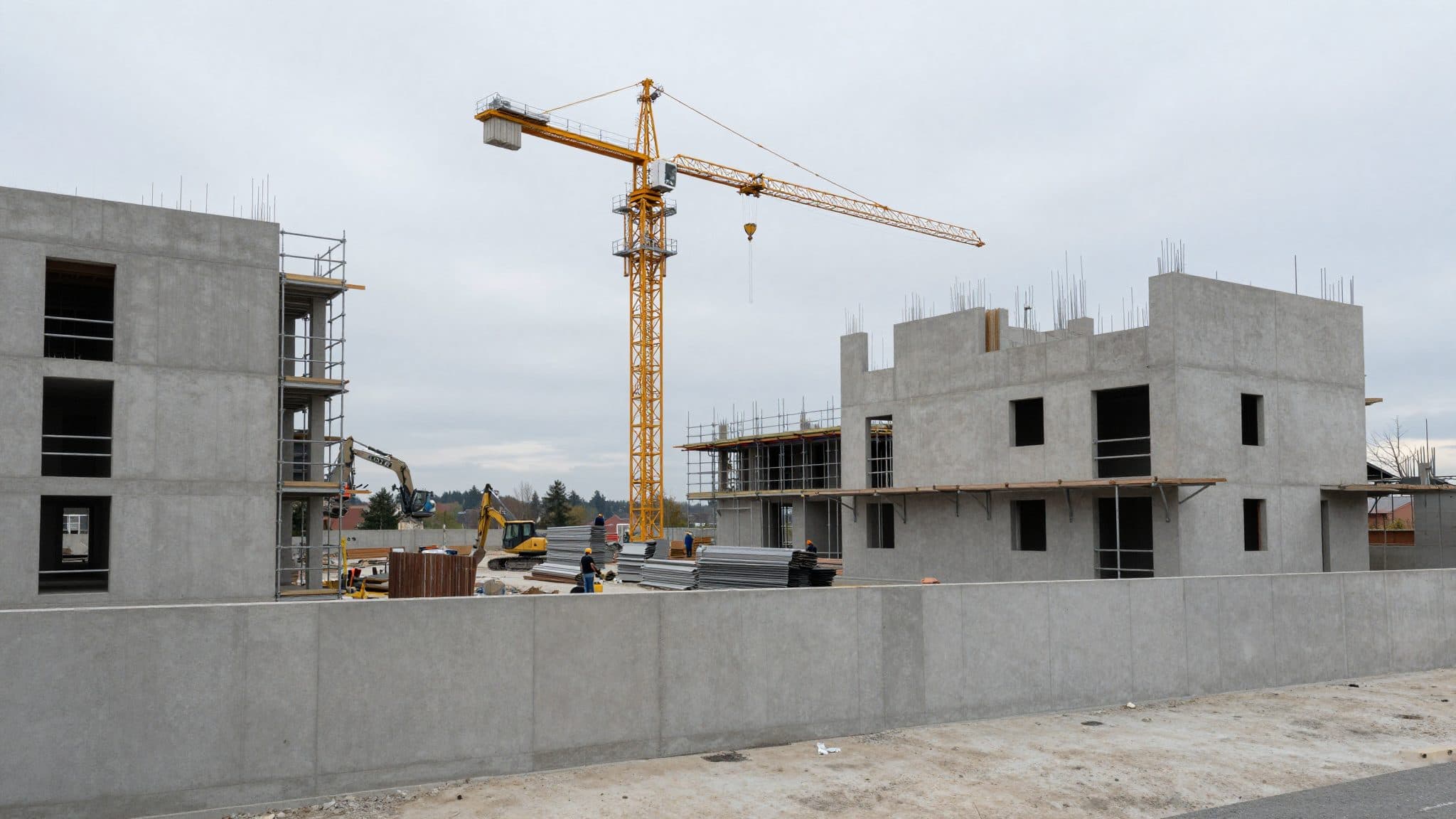
AI-generated image (z-image via Kie.ai)
Summary
The consulting firm EY expects the Austrian construction industry to reach its low point in 2026 and to recover only very modestly by 2028. The main reason is the slump in new residential construction, which has weighed on the entire sector since 2021.
Vienna, July 20, 2026
According to the consulting firm EY, the Austrian construction industry will reach its low point in 2026 and recover only minimally by 2028.
EY's analysis shows that total construction volume in Austria is expected to fall to 51.7 billion euros in 2026. Compared with 2021 at 58.7 billion euros, this represents a real loss of just under twelve percent within five years. "In den vergangenen fünf Jahren habe der Markt damit real knapp zwölf Prozent an Volumen verloren," the consulting firm's forecast states.
Structural engineering – meaning traditional building and residential construction – is particularly hard hit. According to EY, real construction volume here collapsed from 50.6 billion euros in 2021 to 43.3 billion euros last year. A slight decline of 0.3 percent is also expected this year. From 2027, things should pick up slightly, with construction volume rising by 0.7 percent, followed by a gain of 1.1 percent in 2028.
New Residential Construction as the Main Driver of the Crisis
The driver of the crisis is new residential construction, which has collapsed massively in recent years. "Der Wohnungsneubau ist in den vergangenen Jahren ganz stark eingebrochen, deshalb sehen wir diese großen Rückgänge," says Elisabeth Sardy-Rauter, an expert at EY. Infrastructure is three times smaller than residential construction and cannot compensate for the loss. "Wenn der Wohnungsbau schwach bleibt, kann Infrastruktur das nicht auffangen," adds Ralf Seidenspinner, Senior Manager at EY Austria.
According to EY, the causes are manifold. High construction and financing costs, uncertain revenue potential and, in some cases, economically scarce available land have slowed the recovery in new residential construction. In addition, interest rates tend to be on the rise, which in turn does not have a positive effect on inflation. "Viele Projekte, die vor einigen Jahren noch kalkulierbar waren, rechnen sich heute nicht mehr oder nur unter deutlich veränderten Bedingungen," EY says.
The number of building permits also reflects the trend. Compared with 2021 at 23,000 approvals, the level has remained very low. In the residential building segment, the number of approvals last year rose slightly from around 10,500 to 11,000 compared with 2024, but remains far below previous levels. For the period 2025 to 2028, this would amount to average growth of just 0.1 percent per year.
Market Consolidation and Distress Sales
EY expects many project developers to come under pressure. "Fakt ist: Die Krise führt zu einer sehr umfangreichen Marktbereinigung," says Sardy-Rauter. Owners with high operating costs who would also need to renovate are having "durchaus sehr schwierig." "Und da wird es dann den einen oder anderen Notverkauf geben." Projects often no longer add up today because the total costs effectively make the apartments unsellable: "Das alles führt dazu, dass in Summe das Ganze sehr teuer ist, und um das Geld kann ich die Wohnung eigentlich nicht verkaufen."
According to EY, a wave of insolvencies among developers has been underway for two years and is likely to continue. Overall, the consulting firm says the construction industry is more likely "in einer längeren Phase der Stabilisierung und Neuorientierung" than at the start of a new upswing. "Ein kräftiger Aufschwung ist aber nicht in Sicht," EY says. "Deshalb erholt sich der Markt deutlich langsamer, als viele Marktteilnehmende erhofft haben." From Sardy-Rauter's perspective, she expects a sideways movement lasting three to five years.
Infrastructure and Energy: Mixed Signals
The situation in the infrastructure sector is mixed. Real infrastructure volume grew from around 8.0 billion euros in 2021 to 8.6 billion euros last year. By 2028, however, volume is likely to lose momentum and decline again to around 8.1 billion euros. The energy sector will remain comparatively stable, but declining construction volumes are expected in roads, rail, telecommunications and water.
Renovations Under Pressure
The renovation sector, which had served as a pillar in recent years, is also weakening. Renovation volume reached 15.4 billion euros last year, almost matching the 2021 level. Renovations grew by 1.4 percent in 2025, and by 2.1 percent in residential construction. This year, however, an overall decline of 1.9 percent is again expected. "Im Moment wirkt es sogar rückläufig, was ich persönlich sehr schade und bedenklich finde," says Sardy-Rauter.
EY cites uncertainty over subsidies and the pending transposition of the EU Buildings Directive into Austrian law as reasons for the deterioration in renovations, among others. "Was noch unklar ist, ist, welche Förderungen es geben wird und was die Sanktionen sein werden," Sardy-Rauter says. Austria should have transposed the EU requirements into national law long ago, but is running behind schedule.
The reach of order backlogs in the construction trade rose to 15 weeks in the first quarter of 2026, up from 13 weeks in 2025. Although this points to a slight revival, it is not enough to halt the downward trend. In subsidized residential construction, the picture is different: "Da wird noch mehr gebaut. Und ich glaube, alles, was gebaut wird, wird denen auch im wahrsten Sinne des Wortes aus den Händen gerissen. Da gibt es keine Verwertungsprobleme," says Sardy-Rauter. For a broad recovery, however, the costs of land, financing and construction itself would have to fall noticeably.
Demand for affordable housing continues to exceed supply. "Daran dürfte sich vorerst nichts ändern," the EY analysis states. By 2028, a slight increase to 52 billion euros is again expected. This corresponds to average growth of just 0.1 percent per year. In structural engineering, the average decline between 2021 and last year was 3.9 percent annually. The Austrian construction industry thus remains in a phase shaped less by collapse or upswing than primarily by stagnation.
Questions & Answers
Who is Elisabeth Sardy-Rauter and in what role is she speaking?
Elisabeth Sardy-Rauter is an expert at the consulting firm EY and provides the central assessments on the state of residential construction in Austria in their current construction forecast.
Why does the Austrian construction industry hit its low point precisely in 2026?
According to EY, total construction volume is expected to fall to 51.7 billion euros in 2026, because new residential construction has been in a massive slump for years and high construction, financing and land costs are blocking the recovery.
What would need to happen for residential construction to recover?
According to EY, the costs of land, financing and construction itself would have to fall noticeably; in addition, clear funding conditions and the transposition of the EU Buildings Directive into Austrian law are still lacking.
Austrian Construction Industry 2026: EY Sees Low Point | allfacts360