Festivals in Germany Under Cost Pressure: Small Organizers Increasingly Under Pressure
Weeze, 17 July 2026
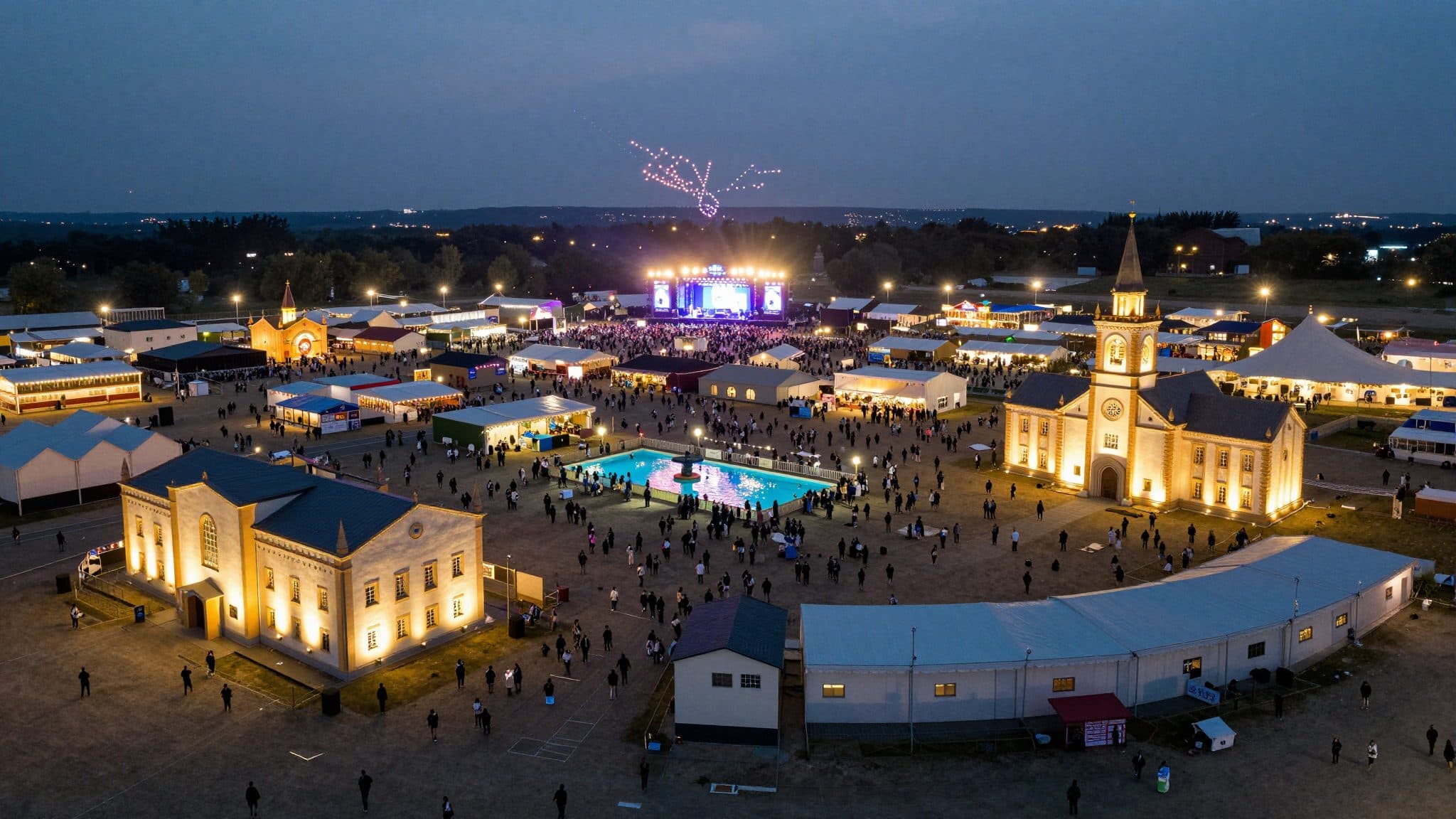
AI-generated image (z-image via Kie.ai)
Summary
As Germany's largest electronic music festival, Parookaville, kicks off in Weeze on the Lower Rhine, the industry is warning of a growing imbalance. Production costs have risen by 50 percent, and only about 15 percent of festivals turn a profit. Small organizers such as the Panama Festival in Bonn have already had to give up.
Weeze, 17 July 2026
As the Parookaville Festival kicks off in Weeze on the Lower Rhine with around 225,000 expected visitors, the German events industry is sounding the alarm: Johannes Everke, Managing Director of the Federal Association of the Concert and Events Industry (BDKV), told MDR AKTUELL that production costs have risen by 50 percent since the pre-Corona era.
Parookaville Launches with a Record
As the Parookaville Festival kicks off in Weeze on the Lower Rhine with around 225,000 expected visitors, the German events industry is sounding the alarm: Johannes Everke, Managing Director of the Federal Association of the Concert and Events Industry (BDKV), told MDR AKTUELL that production costs have risen by 50 percent since the pre-Corona era.
According to the organizers, Parookaville is the largest festival for electronic music in Germany. On the former military grounds at Weeze Airfield, around 300 artists will perform over the three festival days until Sunday. Since the Corona pandemic, the site has been designed for 225,000 people and has always sold out. At its premiere in the summer of 2015, 40,000 people attended.
This year, a new 360-degree stage with a giant video cube in the middle of the audience is set to be one of the highlights. Festivalgoers can cool off in a 700-square-meter pool or get a tattoo or piercing in the "Jail." Alongside electronic sounds, chanson and Schlager singer Vicky Leandros will also take the stage with hits such as "Ich liebe das Leben" and "Après Toi," as well as DJ Ötzi with "Anton aus Tirol." Traditionally, weddings also take place at Parookaville without restrictions – the motto in the church is: "Heirate, wen oder was dich glücklich macht!".
Economic Situation of the Industry
While the major brands continue to grow, the situation looks bleak for small and medium-sized festivals. A study by Initiative Musik, which examined the German festival landscape in 2025, shows: On average, around 38 percent of a festival's expenses go to artist fees. Only about 15 percent of festivals turn a profit in the end. Despite an overall industry revenue of around 550 million euros, profit margins remain slim.
Ticket prices have risen by almost 30 percent over the past five years, especially for pop and rock events. At small and medium-sized festivals, visitors often still get off comparatively cheaply: On average, the most expensive ticket option costs around 90 euros. At large festival brands, however, a pass can climb to over 500 euros. For Parookaville, visitors pay around 150 euros for a day ticket.
Everke told MDR AKTUELL: "Das bedeutet, der Markt ist sehr eng geworden". He added: "Das merken wir bei den ganz großen genauso wie bei den ganz kleinen Konzerten." At the same time, there are more and more festivals nationwide, an estimated 20 percent more than before. The race for attention and ticket buyers is intensifying the situation.
First Festivals Are Giving Up
The organizer of the Panama Festival in Bonn had already given up in 2025 after becoming insolvent. The organizers of the Dortmund festival "Juicy Beats" also announced in 2025 that they are struggling with rising costs and the general challenges in the industry. "Einige hatten stärkere Finanzierungen und Gesellschaften im Hintergrund und konnten länger durchhalten", sagte Zagelow.
The reasons for the misery are manifold. "Weil das Geld eben auch aufgrund gestiegener Lebenshaltungskosten anderweitig verplant ist", erklärte Zagelow. At the same time, line-ups are becoming less attractive, because major national artists such as KIZ or Kraftclub now go on their own tours in the summer. Anyone who can afford a day ticket at Parookaville for around 150 euros has to cut back elsewhere.
The industry is responding with different strategies. Some organizers plan to take a creative break in 2027, according to their own statements, in order to save costs and develop new concepts. Others are banking on additional experiences around the stages to justify the increased ticket price. "Besonders zu spüren bekommen es am Ende aber die Kleinen – also die Clubs und die kleinen Festivals", fasste MDR die Lage zusammen.
Reactions and Demands
In its study, Initiative Musik recommends stronger networking among smaller festivals in order to bundle purchasing and logistics. Funding programs from the federal states and municipalities could also help preserve the diversity of the festival landscape. Industry insiders point out that without political support, further small festivals could disappear from the market in the coming years.
For the visitors of Parookaville, meanwhile, a festival weekend of electronic music, Schlager hits, and a wedding ceremony on the grounds is getting underway. The organizers expect around 225,000 guests to celebrate on the sold-out site. The industry's economic worries are not to be seen on the festival grounds for the time being.
The coming months will show whether the announced creative breaks and the search for new financing models can bring about a turnaround. Industry associations such as the BDKV are demanding stable framework conditions and a reliable funding landscape from policymakers so that the diversity of the German festival landscape is preserved.
Outlook on the Festival Landscape
Festivals are considered an important part of the cultural and tourism economy in Germany. They attract not only domestic visitors but also guests from other European countries. The economic pressure therefore affects not only the organizers but also cities and municipalities that benefit from tourism revenue.
The discussion about fair ticket prices and fair fees for artists will continue to accompany the industry in the coming years. While major brands such as Parookaville can enforce their prices, small organizers are fighting for every euro.
In the end, according to industry insiders' assessment, the festival landscape in Germany will continue to change in the coming years: fewer small festivals, more major brands, higher prices, and tougher competition for visitors' attention.
Questions & Answers
Who is Johannes Everke?
Johannes Everke is the Managing Director of the Federal Association of the Concert and Events Industry (BDKV) and spoke to MDR AKTUELL about the rising production costs in the festival industry.
Why did small festivals like the Panama Festival in Bonn have to give up?
The Panama Festival in Bonn had to give up in 2025 after the organizer became insolvent. The industry is struggling with production costs that have risen by 50 percent since the pre-Corona era.
How many people attend Parookaville in Weeze?
Parookaville in Weeze on the Lower Rhine expects around 225,000 visitors over the weekend and is, according to the organizers, the largest festival for electronic music in Germany.
Festivals Under Cost Pressure: Prices Rising, Small | allfacts360