First verdict in the Morandi trial: Twelve years in prison for Castellucci
Genoa, July 16, 2026
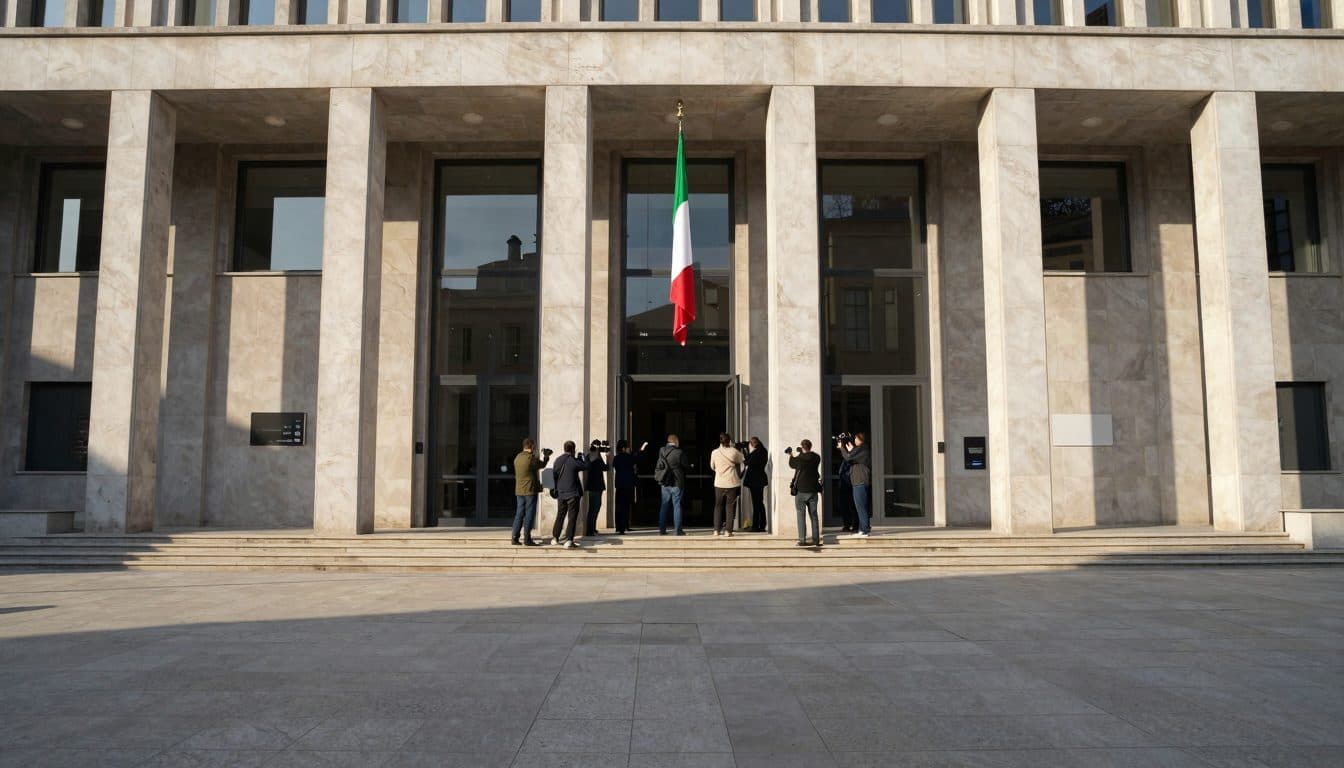
AI-generated image (z-image via Kie.ai)
Summary
Nearly eight years after the collapse of the Morandi Bridge in Genoa, which killed 43 people, an Italian court on Thursday sentenced Giovanni Castellucci, the…
Genoa, July 16, 2026
Nearly eight years after the collapse of the Morandi Bridge in Genoa, which killed 43 people, an Italian court on Thursday sentenced Giovanni Castellucci, the former head of the motorway operator Autostrade per l'Italia, to twelve years in prison in the first instance.
It is the first verdict in a mammoth trial that has been running since July 2022 and lasted around four years and 283 hearing days. A total of 57 defendants are standing trial, including not only former executives of the motorway operator Autostrade per l'Italia and its then parent company Atlantia, but also former officials from the Ministry of Transport. The Genoa public prosecutor's office had sought a total of just under 400 years in prison for 56 of the 57 defendants.
The prosecution accuses the defendants of neglecting necessary maintenance work and ignoring warning signs. Investigations found that the collapse was caused by the rupture of load-bearing cables on the ninth bridge pillar. These had been damaged over the decades by a corrosive environment. The reinforced steel of the 1.2-kilometer-long bridge had also become brittle over time, according to the investigators' findings.
Background: The disaster of August 14, 2018
On August 14, 2018, a pillar of the Morandi Bridge gave way. A 200-meter-long section of the Morandi Bridge plunged 50 meters into the depths. Cars and trucks were dragged down, some falling onto the houses below. When the Morandi Bridge in Genoa collapsed on August 14, 2018, 43 people lost their lives. 16 people were injured.
The bridge was a cable-stayed structure that was opened in 1967 after around five years of construction and is named after its architect Riccardo Morandi. The Polcevera Viaduct connected the east and west of Genoa. The four-lane motorway was and is an important transit route to France (Nice) and led to the port of Genoa, the largest in Italy. Up to 1,000 trucks and a multiple of that in cars drove over the bridge every hour, which crossed a former marshalling yard, several residential blocks, a railway line and several roads at a height of around 40 meters.
Prosecution's allegations
Specifically, the investigators accuse Castellucci of having delayed work on pillar number nine, which later collapsed. He had known about defects in the bridge since 2009. According to the Genoa public prosecutor's office, most of the defendants had anticipated the collapse of the bridge built in the 1960s and nevertheless took no action to prevent it.
Instead, as much money as possible was allegedly saved on maintenance in order to secure higher dividends for shareholders. The prosecution had requested 18 years and six months in prison for Castellucci – the highest individual sentence in the trial. In the end, the court handed down twelve years, as Reuters and APA reported on July 16, 2026.
Statements and defense strategy
Castellucci himself had always denied any guilt. «Ich fühle mich verantwortlich, aber nicht schuldig», he said during the trial. The defense maintains the thesis that a hidden construction defect – the corrosion of the reinforcing steel – caused the collapse, and not inadequate maintenance. Castellucci had also insisted that work be carried out to reinforce the bridge pillar, his lawyer told the Italian press.
Castellucci has already been in prison for over a year. He was convicted in connection with a traffic accident in which a bus had broken through a bridge railing in southern Italy in 2013 and plunged into the depths. 40 people died at the time. The manager is already serving a six-year prison sentence in Milan. The lawyers argue that Castellucci is being made a scapegoat, the "Sündenbock."
Sentences for co-defendants
The central role in the trial was played by prosecutor Walter Cotugno, who described the behavior of those responsible in drastic terms: «Die Morandi-Brücke war eine Zeitbombe. Sie konnten es ticken hören, aber sie wussten nicht, wann sie explodieren würde.» The responsible investigating judge found that since the inauguration of the bridge in 1967, "nicht einmal minimale Instandhaltungsmaßnahmen ergriffen" had been taken to reinforce the steel inserts of the bridge pillar.
Prison sentences were also handed down on Thursday in Genoa against other former managers and a senior official from the Ministry of Transport. The second-highest sentences went to the former number two and number three of the motorway operator, namely five years and six months and eleven years. A senior employee of the Italian Ministry of Transport received five years in prison. All defendants deny the charges.
Around a year and a half after the trial began in July 2022, Castellucci and nine other accused former managers reached settlements with more than 190 civil plaintiffs. They received compensation payments from the ten defendants. At the same time, the defendants' lawyers emphasized that this was in no way an admission of guilt, but merely an "Act of helpfulness."
A representative of the victims' relatives criticized the complete absence of admissions of guilt in the trial. The charges include manslaughter, intentional bodily harm, obstruction of official duties, document forgery, and intentional omission of safety devices in the workplace. The prosecution had sought a total of more than 400 years in prison for the 57 defendants on charges of manslaughter, endangerment of traffic safety and document forgery.
Settlements and criticism from victims' relatives
The majority of the nearly 60 defendants did not appear in court for the verdict. Due to the size of the proceedings, a tent had been specially set up in the courtyard of the court. It is considered certain that this trial will go through all instances. The verdict is therefore not yet final.
Around 600 residents lost their homes due to the collapse. Hundreds who lived in houses under the long elevated bridge were made homeless. Several houses had to be demolished because they stood under bridge pillars that were at acute risk of collapse. Resident Giuseppe Rodinò, whose house was only 30 meters from the collapse site, said: «Der einzige Brückenbogen über dem Fluss ist zusammengebrochen. Und das war ein sehr, sehr großes Glück für uns – leider nicht für die, die gestorben sind.»
Consequences for residents and new construction
The remains of the structure were demolished, initially through controlled detonation. In August 2020, a new bridge designed by star architect Renzo Piano was inaugurated, named Ponte San Giorgio. The structure features 43 light masts, one for each fatality of the collapse. The new bridge had been built in just under two years, with applicable law being suspended for the planning and construction phases.
The motorway operator Aspi and the company responsible for maintenance, Spea, are not standing trial. They had reached an out-of-court settlement with the public prosecutor's office, which provides for the payment of 29 million euros to the state. Castellucci had resigned as head of Autostrade per l'Italia one year after the disaster with a severance package of 13 million euros.
Among the survivors was former professional footballer Davide Capello, who survived the fall with his car with virtually no injuries. «Ich bin nach Genua gefahren, und als ich über die Brücke bin, habe ich plötzlich gesehen, dass sie vor mir zusammenbricht. Und auch mein Auto und ich sind nach unten gestürzt. Ich bin dann mit dem Auto an einem Pfeiler hängen geblieben, ich weiß es nicht genau. Deshalb bin ich nicht nach ganz unten gefallen», he said. A survivor reported: «Wir haben versucht, rückwärts zu fahren, ich war schon 600 Meter weit auf der Brücke. Und dann habe ich einen Typen gesehen, der viel intelligenter und geistesgegenwärtiger war als ich: Er ist aus dem Auto ausgestiegen und hat geschrien: lauft!»
Questions & Answers
Who is Giovanni Castellucci?
Giovanni Castellucci is the former head of the Italian motorway operator Autostrade per l'Italia and was sentenced to twelve years in prison in the first instance on July 16, 2026. He is already serving a six-year prison sentence for a 2013 bus accident that killed 40 people.
What happened on August 14, 2018 in Genoa?
On that day, a pillar of the Morandi Bridge gave way, causing an approximately 200-meter-long section of the roadway to plunge some 45 to 50 meters into the depths. 43 people were killed, 16 were injured, and around 600 residents lost their homes.
What happens next in the proceedings?
The verdict of July 16, 2026 is the first in a mammoth trial with 57 defendants and is not yet final. It is considered certain that the trial will go through all instances, meaning appeals and revisions will follow.
First verdict in the Morandi trial: Twelve years in… | allfacts360