Italian Court Sentences Farmer to 16 Years in Prison for Death of Indian Harvest Worker
Latina, July 9, 2026
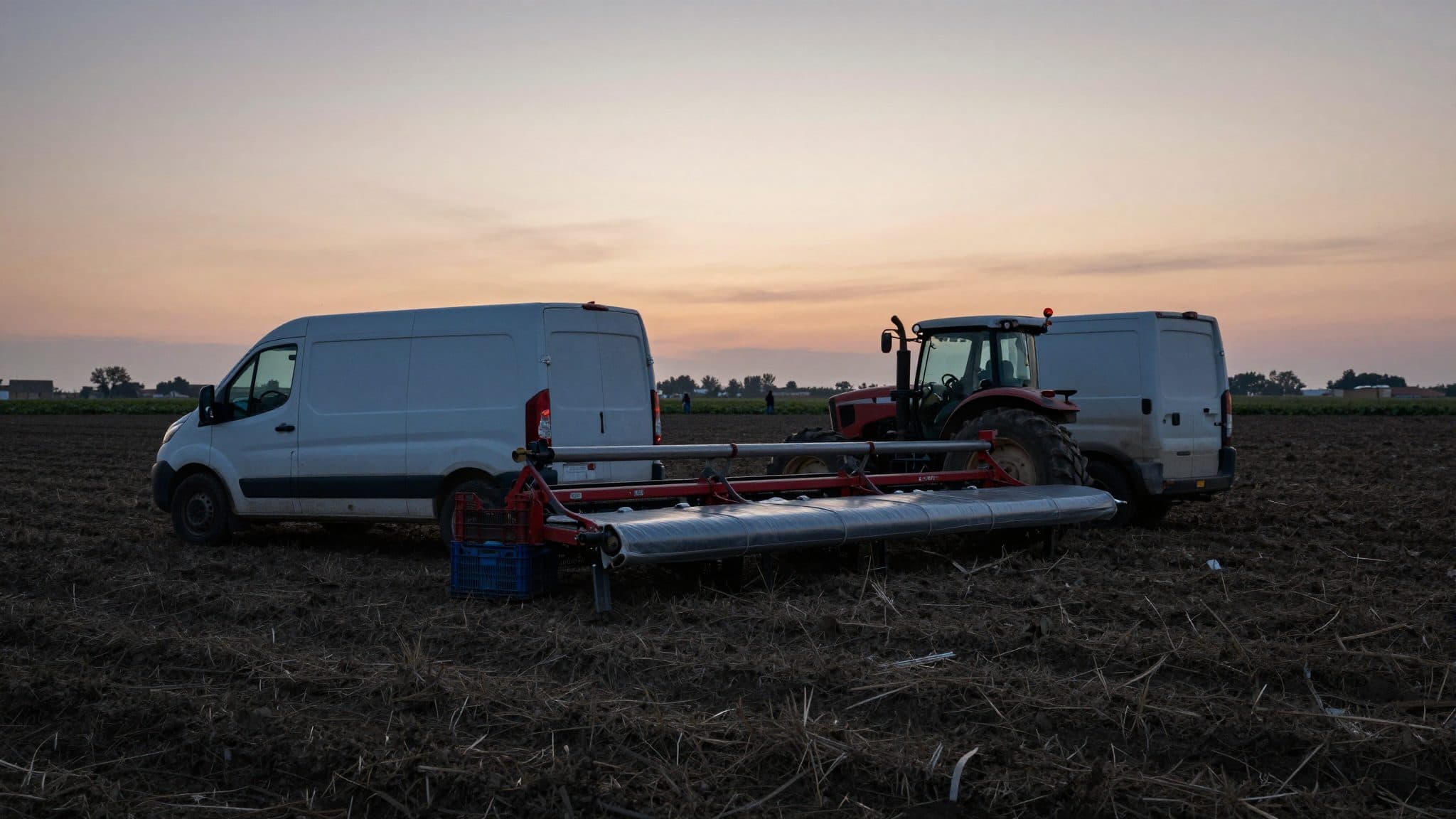
AI-generated image (z-image via Kie.ai)
Summary
A court in Latina south of Rome has sentenced a 39-year-old farmer to 16 years in prison for the intentional killing of Indian harvest worker Satnam Singh. The 31-year-old was caught in a machine on a field in the summer of 2024; instead of taking him to the hospital, the farmer left him in front of his accommodation.
Latina, July 9, 2026
A court in Latina south of Rome has sentenced a 39-year-old farmer to 16 years in prison for the intentional killing of Indian harvest worker Satnam Singh, who bled to death after a workplace accident on a field in the summer of 2024.
Background of the Case
The verdict was announced on Wednesday evening in the criminal trial against the farmer, who is held responsible for the death of Satnam Singh in the summer of 2024. The Indian man had become caught in a machine on a field near the municipality of Borgo Santa Maria, about 60 kilometers south of Rome, which severed his right arm and crushed his legs. Instead of taking the seriously injured man to a hospital, the farmer, according to the indictment, transported him in a delivery van to his accommodation and left him there.
The prosecution had requested a prison sentence of 22 years; the court did not follow the request in full and imposed a sentence of 16 years. According to investigators, the farmer justified his behavior by saying that he had panicked. His wife described in court how she had begged the owner for help. The exact wording of her statement: "Ich habe den Besitzer angefleht, uns zu helfen, ich habe ihn auf Knien angefleht. Aber er hat uns vor dem Haus abgesetzt und ist weggelaufen."
The accident victim Satnam Singh was 31 years old and came from India. According to information from the proceedings, he had come to Italy together with his wife in 2021 to work there as a harvest worker. The accident occurred in the summer of 2024 on the field in the region around Borgo Santa Maria, where mainly melons and zucchini are grown. The exact circumstances under which Singh became caught in the machine remained the subject of the evidentiary proceedings.
Course of the Accident
The severed arm of the accident victim was found, according to the court, in a fruit crate next to him. After the accident, Singh was flown by helicopter to a hospital in Rome, where he died about a day and a half after the accident from the consequences of his injuries. Neighbors had alerted emergency services after the farmer had dropped off the seriously injured man in front of the house and fled. Medical help only came through their intervention.
The case attracted attention far beyond Italy in the summer of 2024 and became a symbol of the exploitative conditions in parts of Italian agriculture. Estimates suggest that around 230,000 people are employed illegally in Italian agriculture, including many migrants from countries such as India or Pakistan. According to industry figures, these workers frequently earn only three or four euros per hour, some even less.
Exploitation in Italian Agriculture
Exploitation in Italian agriculture is, according to observers, often organized through a system of illegal intermediaries who mediate between businesses and workers and withhold a large portion of the wages. Migrants without regular residence status thus fall into a double dependency: on the employers and on the intermediaries. Fear of deportation or dismissal prevents many of those affected from filing complaints with authorities or requesting medical help.
In the trial before the court in Latina, which is located south of Rome, the farmer was found guilty of intentional killing. The prosecution had accused the 39-year-old of having consciously accepted the death of Singh by foregoing transportation to the hospital and abandoning the injured man to himself. The court followed this reasoning and concluded that the farmer is criminally responsible for the death of the harvest worker.
The defense can appeal the verdict, as emerged from the proceedings. This means that the criminal proceedings are not yet finally concluded. Nevertheless, observers interpret the outcome of the proceedings as an important signal for the handling of labor exploitation and the criminal prosecution of employers who put their employees in mortal danger.
Living Conditions of Harvest Workers
The living conditions of harvest workers in the region around Borgo Santa Maria and in other parts of Italy have been criticized for years. Human rights organizations regularly document cases in which foreign workers labor under precarious conditions on fields and plantations. Reports of missing protective clothing, inadequate safety precautions on machines, and lack of medical care run through the coverage.
Singh himself had fallen into this system as a migrant worker. His wife described how, after the accident, she had tried to persuade the owner to provide help. The judges rated the wife's statement as the central piece of evidence regarding the question of whether the farmer had consciously accepted the death of the injured man. The quoted statement of his wife makes the extent of the helplessness clear.
Alongside the criminal trial against the farmer, Italian investigators are also dealing with the role of possible other parties involved in the employment structures through which Singh had come to Italy. Time and again, prosecutors raise the question of whether intermediaries or other businesses are involved in comparable cases. Proceedings against middlemen often drag on for years.
Verdict and Possible Appeal
The case stands as an example of a broader debate about the modernization of controls in agriculture and about the rights of migrant workers. Italian unions have been calling for stricter controls, higher penalties, and better accommodation of harvest workers for years. International organizations such as the International Labour Organization (ILO) have also repeatedly criticized the conditions.
The conviction to 16 years in prison is perceived in Italian media as a comparatively harsh verdict in a labor criminal case. While the prosecution had demanded 22 years, the court regards the criminal responsibility of the farmer as established. In the estimation of observers, the judiciary thereby sets a standard for comparable cases.
Little was made known in the proceedings about the personal situation of Satnam Singh's widow after her husband's death. His death struck a family that had come to Italy in search of work and encountered there a working environment shaped by extreme exploitation. The case made visible how vulnerable migrants without adequate protection are in agriculture.
Significance Beyond the Individual Case
With the verdict, a criminal trial ends that had attracted the attention of the Italian and international public since the summer of 2024. The story of Satnam Singh became one of the best-known examples of the dark sides of food production in Italy and stands at the center of a debate about responsibility, punishment, and human dignity in agriculture.
The verdict is not yet final, as the defense of the farmer has the right to appeal. Until a possible appeal hearing, the 39-year-old will, under Italian law, presumably remain in pretrial detention or under judicial conditions. A date for an appeal hearing has not yet been set.
Regardless of the outcome of a possible appeal, the verdict from Latina already has a signaling effect. It shows that Italian courts are willing to hold employers accountable with high prison sentences when they put their employees in mortal danger. For the harvest workers in the fields around Rome and throughout Italy, it remains to be hoped that such verdicts will contribute to better working conditions.
Questions & Answers
Who was Satnam Singh?
Satnam Singh was a 31-year-old Indian harvest worker who had come to Italy with his wife in 2021 and suffered a fatal accident on a field near Borgo Santa Maria south of Rome in the summer of 2024.
What happened after the workplace accident?
Instead of taking the seriously injured man to the hospital, the farmer drove him in a delivery van to his accommodation and left him there. Neighbors only then alerted emergency services; Singh died about a day and a half later in a clinic in Rome.
What sentence did the court in Latina impose?
The court sentenced the 39-year-old farmer to 16 years in prison for intentional killing. The prosecution had demanded 22 years; the verdict can still be appealed.
Farmer Sentenced to 16 Years in Prison for Death of Harvest | allfacts360