Heat Wave in Germany: Tenants Have No Right to Cooling – Debate Over Heat Protection in Tenancy Law
Berlin, 17 July 2026
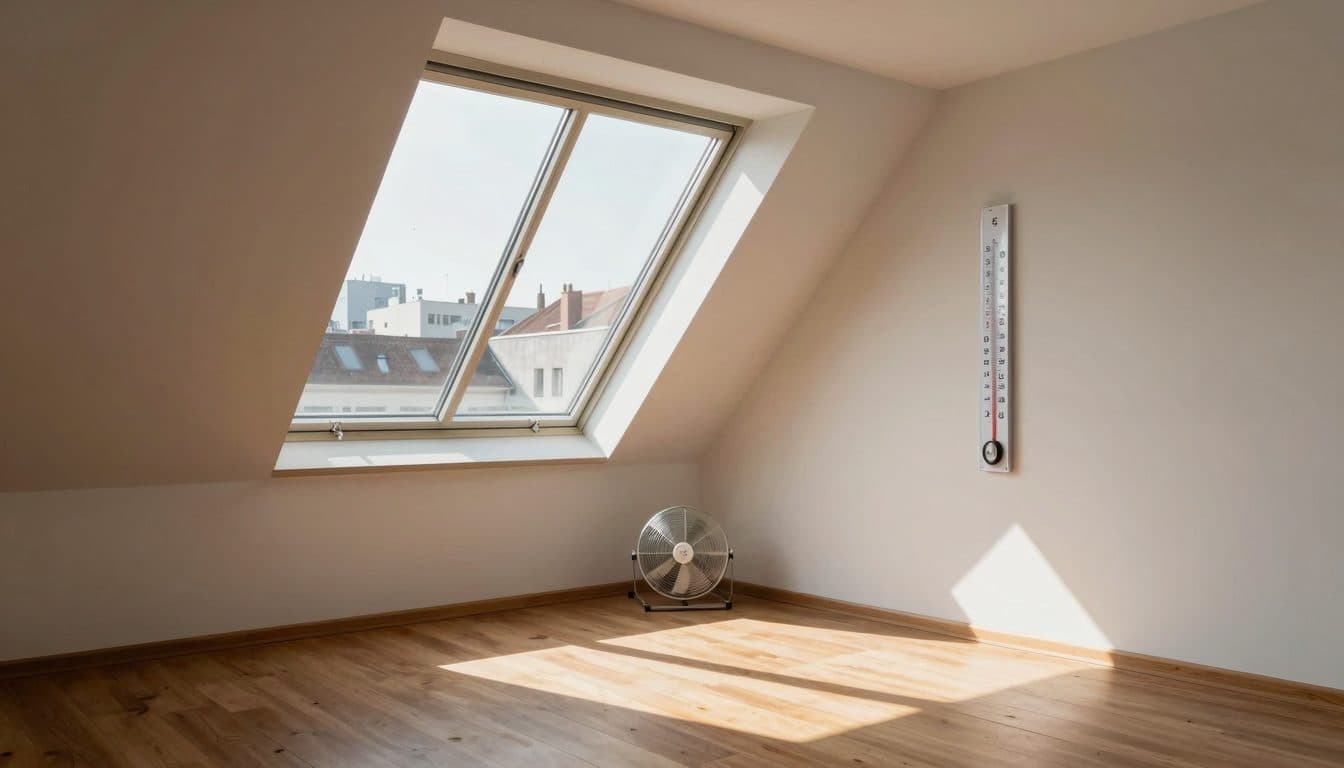
AI-generated image (z-image via Kie.ai)
Summary
In view of the extreme heat wave in Germany, the debate over the protection of tenants from overheating is growing. While the Robert Koch Institute estimates more than 5,100 heat-related deaths for 2026, tenants have no clear right to cooling of their apartments under current case law.
Berlin, 17 July 2026
As Germany faces the most extreme heat wave on record in the summer of 2026, the debate over heat protection for tenants is growing. Under current case law, tenants have no right to a cooled apartment.
The heat wave, which has gripped Germany since the end of June 2026, has reignited the debate over heat protection in apartments. At his summer press conference on 15 July in Berlin, Federal Chancellor Friedrich Merz spoke about the challenges that climate change poses for Europe: „Wir können den Klimawandel aus Europa heraus nicht aufhalten, und deswegen wird eine zweite große Aufgabe sein, mit dem Klimawandel zu leben. Das muss sich im Baurecht niederschlagen, das muss sich in der Gesundheitsvorsorge niederschlagen, das muss im Schutz auch von besonders vulnerablen Gruppen zum Ausdruck kommen."
Darya's Experience in the Attic Apartment
The tenant Darya, whose name was changed by the editorial team, described the effects of the heat in her attic apartment to Deutsche Welle. „Im Sommer wird diese Wohnung zu einer Thermoskanne," she said about her apartment, where she lives with her husband and their one-year-old daughter. „Kleine Kinder leiden am meisten, weil sie nicht wirklich verstehen, was gerade passiert," she added. Her lease contains detailed regulations for the winter months and stipulates a minimum temperature of 21 degrees during the day – but for the summer, such a clause is missing.
Darya's lease contains no provision for heat protection. The temperature in her apartment was above 32 degrees Celsius – higher than the 29 degrees she had experienced on the Turkish coast. „Wir haben sogar versucht, gefrorene Wasserflaschen davorzustellen, aber das hat kaum geholfen – es wurde lediglich die heiße Luft umgewälzt," she reports. Outside, temperatures climbed to a scorching 39 degrees.
Legal Situation in Tenancy Law
Michael Selk, a lawyer specializing in tenancy law, explained the legal situation: „Der Vermieter schuldet grundsätzlich nur den Standard, der zum Zeitpunkt der Errichtung des Gebäudes galt," he said, referring to the case law of the Federal Court of Justice on apartment defects. „Aber eben keinen Anspruch auf Kühlung."
According to the case law of the Federal Court of Justice, residential tenants have a right to sufficiently warm rooms – between 20 and 24 degrees Celsius, depending on the room, Selk writes to DW. There is no comparable right to cooling. „Der Mieter hat keinen Anspruch auf Modernisierung," he makes clear. Specifically, this means: In the case of a building from 1990, the technical standard of that time would also be applied in court.
Previous Rulings and Possible Exceptions
However, according to a 2023 study by the „Arbeitsgemeinschaft Zeitgemäßes Bauen," around 75 percent of Germany's housing stock was built before 1990. Selk points out that exceptions could nevertheless exist: „Entscheidend ist, ob ein solcher Fall irgendwann den Bundesgerichtshof erreicht und dieser aus Gründen des Gesundheitsschutzes eine Ausnahme von der bisherigen Regel schafft." Such an exception already exists in other areas. In 1998, the Federal Constitutional Court ruled in favor of health protection in cases of exposure to PCP (pentachlorophenol), lead pipes, or questions of electricity supply.
But the question remains: How should the landlord provide cooling? „Wie der Vermieter dies allerdings gewährleistet, ist sein Ermessen – gegebenenfalls muss er Klimageräte zur Verfügung stellen oder für bessere Dämmung sorgen," says Selk. Trinidad Fernandez, head of the „Climate Transition Strategies" unit at the Fraunhofer Institute for Industrial Engineering (IAO), demands: „Hitzebeständigkeit muss als grundlegende Voraussetzung für guten Wohnraum und eine gute Stadtplanung betrachtet werden."
Health Consequences of the 2026 Heat Wave
The urgency is also underscored by the health consequences of the extreme temperatures. The Robert Koch Institute (RKI) estimates that there have been more than 5,100 heat-related deaths in Germany in 2026 so far, most of them during the heat wave at the end of June. According to the EU climate service Copernicus, June 2026 was the hottest June ever recorded in Western Europe and the second-hottest worldwide. For comparison: for the entire year 2025, approximately 2,600 heat-related deaths were estimated.
The pressure to act is growing: more than half of the people in Germany live in rented accommodation – the highest proportion within the European Union. Under the Building Energy Act (GEG), buildings must generally be designed in such a way that overheating in summer is limited. „Im Winter fror man, da muss es warm sein, im Sommer war es eh immer warm und heiße Tage waren nicht so häufig," Darya describes the planning logic of older buildings. But this thinking falls short in view of climate change.
Solutions are also being discussed in other areas. For example, the Rheinisch-Bergisch district agreed with the health insurance companies that, retroactively from 1 January 2026, there would no longer be any additional costs for ambulance trips. District Administrator Arne von Boetticher said: „Mir ist wichtig, dass die Menschen im Rheinisch-Bergischen Kreis keine Sorge vor Kosten haben müssen, wenn sie den Rettungsdienst rufen." The agreement creates clarity and security for citizens.
International comparisons show that heat protection standards vary. In some countries, such as Australia, a room temperature of around 26 degrees Celsius is often considered the threshold at which measures to reduce heat stress must be examined. „Natürlich gibt es einen Anspruch auf Einhaltung eines Temperaturgrenzwertes," the Australian regulatory practice is quoted as saying. Whether such a threshold will also be introduced in Germany depends on political and legal developments.
International Comparison and Thresholds
The connection between climate change and health protection is increasingly being recognized. Fernandez emphasizes: „Vor diesem Hintergrund müsse der Schutz vor extremer Hitze auch als Gesundheitsmaßnahme verstanden werden." Federal Chancellor Merz had also referred to health protection. Darya reports that the heat has been particularly hard on her since the birth of her daughter and that she has sometimes fled to hotels to escape the heat.
Parallel to the heat protection debate, the digitalization of the healthcare system faces challenges. Jochen Werner, former Medical Director and Chairman of the Board of the University Hospital Essen, coined the phrase: „Tod durch Datenschutz." With the ISiK standard – Informationstechnische Systeme in Krankenhäusern (Information Technology Systems in Hospitals) – the legislature has tasked Gematik (§ 373 SGB V) with defining binding, FHIR-based interfaces for hospital information systems; their implementation is mandatory for manufacturers. However, the costs of these interfaces are causing criticism: „Wenn wir gesetzlich dazu verpflichtet werden, dann machen wir es eben noch teurer," an industry insider is quoted as saying about the attitude of some providers.
Digitalization and Data Protection in Healthcare
For Bastian Stockhausen, author of a contribution titled „Todesursache EBIT: ‚Teure Schnittstellen blockieren Gesundheitsdigitalisierung'," overpriced interfaces are a brake on digitalization in healthcare. They endanger patient care, according to his criticism. The debate over digital infrastructure and the heat-related health crisis make it clear that health protection in Germany faces a variety of challenges.
The coming weeks will show whether the legislature responds to the heat wave. The discussion over binding temperature thresholds, better insulation, or the provision of air conditioning units by landlords is likely to continue. Selk sums it up: As long as the Federal Court of Justice does not create an exception to the existing regulation, tenants like Darya will remain dependent on their own initiative to cope with the heat in their apartments.
Sources for this article include Deutsche Welle, the University Hospital Essen, and communications from the Rheinisch-Bergisch district.
Heat in Apartments
Legal Situation
Heat Protection in International Comparison
Health Consequences
Digitalization and Data Protection
Political Reactions
Questions & Answers
What rights do tenants in Germany have in the event of extreme heat in their apartment?
According to the case law of the Federal Court of Justice, tenants have no right to cooling of their apartment, but only to the structural standard at the time the building was constructed. According to lawyer Michael Selk, the landlord owes sufficiently warm rooms in winter; in summer, there is no comparable right to heat protection measures.
How many heat-related deaths have there been in Germany in 2026 so far?
The Robert Koch Institute estimates that there have been more than 5,100 heat-related deaths in Germany in 2026 so far, most of them during the heat wave at the
Heat Protection for Tenants 2026: Debate Over Heat Wave | allfacts360