Military service compromise in sight: Stocker sees agreement with coalition near, civil service still stuck
Wals-Siezenheim, 23 July 2026
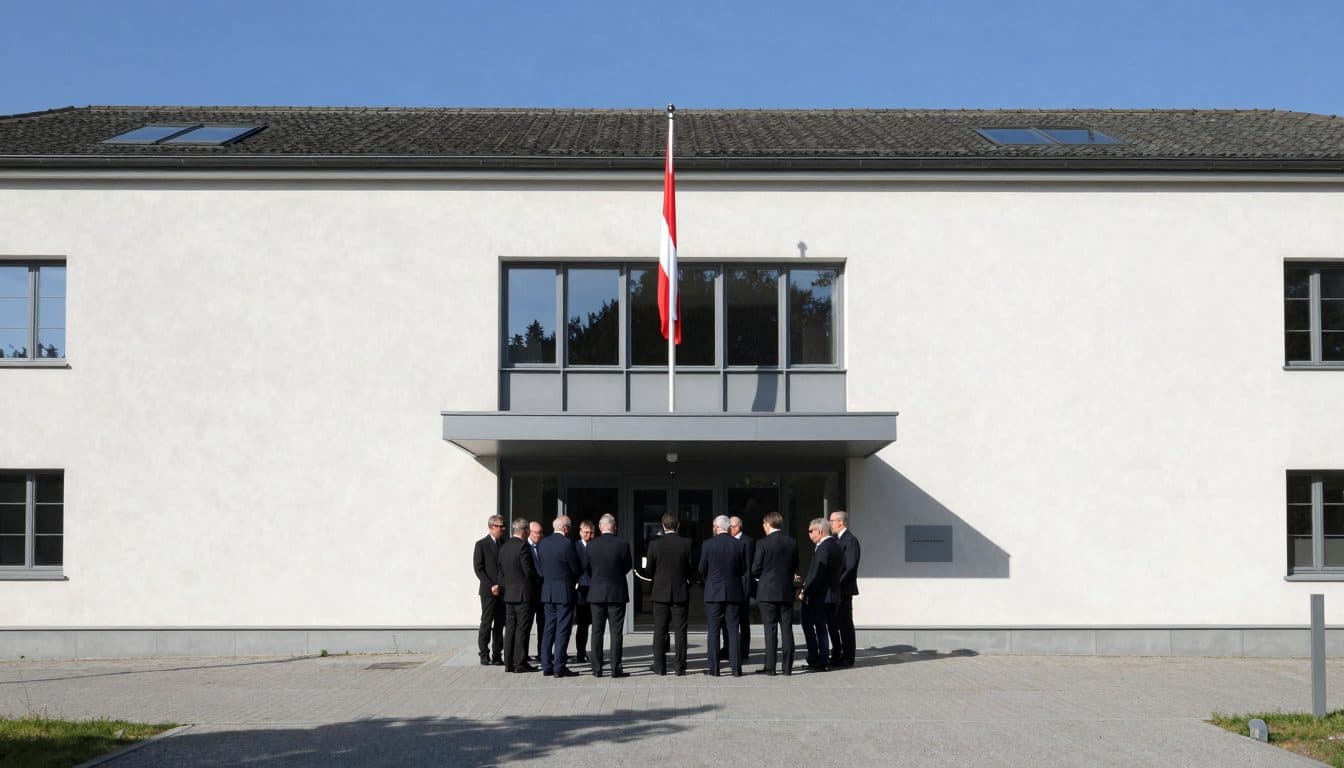
AI-generated image (z-image via Kie.ai)
Summary
Federal Chancellor Christian Stocker (ÖVP) sees the coalition "very close" on a military service compromise. However, the future regulation of civil service is still open, with negotiators continuing to wrestle with a solution. An agreement by the government meeting on Monday in Wals-Siezenheim is considered desirable.
Wals-Siezenheim, 23 July 2026
Federal Chancellor Christian Stocker (ÖVP) sees the government "very close" on a military service compromise, while no agreement is yet in sight on civil service.
The government is heading toward a solution in the military service debate that has been simmering for weeks. Federal Chancellor Christian Stocker (ÖVP) said on the sidelines of his summer tour in Innsbruck that the coalition parties were "very close" on military service reform and that it could be assumed "dass wir eine Lösung haben werden." On civil service, however, they were "noch nicht so nahe," Stocker added, without going into details.
At the center of the negotiations is the compromise model "6 plus 3," most recently brought into play by Stocker himself. Under this, conscripts are to serve six months of basic military service in the future and, immediately afterwards, complete 60 days of militia exercises, with a further 40 days of militia to follow later. In total, according to negotiator circles, this results in the "6 plus 100" days variant, which is now said to be accepted in the coalition and thus also by the NEOS.
The compromise model in detail
The background to the compromise is the search for a model that fills Austria's conscription with new life under the conditions of an altered security situation in Europe. The SPÖ had originally advocated a "6 plus 2" model, while the NEOS favored a purely voluntary system without compulsory basic military service. Both positions were considered unable to command a majority in the government.
In between lay further variants that circulated through the negotiations in recent weeks. A recommendation developed by experts provided for the so-called "8 plus 2" staged model, in which a two-month blocked troop exercise is to take place within 18 months after basic military service. Militia exercises totaling 40 days are then envisaged. The SPÖ also brought in a "9 plus 2" model with compulsory exercises.
The "6 plus 3" variant is considered comparatively quick to implement, although negotiator circles point out that it would be more expensive than the originally recommended "8 plus 2" variant. Nevertheless, the "6 plus 100" model prevailed in the finale of the negotiations, according to negotiator circles. With the "staged model," a similar variant is also found in the experts' report, which additionally underpins the ÖVP's negotiating position.
Positions of SPÖ and NEOS
On civil service, the positions remain further apart. An extension of civil service remains out of the question for the NEOS, according to negotiator circles. In order to nevertheless reach a solution by Monday, it is considered conceivable that an agreement is reached on "6 plus 3" for military service and that civil service is extended to a lesser extent – a compromise within the compromise, so to speak. Stocker called an agreement by Monday "wünschenswert."
The government meeting, at which the military service reform is to be finalized, takes place at 2 p.m. at the Schwarzenberg Barracks in Wals-Siezenheim in Salzburg, as the coalition announced on Thursday afternoon. The location is not chosen by chance: Wals-Siezenheim is home to a base of the Austrian Federal Army that has particular symbolic significance for the discussion about the future orientation of national defense.
Stocker justified the pressure for reform with the security policy situation in Europe. In general, the chancellor said, it applies to him that Austria, in matters of defense within the framework of neutrality, must not be a "kein blinder Fleck." This formulation refers to the debate about how the country should set up its armed forces in light of the Russian war of aggression against Ukraine and the discussion about strengthening European defense capabilities.
Place of decision: Wals-Siezenheim
The Military Service Commission, which contributed its expertise to the debate in recent months, had examined several models for strengthening national defense. Both the duration of basic military service and the question of how militia exercises can be organized and financed in the future played a role. The results of this review flowed into the coalition's negotiations.
For the NEOS, it is crucial that there is a solution for military service that neither fully abandons voluntariness nor extends civil service. The party had reiterated this position several times in recent weeks. By accepting "6 plus 3" for military service without extending civil service, the Pink party would preserve an important point of their line.
Security policy background
The SPÖ, for its part, had early on advocated for an extension of military service, citing, among other things, the security situation in Europe. What role the most recently floated "9 plus 2" variant played in the negotiations is not publicly known in detail. Negotiator circles, however, assume that the SPÖ will agree to the compromise now found.
It remains open how long the extended military service will actually last. While the "6 plus 100" model arithmetically results in 60 days of militia plus 40 further days to be completed later, it remains to be seen which deadlines and exercise periods will be enshrined in law in detail. The question of whether the additional militia exercises will be compulsory or voluntary has also not yet been finally clarified.
The cost question plays a significant role in the negotiations. The "6 plus 3" model is considered more expensive than the originally recommended "8 plus 2" model, as negotiator circles confirm. The additional expenditure would have to be taken into account in the budget of the Ministry of Defense, which – given the federal government's strained budget situation – carries additional political dynamite.
For the coming week, it is now crucial whether a common denominator is nevertheless found on civil service. Stocker himself spoke of a "wünschenswerten" agreement by Monday. Should civil service remain blocked, this could overshadow the otherwise achieved agreement on military service and complicate the presentation of the overall package at the government meeting.
Open questions and costs
Observers interpret the recently achieved progress as a sign that the coalition is interested in a fundamental solution. The fact that a concrete proposal – the "6 plus 3" model – is on the table, which could also be supported by the NEOS, is seen as the result of a longer phase of negotiations in which originally more widely separated positions were brought closer together.
Should the government actually adopt a resolution on Monday, this would be the first comprehensive military service reform in Austria in years. It would fill conscription with new life in an altered form and at the same time reorganize civil service in a way that still needs to be coordinated within the coalition.
Outlook on the government meeting
The coming days are likely to show whether the negotiating teams of the ÖVP, SPÖ, and NEOS can clear up the last outstanding points – in particular the question of civil service. Chancellor Stocker has announced that he will push for a solution. Whether this succeeds by the government meeting on Monday remains to be seen.
Questions & Answers
Which military service model is currently up for debate?
At the center is the compromise model "6 plus 3" proposed by Federal Chancellor Christian Stocker (ÖVP), which provides for six months of basic military service, 60 days of militia exercises immediately afterwards, and a further 40 days of militia exercises at a later date.
Why is civil service stuck?
An extension of civil service remains out of the question for the NEOS, according to negotiator circles. Federal Chancellor Stocker said the coalition was "noch nicht so nahe" on civil service as on military service.
When is the military service reform to be adopted?
The government meeting, at which the reform is to be finalized, takes place on Monday at 2 p.m. at the Schwarzenberg Barracks in Wals-Siezenheim in Salzburg. Stocker called an agreement by Monday "wünschenswert."
Military service reform: Stocker sees agreement near | allfacts360