Orcas tear apart ocean sunfish in the Gulf of California – behavior puzzles researchers
Berlin, 24 July 2026
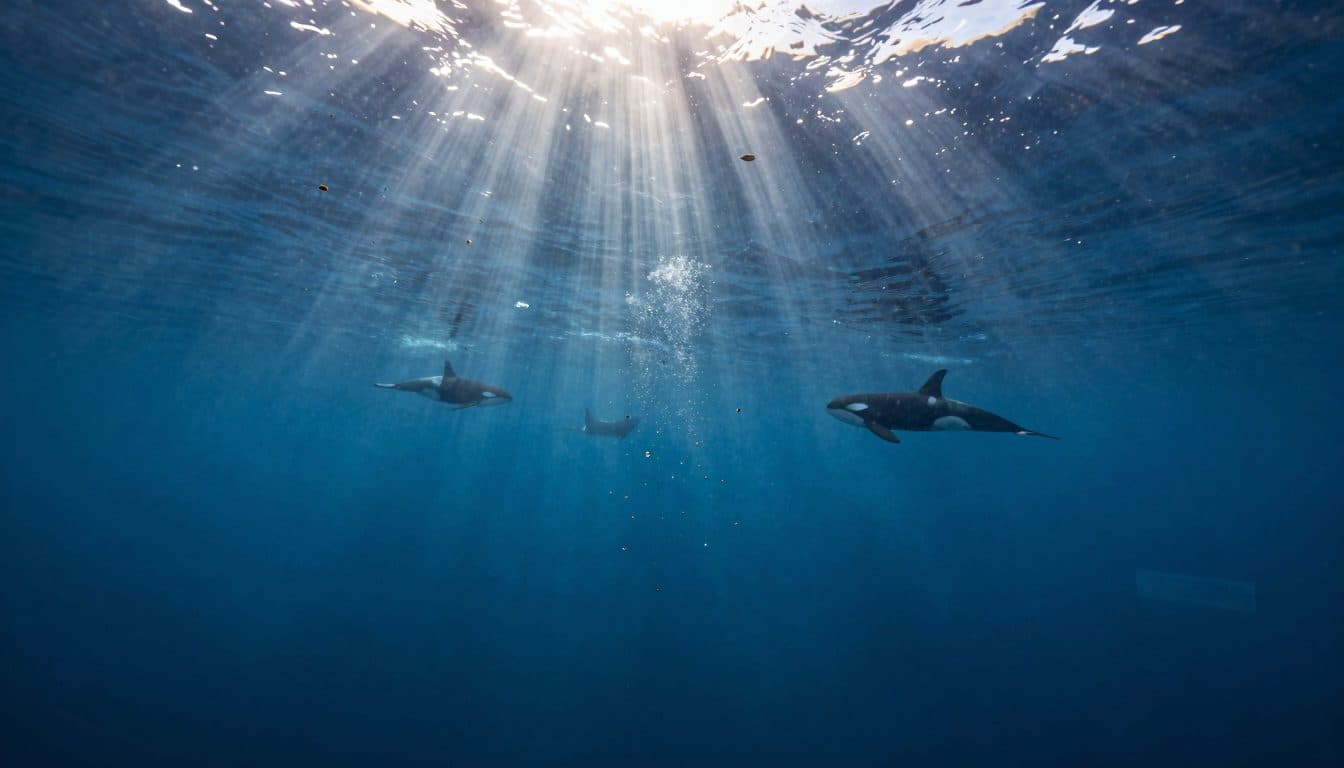
AI-generated image (z-image via Kie.ai)
Summary
A study documents how orcas in the Gulf of California deliberately shred ocean sunfish. The researchers around Kathryn Ayres see this possibly as play or as a learning technique for younger animals. Previous observations point to a behavioral pattern that has rarely been described before.
Berlin, 24 July 2026
A research team led by marine biologist Kathryn Ayres has documented how orcas in the Gulf of California deliberately tear apart ocean sunfish – possibly as play or to make feeding easier for younger animals.
Orcas, also known as killer whales, are known for their intelligence and their versatile hunting behavior. A new study now shows a particularly spectacular behavior: in the Gulf of California off the coast of the Mexican state of Baja California Sur, several orcas literally tore apart ocean sunfish, repeatedly ramming the animals until their tissue burst into thousands of pieces.
The observations come from a team led by Kathryn Ayres from the marine conservation organization Beneath The Waves and have been published in the journal Frontiers in Ethology. The researchers documented two independent events from 2024 and 2025 that occurred in nearly identical fashion off the island of Isla Cerralvo.
Documented observations in the Gulf of California
"We have documented an orca holding an ocean sunfish and releasing it just before another orca rams it at high speed, causing the tissue to break into thousands of pieces," says first author Kathryn Ayres from the marine conservation organization Beneath The Waves. According to the team, the study raises an unusual question: does this strategy serve to better prepare food for the young?
The first observation was made by Ayres in July 2024. At that time, a female orca held a dead sharptail mola (Masturus lanceolatus) by its large tail fin. A second orca rammed the fish at high speed. The ocean sunfish's tissue "exploded" into countless small fragments that spread through the water like a cloud, as the research team reports. In the following year, 2025, a similar event was filmed off the same island in the Gulf of California, according to the study.
What function this behavior serves has not yet been conclusively clarified. "We suspect that this makes it easier for younger orcas to feed or simply serves as play," the researchers write. The assumption is supported by comparable observations in other animal species, in which adult animals make it easier for younger ones to eat by breaking prey into smaller, more manageable pieces.
Play or feeding strategy
Orcas are known to play with their prey, the scientist adds. They have repeatedly been observed hurling seals through the air, "playing" with prey, or jointly manipulating objects over extended periods. Whether the spectacular "ramming bombardment" of ocean sunfish also belongs to these culturally learned behaviors cannot yet be said.
It has long been documented that orcas have an exceptionally broad diet. According to studies, orcas (killer whales) eat around 200 animal species. These include fish, seals, whales, squid, and even sharks. Ocean sunfish – with their massive, disc-shaped bodies and a length of up to three meters – are a comparatively unusual prey.
The researchers emphasize that such behaviors are not only interesting from a biological perspective. They also provide insights into the social structure and learning behavior of the animals. "Orcas frequently play with their prey," says Ayres. When younger animals observe how adult conspecifics systematically break down prey, this could be a learning process within the group.
Broad diet of killer whales
The study thus complements the picture of a highly developed and culturally diverse species. Cultural learning – the transmission of behaviors within a group – is considered well documented in killer whales. Certain hunting techniques are practiced differently in different regions and passed down through generations.
It is striking that both documented incidents occurred in the same sea area. This could indicate that it is an established tradition within a particular orca group that regularly visits the waters around Isla Cerralvo. However, two observations are not enough to statistically confirm this, as the researchers acknowledge.
The videos showing the animals dismembering the ocean sunfish were recorded with underwater cameras and drones. They allow the sequence of individual movements to be analyzed in detail. According to them, the orcas take turns: one holds the fish, another accelerates and rams at high speed.
Evidence of cultural learning
Some sequences show that the ramming speed is considerable. The researchers estimate that the orcas approach the ocean sunfish at a speed of several meters per second. The forces involved are sufficient to literally tear apart the soft yet compact body of the fish.
Another aspect is the energy expenditure. A fully grown ocean sunfish can weigh several hundred kilograms. For a single female orca, it would be difficult to efficiently dismember such a carcass with her jaws. The joint approach – holding plus ramming – could therefore represent a division of labor that distributes the energy expenditure.
The authors of the study hope that further observations will clarify whether this behavior occurs regularly and which orcas – young or adult animals – play which role in it. Future studies are also intended to clarify whether the behavior is widespread beyond the region or remains limited to a particular population.
Outlook on further research
Overall, the study shows how much remains unknown about the way of life of orcas. Despite decades of research, new behaviors keep emerging that broaden the picture of these animals. The dismemberment of ocean sunfish through coordinated ramming joins a series of examples in which killer whales develop techniques specifically tailored to certain prey.
Questions & Answers
Who researched the behavior of the orcas?
The behavior was documented by a research team led by marine biologist Kathryn Ayres from the marine conservation organization Beneath The Waves and published in the journal Frontiers in Ethology.
Where were the orcas observed tearing apart the ocean sunfish?
The two documented incidents occurred in 2024 and 2025 off Isla Cerralvo in the Gulf of California off the coast of the Mexican state of Baja California Sur.
What explanation do the researchers have for the behavior?
The researchers suspect that the joint tearing apart of ocean sunfish makes feeding easier for younger orcas or serves as play; a conclusive explanation is still pending.
Orcas tear apart ocean sunfish – study from Mexico | allfacts360