Climate Crisis: Small Steps, Big Plans – and Action at Scale
Kota Kinabalu, 17 July 2026
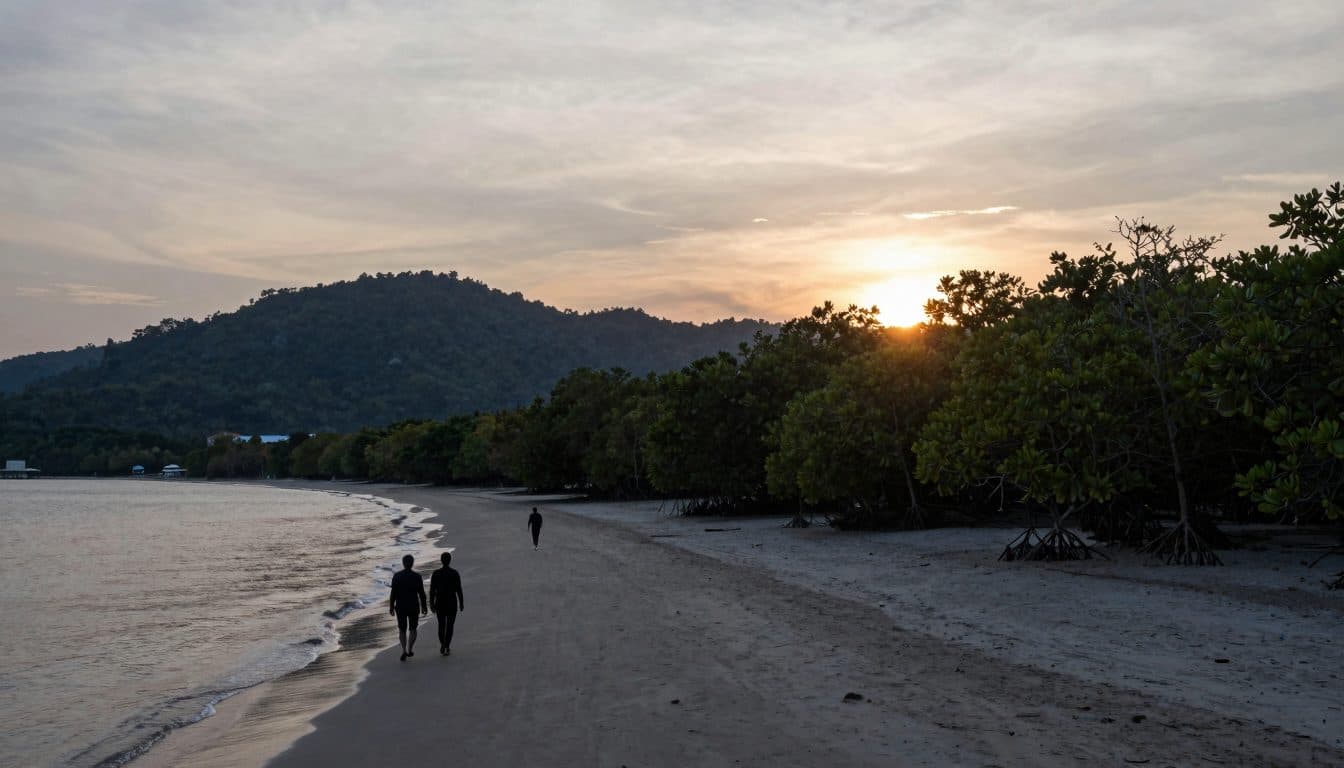
AI-generated image (z-image via Kie.ai)
Summary
A new contribution urges starting small, thinking big, and acting at scale in the fight against the climate crisis. The Amazon, the Hindu Kush Himalaya, and Borneo are considered planetary frontier regions, together hosting a quarter of all known species and storing vast carbon reserves.
Kota Kinabalu, 17 July 2026
Given sluggish progress on the UN Sustainable Development Goals, a contribution published on 17 July 2026 calls for the fight against the climate crisis to begin locally, to think globally, and to act at scale – with the three major regions of the Amazon, the Hindu Kush Himalaya, and Borneo as priority areas.
Starting Point: Weak Progress on the UN Goals
The United Nations' 17 Sustainable Development Goals were agreed in 2015. More than ten years later, the contribution says, progress is weak: there is a lack of impact, money, and political will. Only 18 percent of the goals are considered achievable by 2030.
The author describes how, on a hot summer day, she sat on Tanjung Aru beach in Kota Kinabalu, Malaysia, watching the sunset and reflecting on priorities for the coming years. For three days she had been exchanging views there with around 170 local and global organizations, including the conservation organization WWF, businesses, investors, and political decision-makers, to discuss expanding impact investing in the Sustainable Development Goals in Sabah and beyond.
The focus was on three regions: the Amazon, the Hindu Kush Himalaya, and Borneo. Together, according to the contribution, they host at least a quarter of all known species. They secure water, food, and energy for billions of people and store extensive terrestrial carbon reserves of the Earth.
Three Regions in Focus
These areas are therefore described as the planetary frontline for experiments and measures on climate stability, biodiversity, and human survival. The author sees the decisive leverage here to still achieve the global goals.
However, the risks are enormous: deforestation, the destruction of peatlands, the melting of glaciers, and short-sighted, uncoordinated development threaten to trigger irreversible tipping points. The contribution warns that the window for decisive action is narrow.
"Start small" means, according to the argument, beginning with concrete local projects – for example, protecting forests, peatlands, and watersheds, or building climate-resilient livelihoods in affected communities. Such pilot projects could show that transformation works.
From a Small Beginning to a Big Solution
"Think big," on the other hand, demands looking at the planetary dimension: what works in one region must be transferred to others, international financial flows must be redirected, and political frameworks must be coordinated globally. Only in this way can individual measures be prevented from running into the void.
"Act at scale" finally aims at the massive scaling of effective solutions: billions of investments in conservation, renewable energy, and sustainable land use, the expansion of impact investing, and binding international agreements. The contribution points to the role of private investors, who could channel capital specifically into regions with high climate and biodiversity benefits.
The central message is that the coming years are decisive for whether the international community can still achieve the goals agreed in 2015. Without a coherent strategy that links local action, global vision, and large-scale implementation, failure threatens – with serious consequences for the climate, biodiversity, and the livelihoods of future generations.
Role of Investors and Politics
The contribution also makes clear that the debate on the Sustainable Development Goals cannot be held only in capitals and at international conferences. Rather, local communities, indigenous groups, science, business, and politics must work closely together to develop viable models.
Particular emphasis is placed on the role of indigenous peoples and local communities, who have managed forests, waters, and soils in the three priority regions for generations. Their knowledge is considered indispensable for developing effective conservation and use concepts that benefit both the climate and biodiversity.
Investors, the contribution says, must be willing to take higher risks and commit capital over the long term. Return expectations often conflict with the long timeframes that conservation and sustainable development require. Innovative financial instruments and public guarantees are needed here.
Knowledge, Coordination, and Time Pressure
Political decision-makers are called upon to create clear framework conditions: binding protected area designations, reforms of subsidies that promote environmental destruction, and reliable international agreements. Only in this way can private capital be mobilized on a large scale.
Science, according to the contribution, provides the necessary foundations for identifying biodiversity hotspots, sensitive carbon sinks, and particularly endangered ecosystems. This data must flow more strongly into political and economic decisions.
At the same time, the contribution warns against underestimating the urgency: advancing deforestation in the Amazon, the rapid melting of glaciers in the Hindu Kush Himalaya, and the loss of primary forest on Borneo are not only local problems but directly affect the global climate system.
According to the author, a central challenge lies in better coordinating the numerous existing initiatives, programs, and funding sources. Fragmentation and duplication prevent scarce resources from reaching where they can have the greatest impact.
The contribution ends with an appeal to use the remaining time until 2030 decisively. Local action, global vision, and scaling are not opposites, but three levels of one and the same strategy. Only if they can be interlinked does a realistic chance remain of still achieving the UN Sustainable Development Goals.
In the coming years as well, it will be decisive whether the international community of states is willing to back up existing commitments with additional resources and clear timelines. The contribution sees this as the greatest political task of the coming years.
Questions & Answers
Which three regions are considered the planetary frontline in the fight against the climate crisis?
The contribution names the Amazon, the Hindu Kush Himalaya, and Borneo. These areas host at least a quarter of all known species, secure water, food, and energy for billions of people, and store large parts of the Earth's terrestrial carbon.
What is the status of the UN Sustainable Development Goals?
The 17 goals were agreed in 2015. More than ten years later, progress is weak according to the contribution, with a lack of impact, money, and political will, and only about 18 percent of the goals are considered achievable by 2030.
What does the call to "start small, think big, act at scale" mean concretely?
"Start small" stands for concrete local projects, for example to protect forests and peatlands, "think big" for looking at the planetary dimension and international coordination, and "act at scale" for the massive scaling of these solutions through investments, political frameworks, and international cooperation.