Pöggstall: Nighttime drinking water shutdown looms | allfacts360
Pöggstall faces nighttime drinking water shutdown – mayor puts residents under pressure
Pöggstall, 30 June 2026
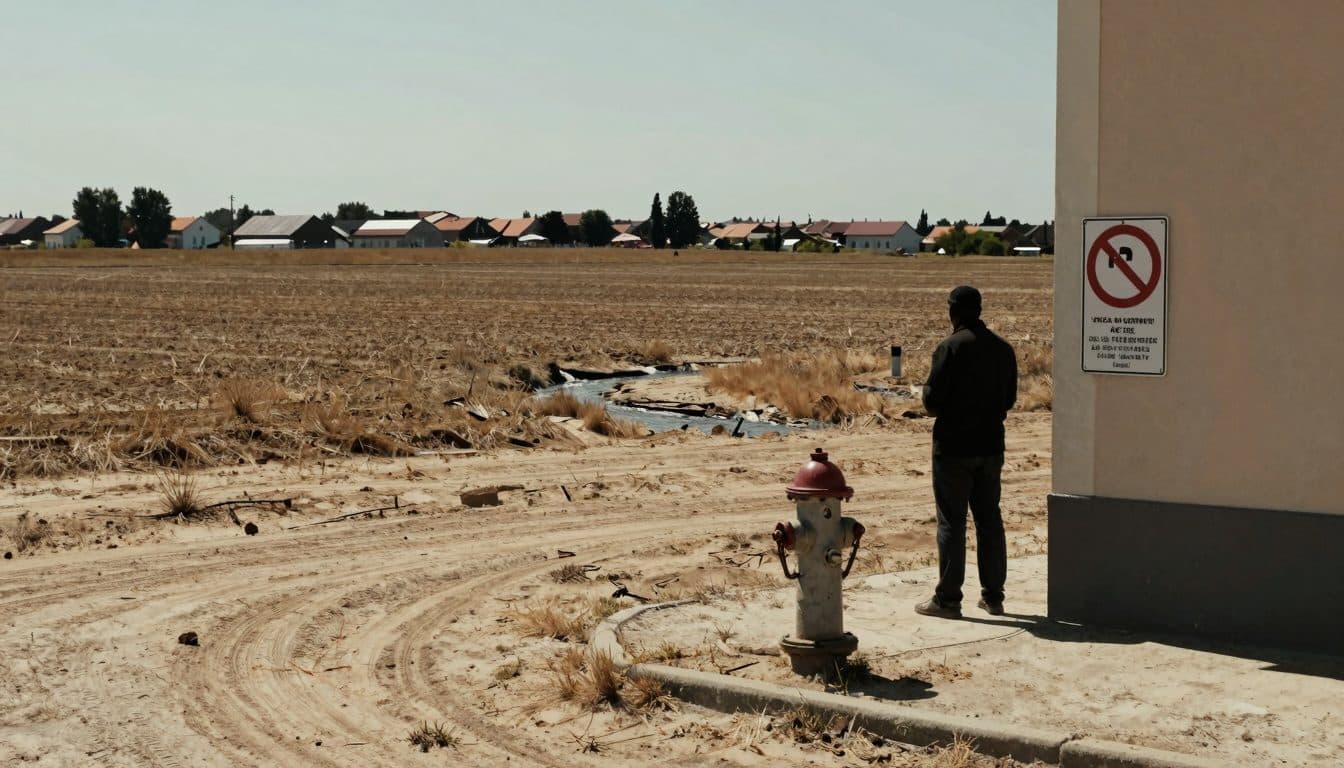
AI-generated image (z-image via Kie.ai)
Summary
The Lower Austrian municipality of Pöggstall is considering temporarily interrupting the drinking water supply between 10:00 PM and 4:00 AM if residents do not noticeably reduce their water consumption. Mayor Helmut Hahn sees the emergency measure as a last resort to ensure supply in the morning hours.
Pöggstall, 30 June 2026
The Mostviertel municipality of Pöggstall in the district of Melk is threatening its approximately 2,400 residents with a nighttime shutdown of drinking water between 10:00 PM and 4:00 AM if the extremely high water consumption does not decrease.
The municipality's warning
The municipality of Pöggstall published a clear warning on its website on Tuesday. If the increased and extremely high water consumption did not decline, a nighttime shutdown from 10:00 PM to 4:00 AM was threatened, the local authority announced. Mayor Helmut Hahn (ÖVP) explained to ORF Niederösterreich that the measure was intended to secure sufficient water for the morning hours, when many people need the cool liquid at the same time.
"Wenn wir sehen, dass der Nachtverbrauch weiter so hoch ist wie am Tag und sich unsere Hochbehälter bis in der Früh nicht erholen, dann werden wir das Wasser zeitweise abdrehen", sagte Hahn. The aim was to safeguard the morning peak, when households typically shower, wash dishes, and water gardens at the same time. The municipality currently supplies about 1,000 of the roughly 2,400 residents who are connected to the municipal network – the remaining residents draw water from their own wells.
Supply at the limit
According to the municipality, Pöggstall's supply is primarily based on six springs and a deep well, which also serves businesses. Consumption currently stands at six and a half liters per second during the day, the mayor explained. A decline was only noticeable around 10:00 PM – on the nights of the previous week, consumption had nearly doubled. Hahn primarily attributes the situation to the current heat wave and also points to continuous garden watering and pool filling by parts of the population.
For weeks, the municipality has been trying to encourage its residents to use water sparingly. "Wir versuchen seit Wochen, die Leute zu sensibilisieren, dass sie sparsam mit Wasser umgehen", sagte Hahn dem ORF Niederösterreich. Initially, appeals had been disseminated via social networks, after which flyers were also distributed to households. The municipality called on residents to "save drinking water and refrain from watering gardens, washing cars, and refilling pools."
Cemetery as the first measure
On Monday, the first concrete measures were taken at the Pöggstall cemetery: the drinking water pipeline was shut off. A quantity of 9,000 liters of utility water provided there on Monday morning had been completely used up by noon. The 9,000 liters are calculated to be enough for about 60 people. Within a few hours in the morning, the water that had been set up was largely consumed by cemetery visitors. The measure at the cemetery was a first step, Hahn explained.
The announcement of the nighttime shutdown spread quickly. The municipality's appeal was also reported on Tuesday by the "NÖN" (Niederösterreichische Nachrichten) and the APA news agency. On the municipal website, the original message was updated a few hours later and now spoke of a "possible nighttime shutdown" as a precautionary measure. According to the municipality, the option of a nighttime shutdown remains in place.
Mayor Hahn also expressed annoyance at the lack of response to the conservation appeals so far. "Wir rufen seit Wochen zum Sparen auf, es fruchtet aber nicht. Daher mussten wir die Nachtabschaltung androhen", sagte der Ortschef. He hoped that compliance by citizens would make the nighttime shutdown unnecessary. The municipality was still waiting and observing the situation.
Initial success from appeals
According to the mayor, the first measures are in fact having an effect: the water level in the elevated tank has risen by 40 centimeters. This has eased the situation at least in the short term. Whether the nighttime shutdown actually takes effect depends, according to Hahn, on whether consumption continues to decline in the evening and nighttime hours and whether the reserves recover by morning.
In an emergency, water would have to be delivered from neighboring municipalities, as the mayor explained. However, supplies there are also very tight. In addition, water from external sources would no longer qualify as drinking water and would have to be boiled before use. "Daher glauben wir, im Notfall wäre es sinnvoller, in der Nacht das Wasser ein paar Stunden abzudrehen, als das Wasser womöglich wochenlang abkochen zu müssen", sagte Hahn.
Water from neighboring municipalities is no alternative
The municipality is not alone in its approach. In Upper Austria's Grieskirchen, the water shortage has already led to bans: filling pools, washing cars, and using lawn sprinklers are prohibited there. The heat wave is affecting large parts of Austria and is pushing numerous municipalities to the limits of their drinking water supply.
Other municipalities also affected
With the announcement from Pöggstall, the municipality is, as things stand, the first in Lower Austria to specifically consider a nighttime drinking water shutdown. Should the measure actually be implemented, around 1,000 people would be directly affected – especially in the hours between midnight and the early morning.
The residents were informed via an official communication. The municipality had already received a notification about this, it was said. Mayor Hahn urgently appealed to the population to prevent a shutdown by consuming water sparingly.
In the long term, the issue of water scarcity is likely to continue to occupy the municipality. Supply via six springs and a deep well, which also serves businesses, is apparently reaching its capacity limits given the current weather conditions. Should the heat wave continue, further measures would have to be considered – possibly going beyond the nighttime shutdown.
Outlook: Wait and see
For the coming days, the municipality announced that it would continue to monitor the situation. A final decision on the nighttime shutdown is apparently to be made at short notice, depending on the development of the water level in the elevated tanks. For now, residents can only follow the mayor's appeal and refrain from watering gardens, washing cars, and filling pools.
Meanwhile, the reporting on the looming shutdown has also attracted attention beyond the region. For many observers, the events in the small Mostviertel town serve as a warning signal of how strained the drinking water supply has become in some regions of Lower Austria.
Questions & Answers
Who is Helmut Hahn and what role does he play in the water crisis in Pöggstall?
Helmut Hahn is mayor of the Lower Austrian municipality of Pöggstall (district of Melk) and a member of the ÖVP. He threatened the nighttime drinking water shutdown and called on the population to save water.
Why is Pöggstall considering a nighttime drinking water shutdown?
The municipality bases its supply on six springs and a deep well, but 6.5 liters per second are consumed during the day, and consumption remains high at night as well. To allow the elevated tanks to recover by morning, the water is to be temporarily shut off between 10:00 PM and 4:00 AM.
What measures have already been taken in Pöggstall?
The municipality first provided information via social networks and flyers, shut off the drinking water pipeline at the cemetery, and made 9,000 liters of utility water available there. The water level in the elevated tank subsequently rose by 40 centimeters.