Power outage in Haßloch affects households, phone and mobile networks – Fire on Mosel passenger ship extinguished
Mainz, 25 June 2026
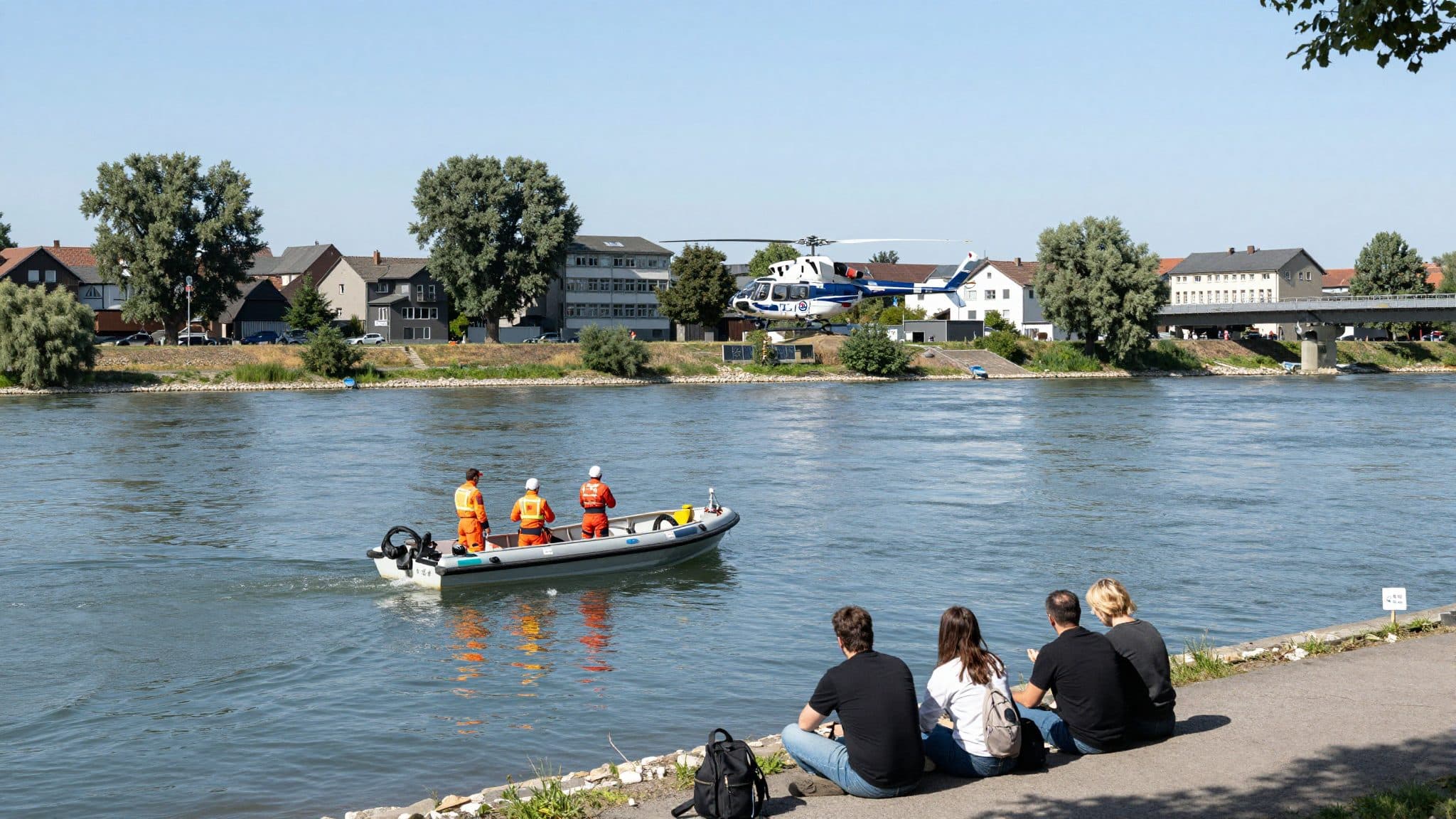
AI-generated image (z-image via Kie.ai)
Summary
In Haßloch in the district of Bad Dürkheim, the power supply failed in the morning. Landline and mobile networks were also affected, but the fire department reports that the majority of households are back on the grid. At the same time, the day before saw the operation at the St. Aldegund lock, where a fire had broken out on a passenger ship on the Mosel.
Mainz, 25 June 2026
In Haßloch in the district of Bad Dürkheim, the power supply failed in the morning, with landline telephony and mobile networks also going down; the fire department reported during the course of the morning that the majority of households were back on the grid and that phone calls were possible again for most.
Power outage in Haßloch
As the fire department reported in the morning, most households in Haßloch are back on the power grid following the outage. Phone calls are also possible again for most, it was said further. The cause of the morning outage was initially unclear; supply disruptions temporarily affected electricity, landline and mobile communications alike, temporarily limiting the reachability of emergency services, relatives and neighbours.
For inquiries, the operations centre set up a telephone point of contact. For inquiries, the following phone number applies: 06324925310. This allowed those affected to get information directly about the status of restoration and possible further disruptions. Hotlines like these are typically set up during widespread outages to relieve the lines of police and emergency services.
In parallel to the technical disruption, care at fixed support points continued. You can get help at the following support points: Feuerwehr-Gerätehaus Haßloch, Ernst-Reuter-Schule, REWE-Parkplatz. People whose apartments were without electricity could stay at these locations, for example to warm up, charge devices or get water – an approach that emergency services routinely prepare for in such situations.
Fire on passenger ship on the Mosel
The day before, an operation on the Mosel had kept emergency services on their toes. A fire broke out on a passenger ship on the Mosel yesterday evening. The vessel was moored late in the evening at the St. Aldegund lock, where fire and rescue services were deployed. According to police in Zell speaking to SWR, the fire started in a cabinet in the technical room. Property damage is estimated at 10,000 euros.
According to information so far from police, the 237 passengers were able to leave the ship uninjured. Although the fire was a serious event, the evacuation proceeded without injuries according to current findings. The cause of the technical defect in the cabinet of the technical room is still being investigated.
The power outage in Haßloch is part of a phase of high strain on the regional infrastructure. Only the day before, rescue forces had been in continuous operation on the Mosel; now, with the supply disruption in the district of Bad Dürkheim, another incident followed that underscored the importance of robust emergency plans. The swift restoration suggests that grid operators and the fire department worked in a coordinated manner.
While the situation in Haßloch eased in the morning, the discussion about the dangers of swimming in the Rhine continues. With high summer temperatures, many are currently drawn to the water. On Monday, emergency services recovered three bodies from the water. After swimming accidents in the Rhine, the bodies of three missing men were found in Hesse, as the police headquarters in Darmstadt announced on Tuesday.
Three dead after swimming accidents in the Rhine
The victims are 23, 27 and 50 years old according to authorities. They had been missing since Saturday after swimming in the Rhine in the Biblis area (Bergstraße district). Fire brigades, rescue services and helpers from the German Life Saving Society (DLRG) initially searched for the missing without success. A police helicopter was also deployed.
Relatives of the 50-year-old had called the police on Saturday evening because the man had not returned home an hour after swimming, unlike usual. The search, however, remained unsuccessful. While the water protection police were still on the lookout for the 50-year-old, passers-by alerted the boat's crew from the shore to a second suspected swimming accident.
In the immediate vicinity, two other men had gone under in the Rhine. Police stated that they were two non-swimmers aged 23 and 27. The search for them also remained unsuccessful. Emergency services searched the spot on the Rhine by boat and helicopter.
The toll highlights the particular hazard situation of the Rhine. The Rhine is one of Germany's most dangerous rivers due to its treacherous current conditions. Although the water surface often appears calm, it flows at an enormous speed that can quickly overwhelm even experienced swimmers. In addition, there are invisible undercurrents and eddies that can pull people under water.
Why the Rhine is considered particularly dangerous
Shipping traffic also contributes to the danger. As one of the busiest inland waterways in Europe, numerous cargo and passenger ships pass along the river daily. These create strong suction effects and stern waves that can put bathing individuals in dangerous situations – often without any warning. In addition, ship pilots often spot swimmers in the water too late or not at all, increasing the risk of accidents.
The murky water also makes any orientation below the surface difficult and makes rescue operations difficult and time-consuming. Against this backdrop, cities such as Düsseldorf, Cologne, Neuss and Duisburg have now banned swimming in the Rhine, while elsewhere bans apply only in partial areas or are reduced to warning signs.
The recent fatalities fit into a worrying statistic. In 2024 there were twelve, according to the DLRG for Hesse. In Hesse, 19 people died in swimming accidents last year, according to the German Life Saving Society (DLRG). In recent days, several people have already died while bathing and swimming. Investigations revealed that these are the men who had previously been reported missing.
Statistics and current weather situation
On Monday morning, the bodies of the three men aged 23, 27 and 50 were found in the Groß-Gerau district. Police confirmed in the evening that the bodies of the three missing persons had been found, police said on Tuesday. The case has reignited a debate in the region about public education, rescue infrastructure and more consistent bans.
A look at the security situation in cities such as Kaiserslautern further intensifies the mood. At a panel discussion of the format SWR Aktuell 360 Grad, results of a new security study by the Institute for Social Pedagogical Research Mainz (ism) were made known. Almost everyone in Kaiserslautern feels unsafe at night, according to the findings. In the PopUp Studio in downtown Kaiserslautern, Mayor Manfred Schulz (CDU) spoke of alarming figures and sees an urgent need for action.
Security debate in Kaiserslautern
The weather report for the reporting day suggests no relief. Today the sun shines again from early until late, with occasional thin clouds passing through. It will be hot, with highs of 31 to 37 degrees. This keeps the appeal of open waters high – and with it the risk of further accidents if bathers ignore the warnings about currents, suction effects and shipping traffic.
Questions & Answers
What is known about the power outage in Haßloch?
In the district of Bad Dürkheim, the power supply failed in the morning, causing landline and mobile networks to go down as well. According to the fire department, the majority of households are now back on the grid, and phone calls are possible again for most.
What happened with the passenger ship on the Mosel?
A fire broke out in a passenger ship on the Mosel on the previous evening, originating in a cabinet in the technical room according to police in Zell. All 237 passengers were able to leave the ship uninjured; property damage is estimated at 10,000 euros.
Why are swimming accidents in the Rhine currently considered so dangerous?
The Rhine has treacherous currents, invisible undercurrents and eddies, plus suction effects and stern waves from dense shipping traffic. Cities such as Düsseldorf, Cologne, Neuss and Duisburg have therefore banned swimming in the Rhine.
Power outage Haßloch: Fire department gives all-clear | allfacts360