SpaceX surpasses $2.1 trillion after its IPO and consolidates Musk as a benchmark in the space, AI, and social media sectors
International Desk, June 15, 2026
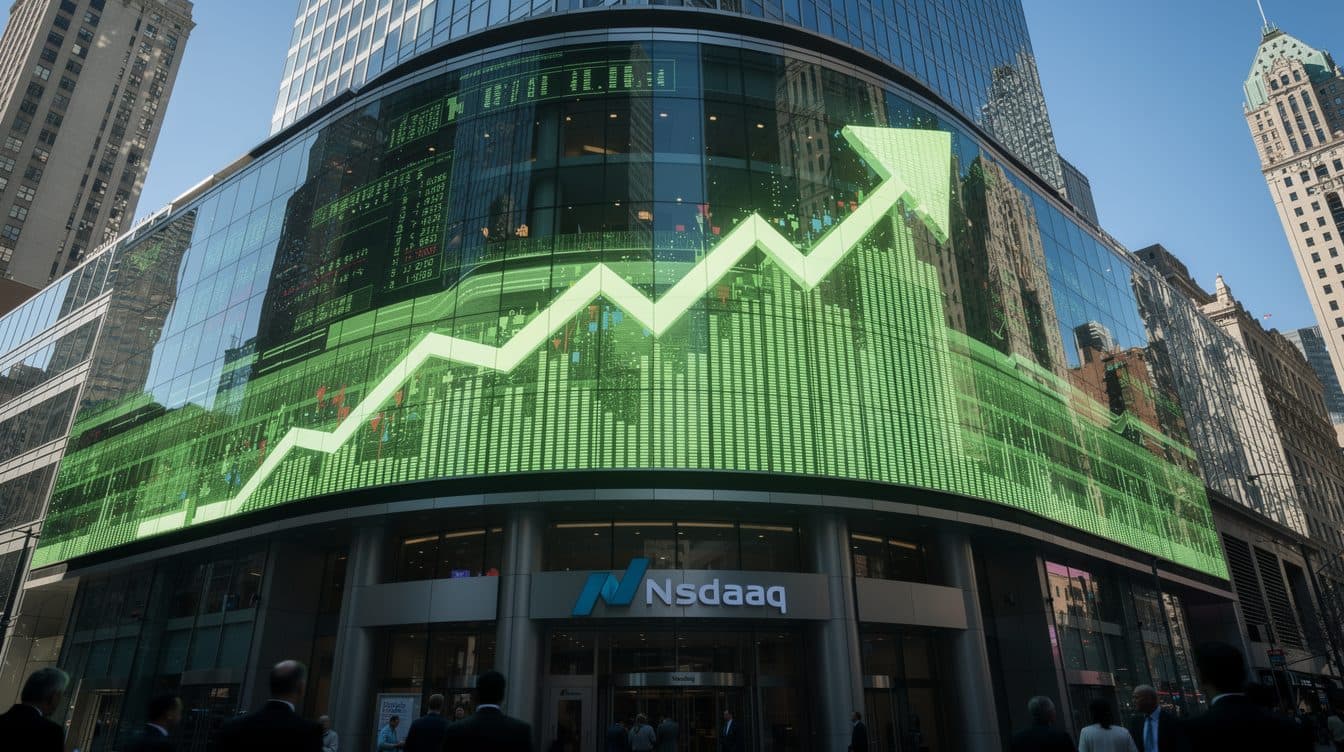
AI-generated image (flux-2/pro-text-to-image via Kie.ai)
Summary
One day after its IPO, SpaceX surpasses a $2.1 trillion valuation, driven by a nearly 20% jump on its Nasdaq debut. The transaction consolidates Elon Musk, founder and CEO, with a stake exceeding one trillion dollars and reshuffles the map of U.S. tech giants.
International Desk, June 15, 2026
The U.S. spaceflight, artificial intelligence, and social media company SpaceX surpassed a $2.1 trillion market capitalization one day after its debut on the Nasdaq, after posting a gain of nearly 20% on its opening day.
An IPO that doubles Aramco's record
The surge placed the company well above the two-trillion-dollar market value threshold, a level that until now had only been crossed in a stable way by other U.S. tech giants. In the session following the IPO, the share price advanced strongly and reinforced the perception that investor appetite for the space, artificial intelligence, and social media sectors remains intact. The subsequent trading volume and revaluation confirmed the exceptional nature of the transaction.
Ahead of the IPO, SpaceX placed 555,555,555 shares at a unit price of $135, allowing it to raise approximately $75 billion. That figure comfortably doubles the previous all-time record for an IPO, the nearly $29 billion that Saudi oil company Aramco raised in 2019. The difference illustrates the change of era in the hierarchy of the markets: international capital no longer flows massively toward fossil fuels, but toward technology, space, and artificial intelligence.
Musk consolidates a stake exceeding one trillion dollars
As founder and CEO, Elon Musk controls approximately a 50% stake in SpaceX's capital, whose valuation has already surpassed one trillion dollars. A significant portion of that wealth comes from the merger carried out in early 2026 between SpaceX and his artificial intelligence company xAI, a multi-billion-dollar transaction in which around $250 billion is said to have flowed toward xAI as part of the deal. The integration consolidates a conglomerate that combines rockets, satellites, AI models, and social platforms under a single corporate umbrella.
The governance structure of the new SpaceX has drawn analysts' attention. Special Nasdaq provisions grant Musk a voting majority exceeding 85% despite his minority economic stake, which in practice leaves outside shareholders with no control rights over the company's strategic decisions. The share structure replicates the dual-class scheme Musk previously used at Tesla and X, and fuels an ongoing debate about the separation between economic ownership and voting power in big tech.
On the financial side, the most recent balance sheet shows striking contrasts. In fiscal year 2025, SpaceX posted revenue of nearly $18.7 billion, equivalent to just over €16 billion, but recorded a net loss of close to $5 billion, largely dragged down by the high development costs of the Starship program. The combination of growing revenue and heavy losses has fueled discussion about the medium-term sustainability of the business model.
Rising revenue, growing losses
All in all, the share price has placed SpaceX in unusual stock market territory. The price-to-sales ratio hovers around one hundred times historical annual revenue, an unusually high premium even by U.S. tech sector standards. Analysts and fund managers consulted by financial media argue that such a valuation is only justified if the company meets very ambitious projections, which leaves the stock exposed to high volatility if future results do not follow through.
Musk himself has contributed to fueling expectations. In messages posted on X on June 14, 2026, the entrepreneur stated that «I think SpaceX might be able to reach approximately $1T revenue in 2030» and added that «And I would be surprised if revenue is not greater than $1T in 2031». His forecasts contrast with the more conservative estimates of the major investment banks: Morgan Stanley analysts forecast $160 billion in revenue in 2028, roughly $330 billion in 2030, and up to $3.4 trillion in 2040.
Optimistic projections versus investment banks
Goldman Sachs, for its part, pointed to around $470 billion in revenue in 2030, according to a Wall Street Journal report published in early June. The gap between the figures handled by Musk and the investment banks' projections is notable: the one-trillion target in 2030 represents roughly triple Morgan Stanley's central estimate, and more than double Goldman Sachs' most optimistic range.
The company itself is aware of the long-term potential. In its IPO documentation, SpaceX estimates that the total addressable market for its product portfolio could reach $28.5 trillion. That figure includes current businesses—the Falcon 9 rockets and the Starlink internet satellite constellation—as well as future lines of activity tied to the Starship program, satellite telecommunications, applied artificial intelligence, and services derived from X, the social network formerly known as Twitter.
The episode also reshuffles the hierarchy of the U.S. tech-heavy index. Some commentators have stressed that the group of the so-called «Magnificent Seven»—the informal club of the seven largest tech stocks on Wall Street—«das passt nun nicht mehr»: the arrival of SpaceX forces a review of rankings and benchmark indices, and opens the door to a «Magnificent Eight» or to a deeper reconfiguration of sectoral leadership.
The 2018 precedent and Musk's profile in the markets
Musk's track record in the stock market has also not gone unnoticed. In August 2018, he posted on Twitter his intention to take Tesla private at $420 per share, claiming to have financing already secured, which triggered SEC investigations and market turmoil. The episode is still cited as a precedent when evaluating the businessman's compliance with financial commitments, including the current revenue targets for SpaceX.
The IPO also comes amid strong demand for risk assets linked to artificial intelligence. Institutional and retail investors flocked to the deal, attracted by the combination of a space business with a global social platform and an AI division—a mix rarely seen on the exchange floor. The placement of 555.5 million shares at $135 was completed swiftly, and the internal sales restriction order was limited to the standard tranches for this type of issuance.
Beyond the immediate impact on the share price, analysts stress that the real challenge for SpaceX will be translating a capitalization of more than two trillion dollars into positive cash flows. The pressure to demonstrate that Starship enters regular commercial operation, that Starlink maintains its subscriber growth, and that xAI generates rising revenue from its models will define in coming periods the sustainability of the stock market premium the market currently awards the company.
The challenge of turning capitalization into cash
The firm itself has framed the IPO as a platform to accelerate its technology roadmap. The proceeds will be allocated, according to official documentation, to completing Starship development, expanding the Starlink constellation, investing in data centers for xAI, and strengthening working capital. In practice, the deal gives Musk financial firepower to compete in three sectors—space, AI, and social media—where the barrier to entry is as high as the capital expenditure required.
Ultimately, SpaceX's IPO marks a turning point both for the company and for the markets. The company enters a capitalization league previously reserved for a handful of tech firms, Musk consolidates his position as one of the great wealth accumulators of recent history, and investors get a new vehicle to bet on the convergence of space, artificial intelligence, and communication platforms. The question that remains open is whether the business figures will ultimately validate, in the coming years, the expectations the market has begun to discount since the first day of trading.
For now, the market has delivered its initial verdict with a gain of nearly 20% and a capitalization exceeding $2.1 trillion. For Musk, for investors, and for the sector's competitors, SpaceX's IPO has set a new bar in the valuation of tech companies and has made clear that space, artificial intelligence, and social media are, in the eyes of global capital, the three axes around which the next decade of the digital economy will revolve.
Questions & Answers
At what valuation did the market price SpaceX after its first day on the Nasdaq?
One day after its IPO, SpaceX surpassed a $2.1 trillion market capitalization, after posting a gain of nearly 20% on its opening day.
How much did SpaceX raise in the IPO and how does it compare with previous deals?
Ahead of the IPO, SpaceX placed 555,555,555 shares at $135, raising approximately $75 billion—more than double the nearly $29 billion that Aramco raised in its 2019 IPO.
How much weight does Elon Musk hold in the capital and in the voting rights of the new SpaceX?
The founder and CEO controls around 50% of the capital, with a stake valued at more than one trillion dollars, and holds a voting majority exceeding 85% thanks to special Nasdaq provisions, despite his minority economic stake.
SpaceX exceeds $2.1 trillion after record IPO on the Nasdaq | allfacts360