Spiegel investigation finds Nazi membership in early FPÖ leadership was higher than previously known
Vienna, 17 July 2026
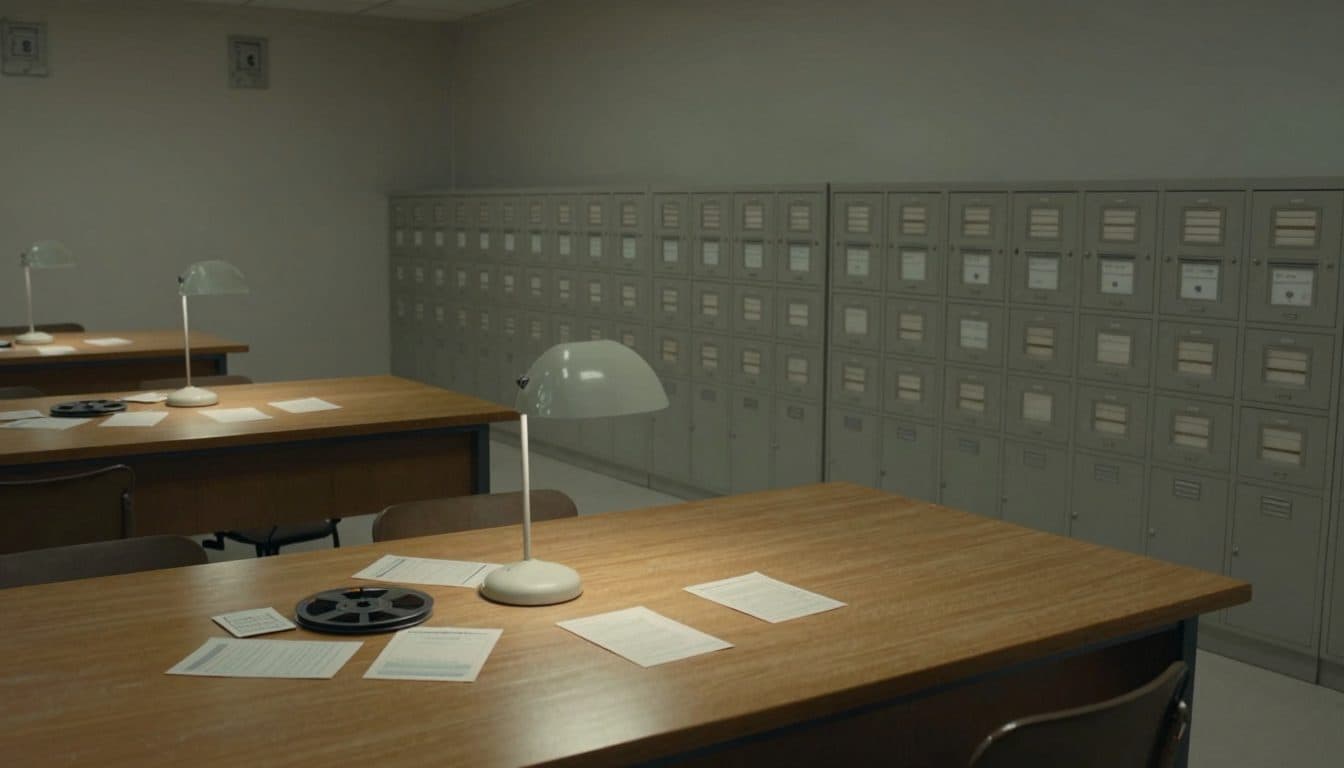
AI-generated image (z-image via Kie.ai)
Summary
A Spiegel investigation using digitized NSDAP membership files from the US National Archives shows that the early FPÖ leadership in the 1950s contained more former Nazi Party members than previously documented. The findings contradict the FPÖ's own 2019 historian report and have reignited political debate in Austria.
Vienna, 17 July 2026
A Spiegel investigation based on digitized NSDAP membership files from the US National Archives has found that the early leadership of Austria's Freedom Party (FPÖ) in the 1950s contained a higher density of former Nazi Party members than previously known, contradicting the party's own 2019 historical report.
Background: The Spiegel investigation
The German weekly magazine Spiegel reported on Friday that all four members of the so-called Proponentenkomitee, the provisional body that led the FPÖ after its founding on 3 October 1955, appear in the NSDAP membership files. The same applies to the quartet that took over leadership after the party's first federal congress in April 1956, according to the report. In 1958, the third four-person leadership team merely replaced one former NSDAP member with another former NSDAP member.
The investigation relied on roughly twelve million index cards from the US National Archives, which were downloaded, read using artificial intelligence, and transferred into a searchable database. The files had been made public by the archive. Spiegel's review of the digitized records contradicts key claims of the historian report commissioned by the FPÖ and presented in 2019, which had described several functionaries as "non-partisan" or omitted them entirely.
Key figures named in the NSDAP files
Among those now documented as NSDAP members is Franz Rainer, the chairman of the FPÖ founding committee, who joined the Nazi Party shortly after the 1938 Anschluss. Rainer held a vice-chairmanship in the FPÖ founding committee in 1955 and was elected to the party leadership in 1956. Alexander Götz senior, who later became FPÖ state party chairman in Styria, had joined the NSDAP as early as 1933. Wilma Jobst, who later became the FPÖ's federal women's leader, joined in 1938 and is not mentioned at all in the 2019 historian report.
The first regularly elected FPÖ chairman, Anton Reinthaller, had served as a Nazi minister during the 1938 annexation of Austria. In a letter after taking over the FPÖ chairmanship, Reinthaller still described himself as a "Nationalsozialist." He once told his ideological allies: "Ich eigne mich zum Politiker der Demokratie wie der Igel zum A… abwischen." The second FPÖ chairman, Friedrich Peter, mocked the fraternity-style posturing of some colleagues, saying: "Nichts ist mir mehr zuwider als dieser burschenschaftliche Trachtenverein." Peter also explained that the name "freiheitlich" had been chosen at the 1955 founding because neither "national" nor "liberal" alone was considered suitable as an umbrella term.
Contradicting the 2019 historian report
The Spiegel investigation also confirms long-standing criticism from academic experts of the 2019 historian report. The report had described Götz and Rainer as "non-partisan" and made no mention of Jobst's NSDAP membership. Historian Margit Reiter of the University of Salzburg, who published the first comprehensive scholarly study of the early phase of the FPÖ in 2019, told Spiegel: "Ideologisch überzeugte Nationalsozialisten besetzten führende Posten in der FPÖ."
The political reaction in Austria was swift. The SPÖ federal managing director Klaus Seltenheim said: "Trotz Skandalen und Enthüllungen am laufenden Band kappt die FPÖ ihre Verbindungen zum Rechtsextremismus nicht," pointing to contacts with the Identitarian movement. The SPÖ dismissed the 2019 document as "der sogenannte Historikerbericht" and said the FPÖ still has a "Rechtsextremismus-Problem."
Political reactions in Austria
The FPÖ's internal reckoning with its own past was triggered in 2018 by the discovery of antisemitic texts in the songbook of the fraternity associated with Udo Landbauer, now deputy governor of Lower Austria. The current FPÖ leader, Herbert Kickl, has used NS-era vocabulary in his rhetoric, declaring he wants to become "Volkskanzler." At the party's 70th anniversary celebration in Vienna's Hofburg in mid-June, Kickl praised the radical right as "größtes Freiheits- und Demokratieprojekt."
The Spiegel report describes the early FPÖ figures as ideologically committed Nazis who did not regard Austria as an independent nation. For them, their homeland was merely the German "Ostmark," a corner of the Reich. One FPÖ functionary is even described in the files as a "gebürtige Reichsdeutsche," as if "Deutsche" had not been enough. A long-serving FPÖ member told the STANDARD that the proportion of former Nazis in the early party was "etwa Hälfte-Hälfte."
In 1956, the Social Democrat politician Otto Kraus told a press conference that the FPÖ's founding amounted to a "Machtübernahme durch einen kleinen Kreis von Rechtsextremisten und NS-Führern" and denounced the party as a "Nachfolgeorganisation der NSDAP." The Spiegel investigation now provides documentary backing for that assessment, more than seven decades later.
Historical context and the FPÖ today
The FPÖ became the strongest political force in Austria at the 2024 National Council election. The new findings are likely to intensify the already heated debate over the party's historical legacy and its current positioning. The SPÖ said the Spiegel research confirmed its long-standing finding that the FPÖ continues to have a problem with right-wing extremism.
Reinthaller himself had spelled out his conditions for taking over the party leadership in blunt terms: "Erstens Geld, zweitens Macht, drittens Mandat." The Spiegel investigation suggests that the early FPÖ leadership was less a break with the Nazi past than a continuation of it under a new label, with many of the same personnel.
The historian report commissioned by the FPÖ in 2019 had been presented as the party's official reckoning with its past. The Spiegel findings now call into question the completeness and accuracy of that report, and are likely to fuel demands for an independent scholarly reassessment of the FPÖ's founding era.
The US National Archives' release of the digitized NSDAP membership files has opened a new avenue for historical research into postwar European politics. By applying artificial intelligence to read the roughly twelve million index cards, researchers can now cross-reference names against party rosters, government records, and other archives at a scale that was previously impossible.
For Austria, the findings land at a sensitive political moment. With the FPÖ now the strongest party in parliament and Kickl as its leader, the question of how the party deals with its early leadership's Nazi past has moved from a historical footnote to a live political issue. The Spiegel investigation is likely to be cited repeatedly in the coming parliamentary term.
Questions & Answers
What did the Spiegel investigation find about the early FPÖ?
Spiegel found that all four members of the FPÖ's provisional Proponentenkomitee and the four-person leadership that took over after the first party congress in 1956 appear in the digitized NSDAP membership files from the US National Archives, indicating a higher density of former Nazi Party members than previously documented.
Which FPÖ figures are named in the NSDAP files?
The report names Franz Rainer, who joined the NSDAP shortly after the 1938 Anschluss and chaired the FPÖ founding committee, Alexander Götz senior, who joined in 1933 and later led the FPÖ in Styria, and Wilma Jobst, who joined in 1938 and later became the FPÖ's federal women's leader.
How does the Spiegel investigation contradict the FPÖ's 2019 historian report?
The 2019 report described Götz and Rainer as "non-partisan" and made no mention of Jobst's NSDAP membership, whereas the Spiegel review of the digitized NSDAP files shows all three were members of the Nazi Party.
FPÖ Nazi membership: Spiegel NSDAP files reveal early | allfacts360