
VIENNA, May 13, 2026
Austria recorded its highest number of serious traffic injuries in 13 years during 2025, with E-scooter and child accidents contributing significantly to the surge, according to new data from Statistik Austria.
Austrian traffic injuries reached their highest level since 2017, with E-scooter and E-bike accidents driving the increase.
VIENNA, May 13, 2026
Austria recorded its highest number of serious traffic injuries in 13 years during 2025, with E-scooter and child accidents contributing significantly to the surge, according to new data from Statistik Austria.
The country's traffic injury statistics show a worrying upward trend since the pandemic lows of 2020. "Since the historic low in the Corona year 2020, the number of traffic accidents and injured persons has been rising continuously," said Manuela Lenk, Director General of Statistics at Statistik Austria.
In 2025, an average of 129 people were injured daily on Austrian roads—three more per day than in 2024. The data reveals that 22 people suffered serious injuries each day, marking the highest daily average in 13 years.
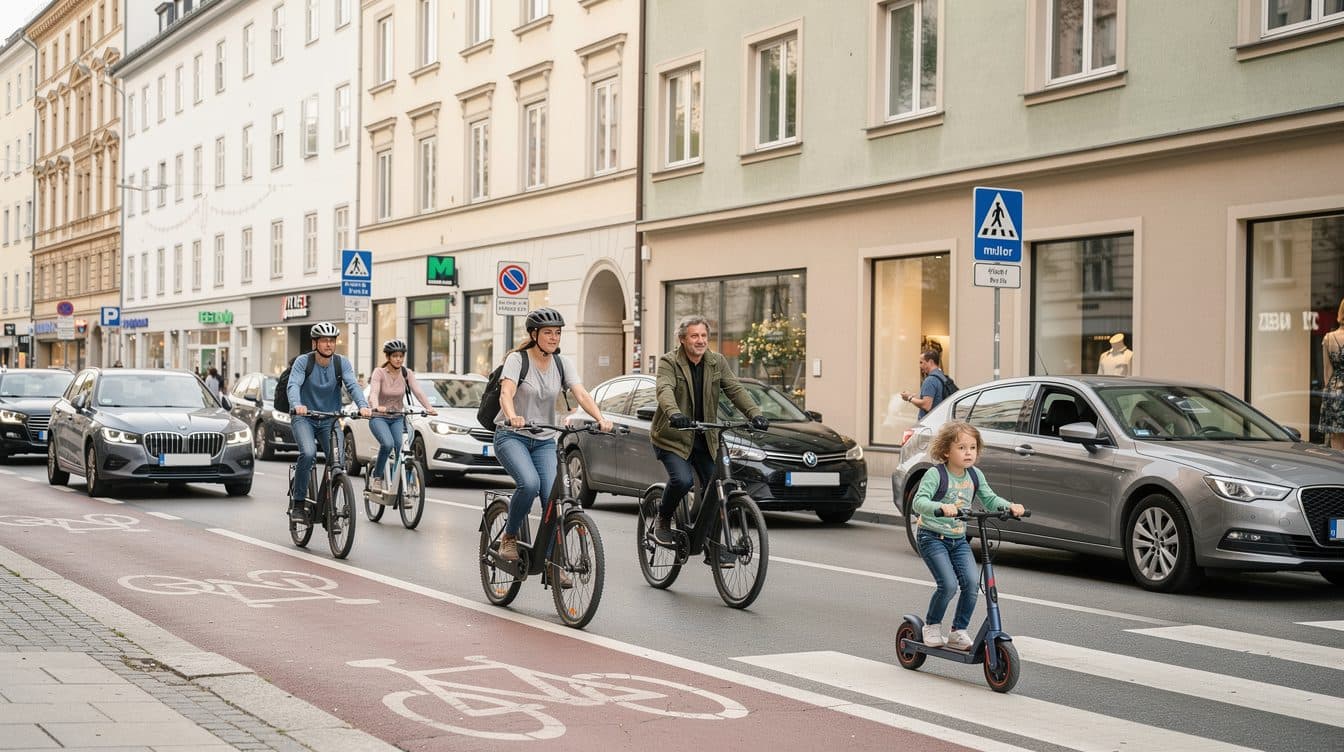
E-scooters and E-bikes were major contributors to the rise. Injuries among E-scooter riders increased by 24% compared to 2024, while E-bike injuries rose by 17%. Together, these groups accounted for 5.5% of all traffic injuries, with 2,597 E-scooter riders injured.
Children were disproportionately affected, with injury rates reaching levels not seen since 2007. Over 3,500 children were injured in traffic accidents last year—a 16% increase from 2024—and eight children died.
E-scooter accidents were a key factor, with children under 14 making up 25% of injured E-scooter riders. Injuries among 10- to 14-year-olds nearly doubled, from 328 in 2024 to 606 in 2025—an 85% spike.
Most child accidents occurred when children were passengers in cars (31%), riding bicycles (22%), or using E-scooters (18%). Helmet usage was alarmingly low among young E-scooter riders, with only 18% wearing protection at the time of accidents, compared to 59% of child cyclists.
Safety organizations are urging immediate action. The ÖAMTC described the statistics as a "clear mandate for policymakers" and reiterated its demand for "an age-independent helmet requirement for E-bikes and E-scooters."
David Nosé, a traffic engineer at ÖAMTC, criticized current regulations as ineffective: "The overwhelming majority of those injured are significantly older than the target group covered by the helmet requirement—the age-limited regulation therefore clearly misses its mark." He added that while helmets don't prevent accidents, they protect against severe head injuries.
The VCÖ emphasized infrastructure improvements, noting that 63% of fatalities occurred on rural roads. The organization called for safer rural routes, including reduced speed limits, increased speed checks, and separated bike paths.
"Safeguarding children and seniors in traffic requires systemic changes," the VCÖ stated. "We need more traffic calming measures in cities, more 30 km/h zones instead of 50 km/h, and a major expansion of cycling infrastructure." VCÖ expert Klara Maria Schenk stressed that "safe bike paths are the most effective measure to reduce cycling accidents."
The data showed stark differences across Austria's states. Lower Austria recorded 111 traffic deaths—27 more than in 2024—accounting for 28% of the country's 403 fatalities. Vorarlberg saw deaths double from seven to 14.
Only Vienna and Salzburg saw improvements, with fatalities dropping from 20 to 15 in the capital and from 28 to 24 in Salzburg. Salzburg was unique in having fewer accidents and injuries overall compared to 2024.
Cycling fatalities more than doubled nationwide, from 32 in 2024 to 65 in 2025, split nearly evenly between traditional cyclists (33 deaths) and E-bike riders (32 deaths).
Public support for safety measures appears strong. An ÖAMTC survey in November 2025 found 84% approval for E-bike helmet mandates and 85% for E-scooter helmet requirements.