Trial begins at Kassel Regional Court: Three former Wilke executives charged with manslaughter by negligence
Kassel, July 6, 2026
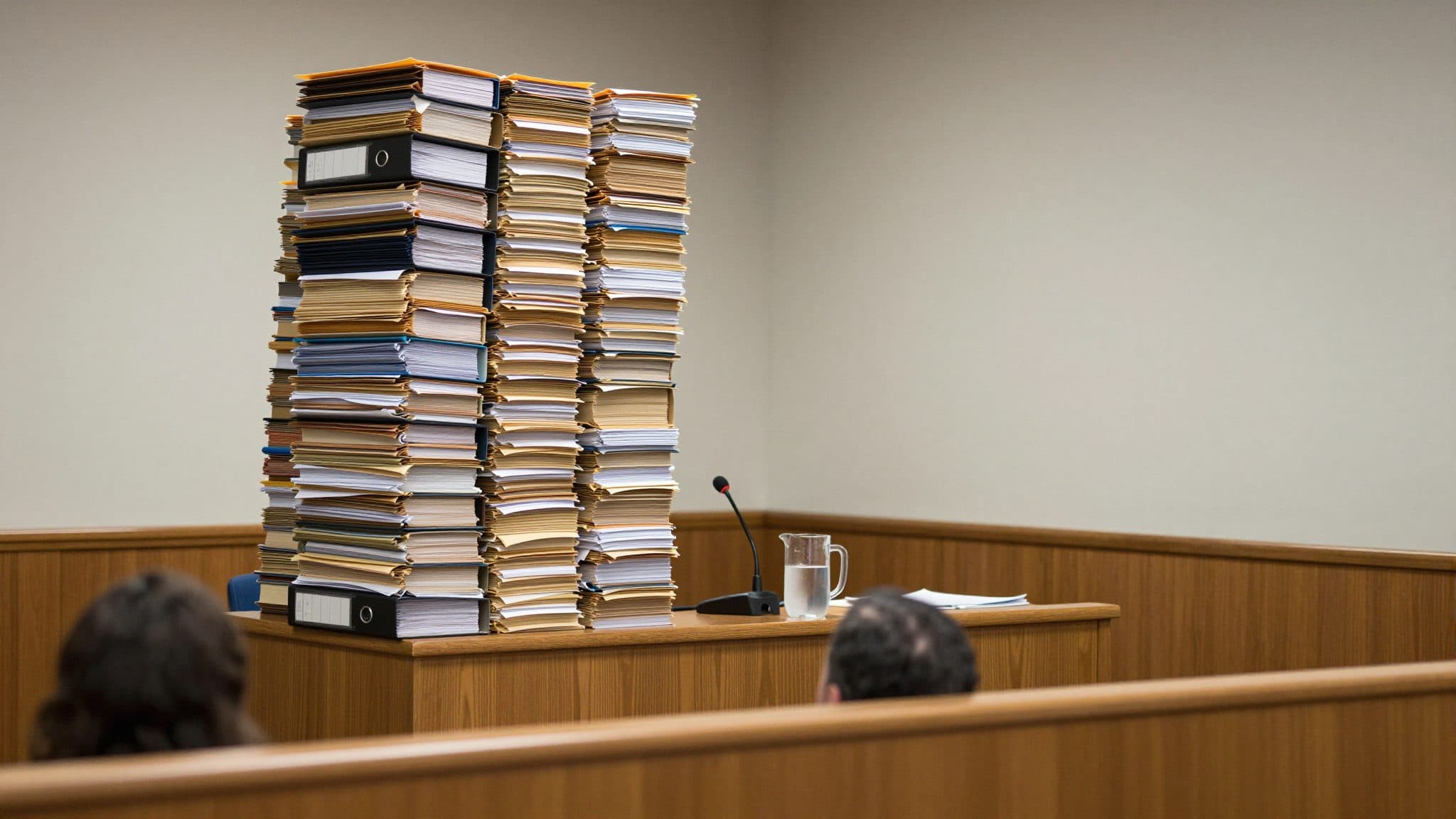
AI-generated image (z-image via Kie.ai)
Summary
Nearly seven years after the Wilke sausage scandal, the criminal trial against three former executives of the insolvent Hessian manufacturer began at the Kassel Regional Court. The public prosecutor's office accuses the defendants, among other things, of manslaughter by negligence in eleven cases, because Listeria germs in the products allegedly led to the deaths of people.
Kassel, July 6, 2026
At the Kassel Regional Court, the criminal trial against three former executives of the insolvent sausage manufacturer Wilke from Twistetal began on Monday. The public prosecutor's office accuses them, among other things, of manslaughter by negligence in eleven cases.
The charges are directed against the now 57-year-old managing director, his 55-year-old deputy, and the 58-year-old production manager of the plant in Twistetal-Berndorf in the Hessian district of Waldeck-Frankenberg. As the public prosecutor's office explained at the start of the trial, the defendants had allowed germ-contaminated sausage to be produced under "catastrophic hygienic conditions" between 2015 and 2019. A spokesperson for the public prosecutor's office described the scope of the files to hessenschau as "room-filling".
The charges at a glance
At the center of the proceedings is the question of who bears responsibility for the deaths of eleven people who died of listeriosis after consuming the contaminated products. According to the public prosecutor's office, the victims were between 47 and 86 years old and came from North Rhine-Westphalia, Bavaria, Baden-Württemberg, Brandenburg, Lower Saxony, Saxony, Berlin, and Saarland. Overall, Listeria was detected in 37 people, seven of whom – including a 31-year-old woman and a 76-year-old man in Hesse – are also said to have suffered a severe infection.
Listeria are bacteria that can trigger food poisoning. In October 2019, after the closure of the plant, there was talk of "ideal conditions" for the multiplication and spread of the germs. Elsewhere it was stated, "the plant in the condition found offers no guarantee for the production of safe food." In a freight elevator, in which sausage and meat had also been transported openly, a "putrefaction odor" was detected. In samples, the Listeria strain "Sigma 1" was also found.
The scale of the scandal
According to the indictment, the defendants are accused of having brought goods that were no longer saleable onto the market "in order to secure corresponding revenues for the company." In addition to manslaughter by negligence and bodily harm, the public prosecutor's office also charges the three suspects with the introduction of substances hazardous to health in four cases, fraud in 17 cases, and the placing on the market of foodstuffs hazardous to health in 18 cases.
According to the public prosecutor's office, the indictment comprises 200 pages, accompanied by 160 binders of evidence. Part of the original charges has already become time-barred and was not admitted. The trial is therefore beginning with a delay of several years – the court and the public prosecutor's office had been in dispute over points not admitted to the indictment since 2022. The public prosecutor's office stated that the demanding legal situation requires a very conscientious examination, which "is not even remotely comparable to an average economic criminal proceeding of increased scope and difficulty".
Political consequences and strengthened controls
More than a dozen hearing days are currently scheduled before the 2nd Grand Criminal Chamber of the Kassel Regional Court. The Wilke scandal had already reached a scientific dimension in 2018: At that time, the Robert Koch Institute (RKI) identified a cluster of illnesses caused by Listeria and, through genome sequencing, identified a specific Listeria cluster that was ultimately traced back to the manufacturer in Twistetal-Berndorf.
The backstory of the case goes back to 2019: At that time, high levels of Listeria contamination were detected in some of the sausage products put into circulation by Wilke. In October 2019, the plant was closed after the germs had been detected. In the region, Wilke had previously been a major employer and important business taxpayer with the slogan "Köstliches aus dem Waldecker Land". The mayor of Twistetal, Friedrich Vogel (independent), told Hessischer Rundfunk: "Die Gemeinde profitiert dann von den entsprechenden höheren Einwohnerzahlen."
What remained of the former plant
Today, little remains of the former size of the company. What is left is an industrial wasteland on a 30,000-square-meter site in the middle of Berndorf's town center. The company is now insolvent. The site has lain fallow for years.
The scandal was also followed by political aftershocks. Hesse's Consumer Protection Minister Priska Hinz already said in early 2020: "Wir haben aus dem Wilke-Skandal weitreichende Konsequenzen gezogen." A spokesperson for her ministry stated that the local offices today have significantly more staff than in 2019. The number of food inspectors has risen by 15 percent during this period.
With this, the state took up the criticism that the food supervisory authority had not sufficiently inspected the plant over the years. At the same time, Vogel emphasized the economic side: "Und wenn Unternehmen gut arbeiten, würde auch die Gewerbesteuer sprudeln."
The Wilke case stands as an example of a broader debate about the control of food producers in Germany. The incidents had already attracted nationwide attention immediately after they became known, because it became clear how long a plant with massive hygienic deficiencies had been able to produce before authorities intervened.
A case of nationwide significance
The scandal is now considered one of the most severe food scandals in Hesse in recent years. The main trial that has now begun is to clarify whether and to what extent the three defendants can be held responsible for the hygienic conditions and the resulting illnesses and deaths.
With regard to the victims, the public prosecutor's office stated that the investigation of the case is a high priority. How long the proceedings will ultimately take is currently unclear – given the volume of files and the complexity, a lengthy course is considered likely.
Parallel to the legal consequences, it remains to be seen what long-term effects the politically announced reinforcements in food controls in Hesse and beyond will have. Industry associations and consumer advocates have pointed to the need for stricter controls and higher control density since the Wilke scandal.
Outlook on further proceedings
Internationally as well, the case is in the focus of the professional world: The genomic sequence of the Listeria cluster detected at Wilke has become a reference case for the traceability of food-borne infections.
As the public prosecutor's office and the court made clear on Monday, the coming hearing days will show whether the charges against the three defendants, after years of preparation, can now also be substantiated in court. For Twistetal-Berndorf, the trial remains not only a legal, but also an economic and emotional chapter that is closely linked to the former sausage plant "Köstliches aus dem Waldecker Land".
If the court convicts the defendants, this could also have a signaling effect for similar cases in the food industry. At the same time, the case illustrates how long it can take from the uncovering of a scandal to court proceedings when extensive files and complex legal questions need to be clarified.
With regard to the start of the trial, it should be noted: The charges are serious, the evidence is extensive, and with the eleven fatalities, human fates are at the center of the proceedings that the Kassel Regional Court will now accompany over many hearing days.
Questions & Answers
What is the Wilke trial at the Kassel Regional Court about?
At the Kassel Regional Court, three former executives of the insolvent sausage manufacturer Wilke from Twistetal must answer for themselves, facing charges including manslaughter by negligence in eleven cases.
How could the Listeria scandal at Wilke happen?
The public prosecutor's office accuses the defendants of having produced and marketed germ-contaminated sausage under "catastrophic hygienic conditions" from 2015 to 2019, which led to fatal listeriosis in at least eleven people.
What consequences has Hesse drawn from the scandal?
According to Consumer Protection Minister Priska Hinz, among other things, the number of food inspectors in Hessian offices has been increased by 15 percent since 2019.
Wilke trial Kassel: Charges against ex-bosses after sausage | allfacts360