Ukraine Intensifies Attacks on Wildberries Warehouses in Russia
Berlin, July 26, 2026
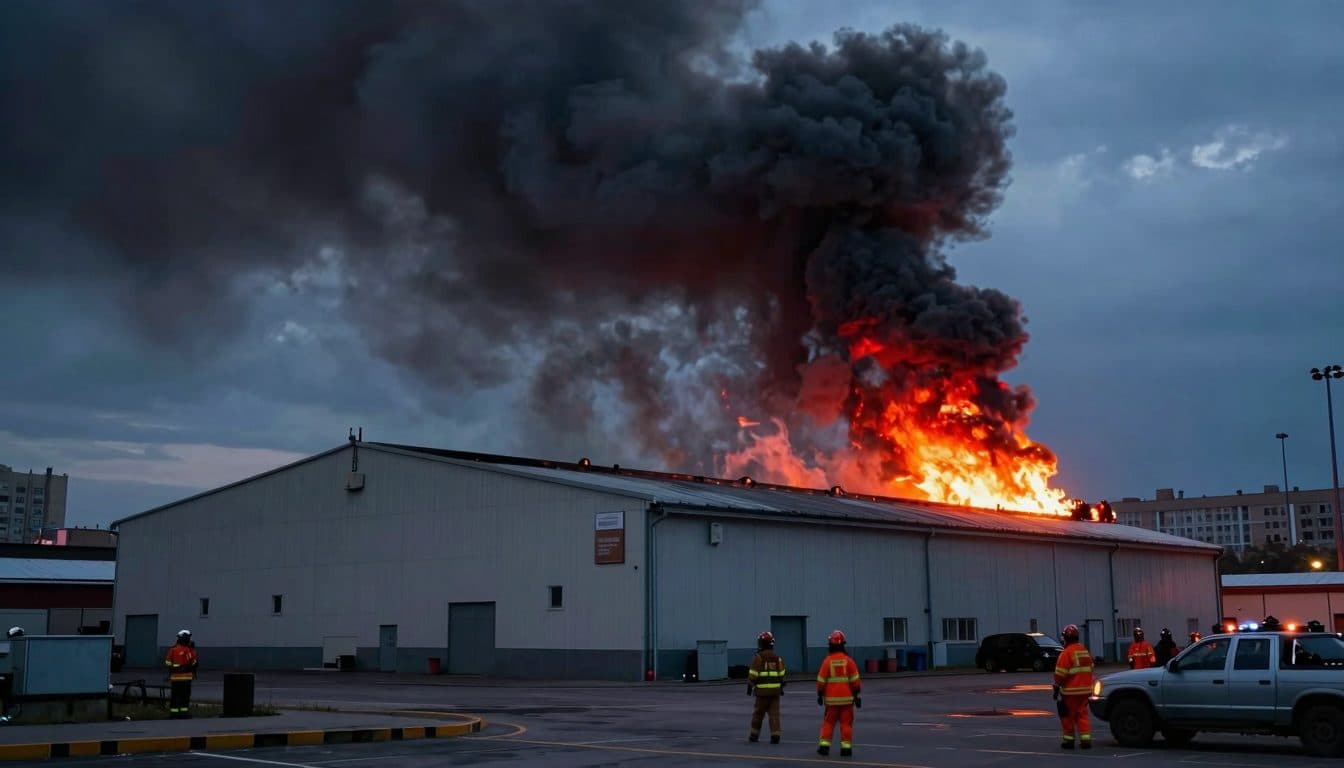
AI-generated image (z-image via Kie.ai)
Summary
Ukraine has attacked several logistics centers of Russia's largest online retailer Wildberries in recent days, including sites in St. Petersburg. President Zelensky spoke about a hit oil facility located more than 1,300 kilometers away and declared that the attacker's economy should be dealt a tangible blow.
Berlin, July 26, 2026
The Ukrainian army has repeatedly attacked warehouses and logistics centers of the Russian online retailer Wildberries in recent days, including sites in St. Petersburg and in Putin's hometown, according to Ukrainian and Russian sources.
Wave of Attacks on "Russia's Amazon"
Russia's largest online retailer Wildberries, often referred to as "Russia's Amazon," has become the target of a new wave of attacks, according to Ukraine. According to the Ukrainian army and the Kyiv Independent, several of the company's sites have been hit by drones since last weekend. The Pulkovo Airport, located near the metropolis of St. Petersburg, also temporarily suspended operations and only resumed them at around 6:00 a.m. local time. St. Petersburg lies more than 800 kilometers from the Ukrainian border.
The night before, Ukrainian forces launched at least 50 drones over the metropolis, according to official Russian figures. In total, Russia claimed to have intercepted 571 drones over Russian territory and the annexed Crimean Black Sea peninsula that night. Russian media published videos showing massive black-red columns of smoke rising over the fires at the warehouse sites.
According to Ukrainian President Volodymyr Zelensky, the targets also included an oil facility more than 1,300 kilometers from the Ukrainian border, as well as other logistics sites in Russia. "We have announced a logistics lockdown," said Mykhailo Fedorov in an interview with the YouTube channel Pressing. "Logistics will be cut off, Crimea will be isolated." The aim of the attacks is to damage the Russian economy so severely that the Kremlin can no longer finance the war.
Drones and Military Goods: Why Wildberries Is in the Crosshairs
In the assessment of Western observers, Wildberries is far more than an ordinary mail-order company. The company handles ordering, payment, and logistics for numerous large and small retailers and, according to Ukraine, is also a "transit hub for sanctioned electronics parts." The Ukrainian newspaper reports that drones and drone accessories, including twelve-kilometer-long fiber optic cables, are available in Wildberries' online shop. Military goods such as flak jackets are also distributed via the platform.
The company's economic significance for Russia is considerable. According to Ukrainian figures, Wildberries alone accounts for roughly 3 percent of Russian gross domestic product. The Kyiv Independent cites an analysis putting previous damages at the equivalent of around 1.2 billion US dollars; CNBC points to a calculation that puts the figure at 2.3 billion US dollars. Russian media estimate the damages at around two billion Swiss francs.
Economic Significance and Damage Tally
Russia reports several deaths in connection with the attacks. According to Russian authorities, two people died in one of the warehouse fires. Reports also surfaced about killed Wildberries employees. The entrepreneur, regarded as Russia's richest woman and the country's first self-made billionaire, issued a statement: "There are no words to describe all the feelings and emotions, the news site quotes her: 'But these situations above all show one thing: We must continue to do what we do, for the benefit of people.'"
Among the losers, according to Ukrainian and Western accounts, are above all thousands of small and medium-sized retailers who store their goods at Wildberries. The Ukrainian newspaper reports that Wildberries recently changed its terms and conditions and no longer accepts liability for the loss of goods in warehouses in cases of force majeure. Many retailers have complained on social networks about enormous losses. Within Ukraine itself, according to the Kyiv Independent, the attacks on Wildberries are widely welcomed or even celebrated.
Erhard Bühler considers Wildberries a "legitimate target" of Ukrainian attacks. Because the company is a "transit hub for sanctioned electronics parts." International law scholar Schmitt, professor of international law at the University of Reading in England, also provided the "New York Times" with an assessment of the attacks. An SRF reportage by correspondent David Nauer contextualizes the strategy: "After four and a half years of war, the Ukrainians want the Russians to truly feel the war for once."
Reactions and International Law Assessment
Parallel to the attacks on Russian logistics infrastructure, Russia is in turn ramping up the pressure on Ukrainian port cities. The head of the Odesa military administration, Oleh Kiper, said on Ukrainian television that Russia has been increasingly shelling Odesa and its port facilities since 2023. "Agriculture is a particular challenge," said Kiper. "Together with the military, however, we are working to strengthen protective measures and restore normal operations."
According to Ukrainian figures, almost 200 ships and other watercraft have been attacked in this month alone. Zelensky stated that the previous day, "not a single ship could enter our ports." The aim of the Russian attacks has always been "to disrupt the so-called grain corridor, because it is our maritime gateway to the world." Around 90 percent of Ukrainian exports are normally handled via seaports. Market analysts therefore expect a significant decline in grain exports in the coming months. "We already understood a few months ago what they will do: They will try everything to block our grain corridor," Fedorov added.
Mutual Attacks on Ports and Energy Facilities
Just a few days ago, ten seafarers died when the freighter "Golden Leo" was hit by Russian cruise missiles. Ukrainian ports have reportedly become too risky for many shipping companies. The administration in Mykolaiv reported growing problems with imports and exports.
Separately, the Russian army announced, according to the Defense Ministry in Moscow, the capture of the village of Bilyzke, population 480, in the Donetsk region in eastern Ukraine. The Ukrainian General Staff did not initially comment on the Russian territorial gains. The International Atomic Energy Agency (IAEA) meanwhile stated that "military activities" were partly impairing the water supply of the Russian-occupied Zaporizhzhia nuclear power plant.
According to another report, a Romanian F-16 shot down a drone over the airspace of the NATO country for the first time since the start of the Ukraine war. Romanian President Nicusor Dan stated that an F-16 fighter jet had brought it down. Ukraine also reported a Russian attack on an energy facility in the northern Ukrainian city of Chernihiv, after which around 150,000 consumers there and in the surrounding district were left without electricity.
Most recently, according to Russian reports, a Sukhoi Su-57 fighter jet crashed near Moscow. The Defense Ministry in Moscow attributed the crash to a technical fault.
The attacks on Wildberries fit into a broader Ukrainian strategy of using drones and long-range weapons to systematically weaken infrastructure on Russian territory. The Ukrainian leadership stresses that the war must increasingly be felt by Russia on its own soil. By shelling ports, energy facilities, and now also major commercial logistics, Russia is, from the perspective of Ukrainian observers, pursuing the mirror-image goal of undermining Ukraine's economic and military capacity to act.
Numerous cities and villages in Ukraine are, according to UN estimates, completely destroyed. According to Ukraine, Russia has been attacking civilian targets such as post offices, shopping centers, power plants, bridges, roads, schools, and hospitals for years. Observers assess that the mutual attacks on each other's rear areas are increasingly changing the logic of the conflict, now in its fourth and a half year.
Questions & Answers
Why is Ukraine specifically attacking Wildberries?
According to Ukraine, Wildberries is far more than a normal mail-order company: It handles ordering, payment, and logistics for numerous retailers, accounts according to Zelensky for around three percent of Russian gross domestic product, and is used as a transit hub for sanctioned electronics parts and military goods such as drones or flak jackets.
What damages have occurred so far?
The Kyiv Independent cites an analysis putting damages at the equivalent of around 1.2 billion US dollars; CNBC points to an estimate of 2.3 billion US dollars. Russian media calculate the damages at around two billion Swiss francs.
What civilian consequences do the attacks have?
Russia reports two deaths in one of the warehouse fires and killed Wildberries employees. The main victims, according to Ukrainian sources, are thousands of small and medium-sized retailers who store their goods at Wildberries; according to reports, the company has changed its terms and conditions so that it no longer accepts liability for goods losses in cases of force majeure.