US House of Representatives Votes in Favor of Permanent Daylight Saving Time
Washington, July 15, 2026
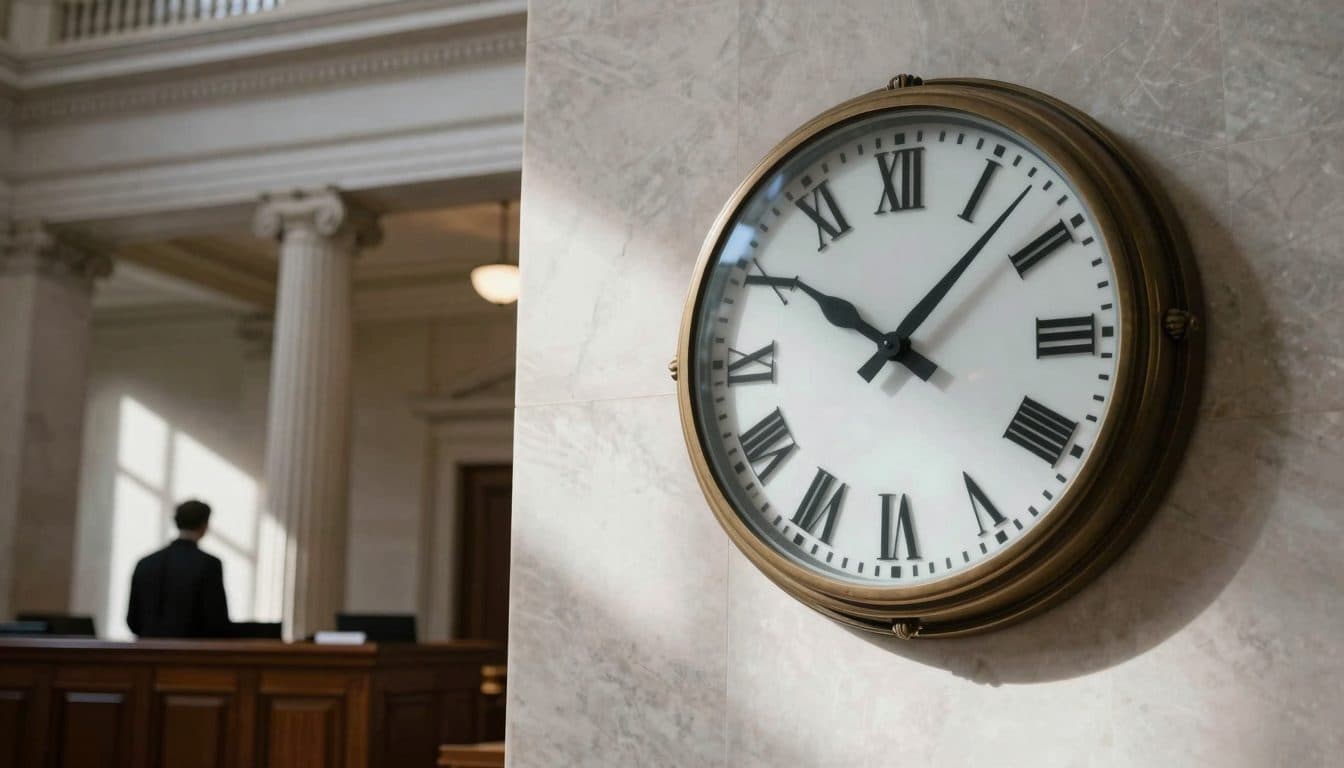
AI-generated image (z-image via Kie.ai)
Summary
The US House of Representatives voted on Tuesday (local time) with 308 to 117 votes in favor of a bill that would introduce permanent daylight saving time in…
Washington, July 15, 2026
Background: Current Regulations in the USA
The US House of Representatives voted on Tuesday (local time) with 308 to 117 votes in favor of a bill that would introduce permanent daylight saving time in the United States and end the semi-annual clock changes.
With this decision, the current daylight saving time would become the new standard time. Should the bill passed on Tuesday come into force, the planned return to standard time in early November would be canceled. As a result, most parts of the US would permanently observe the time that currently applies there during the summer half of the year. Currently, it lasts from early March to early November, roughly two-thirds of the entire year.
Representatives voted with a broad majority in favor of the initiative. In the House, 308 members voted to abolish the time change, while 117 voted against it. The bill also includes an opt-out clause for individual states that wish to remain on permanent standard time. This gives states the option to permanently opt out of the switch.
Next Steps in Congress
Now it is the turn of the second chamber of parliament and ultimately US President Donald Trump. He supports the measure, under which the currently applicable time would become standard time. Only when both the Senate and the House of Representatives approve the initiative and the president signs it would the regulation come into force.
Daylight saving time is as controversial in the US as it is in Europe. In the United States as well, there is an ongoing public debate about the health, economic, and safety-related consequences of the annual change. In the US, daylight saving time was introduced in the 1960s and its duration has been gradually extended. Originally, it lasted from late April to late October; in the following years, efforts were made to gradually extend its duration.
Previous Attempt in the 1970s
US policymakers had already made one push toward permanent daylight saving time. Following the first oil crisis, there was to be a trial of permanent daylight saving time in 1974 and 1975, but the experiment was not sustained. Following protests, it was suspended between October 1974 and February 1975. The current attempt explicitly references the experiences of that time.
Special Case Arizona, Hawaii, and Puerto Rico
Not all US states and territories currently participate in the time change. Arizona (with the exception of the Navajo Nation), Hawaii, as well as overseas territories such as Puerto Rico, observe standard time year-round. With the planned opt-out clause, this practice would be put on a statutory basis, and at the same time, additional states could permanently revert to standard time.
A Look Toward Europe and Austria
Europe has also struggled for years with the abolition of the time change. The EU Commission proposed in 2018 to abolish the seasonal time change. A public consultation organized by the EU Commission showed clear support from citizens for doing so. In the Council, however, the governments of EU countries were unable to agree on a common line. After countless debates, studies, and political setbacks, Brussels ultimately resigned and shelved the efforts for the time being.
In Austria, the mood among the public has been clear for a long time: a market survey conducted in March showed that four-fifths of Austrians reject the time change. Only 20 percent want a continuation of the seasonal time change. When asked which alternative is preferred, a more nuanced picture emerges: 54 percent of Austrians want daylight saving time to be kept permanently, while 26 percent would prefer permanent standard time. As an alternative, permanent daylight saving time is in the lead.
The history of daylight saving time in Austria goes back a long way. In Austria, daylight saving time was introduced for economic reasons for the first time from 1916 to 1920 and then applied again in the years 1940 to 1948. In coordination with the Council of Europe, daylight saving time was reintroduced in 1980. Since Austria's accession to the EU in 1995, daylight saving time has applied in accordance with binding EU regulations.
The EU member states are therefore in a situation similar to that of the US before the House of Representatives voted: a broad majority of citizens wants to abolish the time change, but governments have so far been unable to agree on a common approach. While Congress in Washington is making a new attempt, efforts in Europe remain blocked for the time being.
With the vote in the House of Representatives, however, the debate over the time change is not over. Numerous questions remain open in the US as well, including the harmonization of time zones, the effects on school and work start times in winter, and coordination with neighboring countries Mexico and Canada. The coming weeks will show whether the Senate approves the initiative with a similarly broad margin.
One thing is certain: should the law come into force, it would be the biggest change to the time regulations in the US in decades. The semi-annual clock change, which is regarded as a nuisance in many parts of the world, would then be a thing of the past in most US states.
Observers point out that comparable initiatives in the past have repeatedly failed due to a lack of majorities. The current push benefits from the clear support of the Trump administration, which classifies the initiative as an energy policy and economic measure. Whether this will be enough in the Senate remains to be seen.
Possible Consequences and Outlook
For Austria and the other EU member states, however, a US regulation on permanent daylight saving time would have no direct impact. European time regulations remain independent of the US model. Should Brussels once again discuss abolishing the time change, however, the Washington vote could be introduced into the debate as an additional argument.
For now, the time change remains in place in Austria and the EU. The next regular change to winter time is scheduled for early November in Europe as well. In the US, this change would be eliminated when the new law comes into force.
The news was disseminated on July 15, 2026, among others, by Deutschlandfunk and the Austria Presse Agentur (APA). It attracted international attention, as the US would be taking a special path with a possible permanent abandonment of the time change — one likely to be debated beyond the country's borders.
Questions & Answers
What did the US House of Representatives vote in favor of?
The House of Representatives voted on Tuesday (local time) with 308 to 117 votes in favor of a bill that would abolish the semi-annual time change in the US and permanently introduce daylight saving time. The bill contains an opt-out clause for states that wish to retain standard time.
Which regions in the US already do not observe daylight saving time?
Arizona (with the exception of the Navajo Nation), Hawaii, as well as overseas territories such as Puerto Rico, already observe standard time year-round and do not participate in the time change.
What is the Austrian public's stance on the time change?
According to a March market survey, around 80 percent of Austrians reject the time change, 54 percent want permanent daylight saving time and 26 percent want permanent standard time; only 20 percent want to maintain the seasonal time change.
US House of Representatives Votes in Favor of Permanent… | allfacts360