Vatican Excommunicates Pius Brotherhood Following Unauthorized Episcopal Consecrations in Switzerland
Vatican City, 02 July 2026
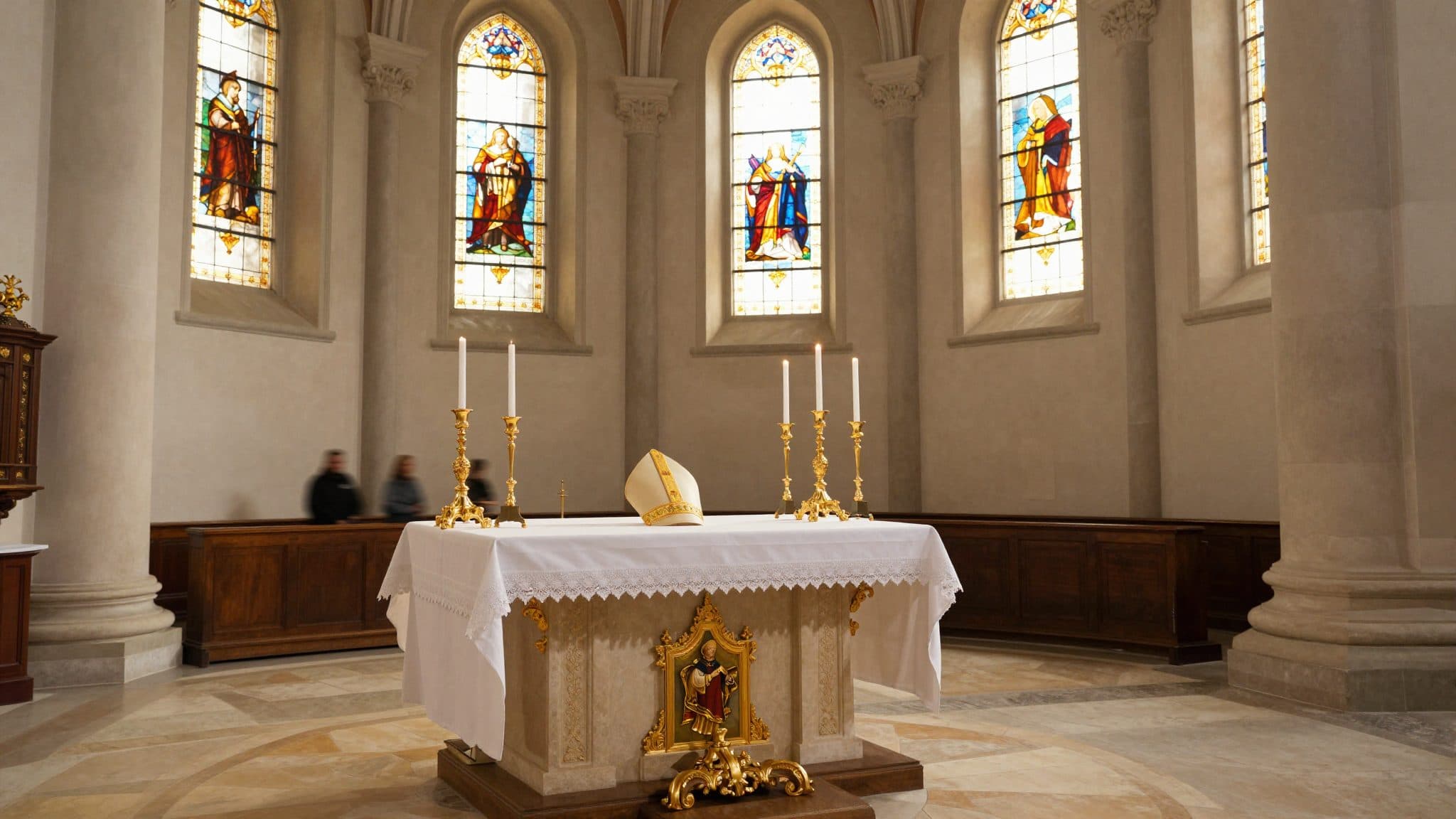
AI-generated image (z-image via Kie.ai)
Summary
The Vatican has expelled the Priestly Brotherhood of St. Pius X and all clergy associated with it from the Catholic Church following unauthorized episcopal consecrations in Écône. The decree of the Dicastery for the Faith takes effect immediately and affects an estimated one thousand priests worldwide.
Vatican City, 02 July 2026
Pope Leo XIV has expelled the traditionalist Priestly Brotherhood of St. Pius X (SSPX) and all clergy associated with it from the Catholic Church with immediate effect following unauthorized episcopal consecrations in Écône in the Swiss canton of Valais.
Background: Founding and Break with Rome
On Wednesday, Spanish Bishop Alfonso de Galarreta consecrated four priests as bishops in Écône, Switzerland, without the Pope's consent. Those affected are Pascal Schreiber from Switzerland, Michael Goldade from the United States, as well as Michel Poinsinet de Sivry and Marc Hanappier from France. The Vatican confirmed this Thursday the excommunication of the men who had participated the day before in episcopal consecrations prohibited by the Pope. Swiss Bishop Bernard Fellay is also affected due to his participation. As a result, the clergy lose all their ecclesiastical offices and dignities.
The corresponding decree was signed by the Pope's supreme guardian of the faith, Cardinal Víctor Manuel Fernández, as Prefect of the Vatican's Dicastery for the Doctrine of the Faith. Cardinal Fernández formally announced the excommunication as punishment for the unauthorized episcopal consecrations in Écône, Switzerland. «Such disobedience – which represents a practical rejection of Roman primacy – constitutes an act of schism», the declaration states. This refers to an action intended to bring about the division of the Catholic Church.
By carrying out the consecration against the explicit will of Pope Leo XIV, they had committed "an act of a schismatic nature", according to the decree. They are subject to the legally prescribed excommunication. The Vatican thereby excludes from the Catholic Church not only all those involved in the consecration, but all clergy who belong to the Priestly Brotherhood. Laypeople who formally join the Brotherhood also face expulsion from the Church according to the declaration.
The unauthorized consecration took place at the headquarters of the Priestly Brotherhood of St. Pius X – the official name of the religious community – in Écône, Switzerland. The Vatican had made clear weeks earlier that an episcopal consecration without the Pope's consent, i.e., the approval of the head of the Catholic Church, would result in expulsion from the Church. Since such a consecration constitutes an act of division under canon law, the expulsion followed automatically.
Number of Those Affected and Reach
According to information from the Catholic News Agency, the community has around 800 priests worldwide, most of them in North America and France. According to the traditionalist group's own figures, there are around 700 priests, along with around 600,000 supporters worldwide. By its own numbers, the Pius Brothers' following is therefore larger than the worldwide membership of the Old Catholic Church, which today numbers approximately 130,000 members. Around 16,000 supporters from around the world traveled to Valais to attend the prohibited ceremony in person.
The Pius Brotherhood was founded in 1970 by French Archbishop Marcel Lefebvre in response to the reforms of the Second Vatican Council (1962–1965). The Council fundamentally changed, among other things, relations with other Christians, with Jews and other religions, as well as with the laity, and permitted the Mass to be celebrated in the respective national languages rather than only in Latin. Because the Pius Brothers reject many of these reforms as too liberal, they have been in conflict with the Vatican ever since. Points of contention are primarily religious freedom and ecumenism. In addition, the Pius Brothers insist on old forms of worship.
Their priests celebrate the Mass in the old rite, in Latin, with their backs to the faithful. The community adheres to the principle "extra ecclesiam nulla salus" – outside the Church there is no salvation. In Zaitzkofen in Bavaria near Regensburg, the community maintains a priory seminary. The Vatican expressly declared that marriages and confessions administered by priests of the Brotherhood are canonically invalid with immediate effect.
Canonical Consequences
As early as 1988, Archbishop Lefebvre had consecrated four bishops without the consent of Pope John Paul II – including the British Holocaust denier Richard Williamson. Lefebvre and the newly consecrated bishops were subsequently excommunicated. Pope Benedict XVI lifted the severe ecclesiastical penalty in 2009 as a sign of reconciliation. This step drew criticism worldwide because Williamson was among those consecrated in 1988. The Vatican has now declared that since the time of Paul VI, numerous attempts to bring the movement back into full communion with the Catholic Church have failed.
Cardinal Secretary of State Pietro Parolin expressed regret over the schism on Wednesday evening. «The essential point», Parolin said, «is that of the Council: Is the Second Vatican Council accepted or not?» The Second Vatican Council represents a milestone for the Church that must be accepted and properly implemented. Cardinal Fernández simultaneously issued an official warning to clergy and laity not to join the "schismatics" of the Priestly Brotherhood of St. Pius X.
The Brotherhood refuses to respect human rights, as it stated in a letter to the Pope three months before the article. German theologian Georg Essen sees not only intra-ecclesiastical but also political questions touched by the dispute: The Brotherhood fundamentally rejects the Church's opening toward democracy, secular states, and religious freedom. Religion expert Norbert Bischofberger explains that the Pope, as a bridge-builder, had sought dialogue with the Brotherhood. With regard to obedience, he formulated: «Where obedience to the Pope and the bishops ceases, the fun ceases as well.»
Connections to the Political Right
In right-wing extremist circles, the Pius Brothers meet with approval according to the assessment of the director of the Center for Studies on New Religions in Turin, Massimo Introvigne – especially when they voice sharp criticism of Islam and of states that permit public mosques or Islamic demonstrations. The Italian far-right party Forza Nuova announced, according to RSI, that it intended to personally attend the episcopal consecration in Écône. In a statement, it declared itself to stand alongside those who have never lowered the banner of tradition. French politician Marine Le Pen of the Rassemblement National had her children baptized in a parish of the Brotherhood. Her father was supported by the founder of the Brotherhood, Marcel Lefebvre. German AfD politician Maximilian Krah worked for years as a lawyer for the Brotherhood and managed assets worth millions. Krah had repeatedly criticized the course of the Catholic Church under the previous Pope as a "catastrophe".
The Vatican correspondent of the Italian daily Corriere della Sera pointed out that the sharpest critics of the Brotherhood's disobedience come from the conservative camp. It is speculated that Pope Leo XIV, in return for conservative loyalty, might show greater leniency regarding the celebration of the Mass in Latin. The former private secretary of Pope Benedict XVI, Archbishop Georg Gänswein, stated: «I believe that Rome could now be ready to be more flexible, generous, and fatherly with regard to the possibility of celebrating the Mass in Latin».
Reactions and Mood in Écône
Many of the faithful present were unimpressed by the threat of excommunication. A Brazilian priest briefly commented on the events with the exclamation «Magnifico». A Canadian father said: «That's the best advertising for us». The atmosphere around the consecration in the surrounding vineyards was described as festive, with prayer circles, picnics, and outdoor confessions. The Brotherhood sees itself as the only truly orthodox Catholic community and is regarded as financially solid. According to observers, the organization attracts particularly younger people because of its clearly structured, hierarchical worldview.
The Vatican classifies the step as the greatest division of the Catholic Church since the Reformation around 500 years ago, in which Switzerland once played a significant role. The last great preceding schism in more recent Church history occurred in 1870, when the liberal Old Catholics separated from Rome over the dogma of papal infallibility. This news was broadcast on 02.07.2026 on the Deutschlandfunk program.
Historical Classification of the Schism
The Vatican also declared that the Priestly Brotherhood of St. Pius X had been expelled from the Catholic Church and that all its supporters were excommunicated with immediate effect. Five leading Pius Brothers have been banished from the Catholic Church with immediate effect. Six self-appointed bishops of the traditionalist Pius Brothers have been expelled from the Catholic Church. With information from Tilmann Kleinjung, ARD Rome.
Six clerics lost all their ecclesiastical offices and titles through the excommunication. The Vatican had warned the remaining members of the Brotherhood – clergy as well as laity – against joining the rebellious bishops and threatened them with the harshest ecclesiastical sanctions. The declaration Nostra Aetate of 1965 had underscored the common roots of Christianity and Judaism, rejected anti-Semitism as well as any collective attribution of guilt to Jews for the death of Jesus – positions to which the Pius Brothers still do not adhere today.
Questions & Answers
Who was excommunicated by Pope Leo XIV?
The Vatican expelled from the Church all those involved in the unauthorized episcopal consecrations in Écône, including the bishops of Spanish and Swiss origin Alfonso de Galarreta and Bernard Fellay, as well as the four newly consecrated bishops. In addition, in future all clergy belonging to the Priestly Brotherhood of St. Pius X are considered excommunicated.
Why do the Pius Brothers reject the Second Vatican Council?
The Brotherhood was founded in 1970 as a reaction to the reforms of the Second Vatican Council (1962–1965). It regards the Council's opening toward other Christians, other religions, religious freedom, and democracy as too liberal and instead
Pius Brothers Excommunicated: Vatican Responds to Episcopal | allfacts360