Vienna's "Time-Out" Shared Home for Minors Below Criminal Responsibility Takes in First 13-Year-Old
Vienna, July 24, 2026
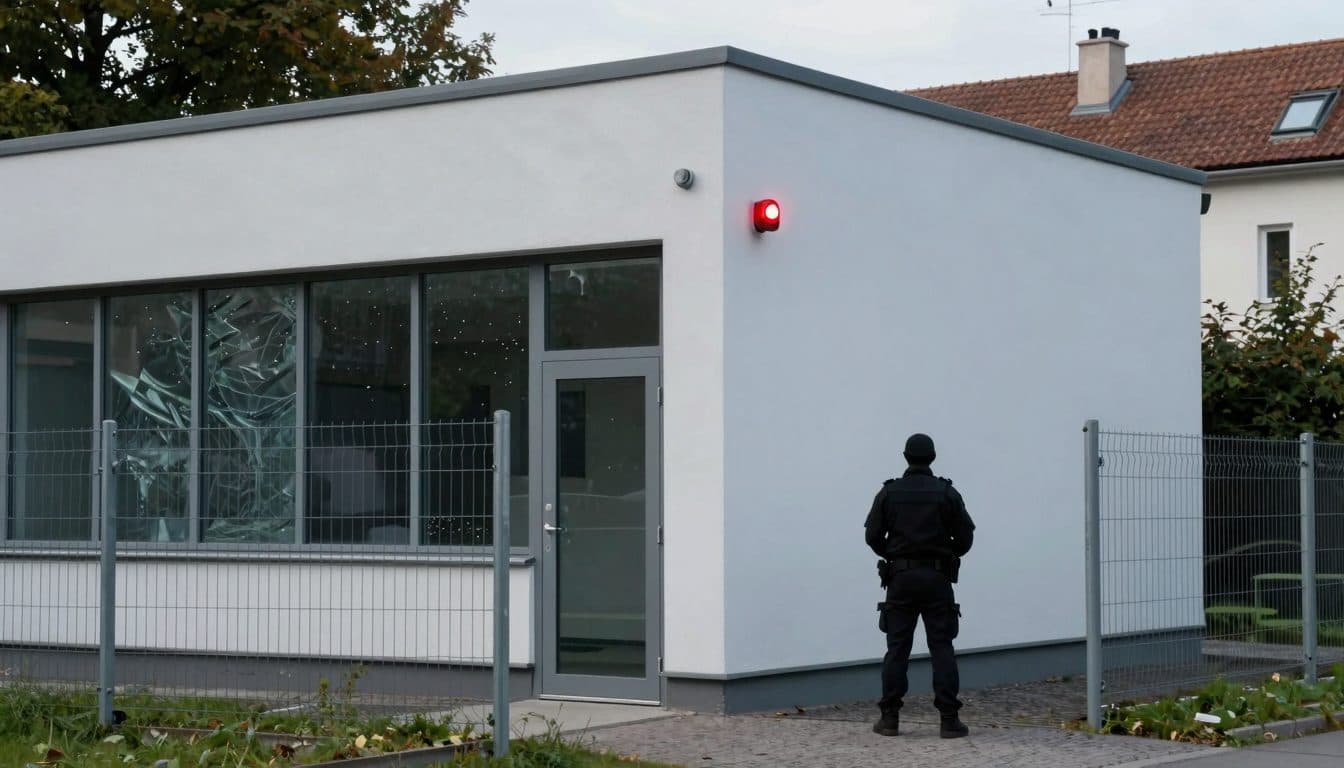
AI-generated image (z-image via Kie.ai)
Summary
In Vienna-Simmering, the controversial Time-Out shared home for repeat offenders below the age of criminal responsibility (under 14) has begun operations. The first 13-year-old has moved in, with another child set to follow shortly – district politicians are voicing sharp criticism.
Vienna, July 24, 2026
In Vienna-Simmering, the "Auszeit-WG" (Time-Out shared home) for repeat offenders below the age of criminal responsibility (under 14), which has been the subject of debate for months, has begun operations and took in its first 13-year-old resident the week before last.
Pilot Project for 11- to 13-Year-Olds
The facility on the outskirts of the city, designed as a nationwide pilot project in Austria, is intended to care for children aged eleven to 13 who have previously come to attention as repeat offenders. As confirmed by the responsible city councillor Bettina Emmerling (Neos) through her spokesperson, a 13-year-old child has been living in the shared home since mid-July. Another child is to follow "in Kürze" (shortly). The stay of the first resident has been proceeding "bisher planmäßig" (so far according to plan).
According to the city, the shared home pursues an intensive educational approach. The facility "erstmals in Österreich die Möglichkeit geschaffen, strafunmündige Intensivstraftäter*innen anzuhalten und durch multiprofessionelle Teams intensiv zu betreuen," (for the first time in Austria creates the possibility of holding intensive repeat offenders below the age of criminal responsibility and providing them with intensive care through multiprofessional teams), according to a statement. The children are taught by remedial teachers; a stay can last up to twelve weeks.
Security Concept Featuring Alarm System and Security Personnel
The costs for the project amount to just under one million euros. During the presentation of the concept, it was repeatedly emphasized that the shared home is explicitly not a "Kinder-Knast" (children's prison), but rather a pedagogically run facility. At the same time, however, the security precautions are unusually strict: According to the concept, the house features, among other things, an alarm system, break-resistant doors and windows, as well as a security team.
As the concept document available to the APA states, this is intended to establish "dadurch ein Höchstmaß an Sicherheit hergestellt werden" (the highest possible level of security). The system, "das die Außenwelt im Anlassfall durch laute Signale aufmerksam macht" (which alerts the outside world through loud signals in case of an incident), was implemented on the recommendation of the police, explained a spokesperson for Emmerling. The alarm system serves "ausschließlich dem Schutz unserer Mitarbeiterinnen und Mitarbeiter" (exclusively to protect our employees) and is used "nur als letzte Maßnahme in absoluten Notfällen zum Einsatz" (only as a last resort in absolute emergencies).
The staff is also prepared for crisis situations. All caregivers have been "vor Ort auf spezielle Festhaltetechniken, Deeskalationstechniken und Selbstverteidigung geschult" (trained on-site in special restraint techniques, de-escalation techniques, and self-defense), explained the spokesperson. Self-defense training sessions take place at regular intervals. In addition, there is always at least one security employee on the team, who is part of the caregiving staff. Since at least two team members are always present in the facility simultaneously, it is "eine reine Notfalllösung" (a purely emergency solution).
District Mayor Steinhart Voices Sharp Criticism
The association responsible for the care assumes in its concept "dass es vor allem am Beginn des Aufenthalts zu stärkeren Widerständen kommt und Mitarbeit verweigert wird" (that especially at the beginning of the stay, stronger resistance will occur and cooperation will be refused). Accordingly, the start of care is accompanied by higher staffing levels and clear rules. The 13-year-old resident had to surrender his mobile phone at the beginning of his stay – a measure that, according to the concept, applies for the entire duration of the stay.
In the immediate neighborhood, the project is meeting with considerable resistance. Simmering's district mayor Thomas Steinhart already voiced sharp criticism of the city's approach at the launch. "Mich am Vorabend der ersten Pressekonferenz zur offiziellen Vorstellung des Pilotprojektes ‚Auszeit-WG' zu informieren, ist für mich ein klares Zeichen dafür, dass Protest zu Recht erwartet wird," (Informing me on the eve of the first press conference for the official presentation of the 'Auszeit-WG' pilot project is a clear sign to me that protest is rightly expected), said Steinhart. The district had also requested an official security concept, he said, but had never received one.
Steinhart, who has represented the district politically for years, also criticized not having been informed about the opening in advance. "Als Bezirksvorsteher erwarte ich mir, dass ich als gewählter Interessensvertreter über die Geschehnisse im Bezirk im Vorfeld in Kenntnis gesetzt werde," (As district mayor, I expect to be informed in advance about events in the district as an elected representative), he said. He also called for an increase in police staffing: "Wenn wir permanent für neue Einrichtungen herhalten müssen, ist eine Aufstockung des Polizeipersonals zwingend notwendig." (If we are permanently expected to accommodate new facilities, an increase in police personnel is absolutely necessary.)
Further Reservations from Politics and the Expert Community
Steinhart emphasized that Simmering is already "vor Herausforderungen" (faced with challenges) due to the nearby juvenile detention center. The additional burden from the Auszeit-WG exacerbates the situation. The City of Vienna counters that the facility serves precisely to prevent escalations in families and the social environment by removing repeat offenders below the age of criminal responsibility from their familiar surroundings at an early stage.
The criticism of the project is not limited to Simmering. The Vertretungsnetz (advocacy network), the Volksanwaltschaft (Austrian Ombudsman Board), staff representatives within the City of Vienna, and the opposition had also voiced concerns. At the center is the question of whether voluntary care is compatible with such strict security measures, and whether the closed placement of children under 14 remains legally and pedagogically justifiable.
Outlook: A Model with Nationwide Impact?
Supporters point to the rising number of serious offenses committed by very young offenders in Vienna and argue that, without such a facility, children would continue to be placed in unsuitable structures – including correctional facilities. According to the city's wishes, the Auszeit-WG is intended to close a gap between outpatient care and closed placement, and to initiate behavioral change through intensive social-pedagogical, psychological, and educational work.
What happens next with the first resident remains open. The responsible agencies emphasize that admission is voluntary and can be ended at any time. If the pilot project is successful, expanding the model to additional locations is being considered. Whether this succeeds will also depend on whether the city can dispel the massive reservations from the district, children's rights organizations, and the professional public.
Regardless, the shared home is already operating. Despite all the criticism, the city sees itself as having a responsibility to create a specialized offering at all for a small group of highly conspicuous children under 14. The coming weeks are expected to show whether the concept holds up pedagogically – and whether the narrow line between protection and loss of freedom can be maintained.
Questions & Answers
Who is Bettina Emmerling and what role does she play in the Auszeit-WG?
Bettina Emmerling is a Vienna city councillor from the Neos party and is politically responsible for the Auszeit-WG. A spokesperson for her confirmed to the media the admission of the first 13-year-old resident and explained the facility's security concept.
Why is district mayor Thomas Steinhart criticizing the Auszeit-WG?
Steinhart criticizes the fact that he was only informed on the eve of the press conference and that the district has not received an official security concept. He is also calling for more police personnel because Simmering is being doubly burdened by the juvenile detention center and the Auszeit-WG.
What security measures apply in the Auszeit-WG?
The facility features break-resistant doors and windows, an alarm system for emergencies, trained staff in de-escalation and self-defense, as well as a security employee on the team. According to the concept, the alarm system serves exclusively to protect the employees.
Vienna Time-Out Shared Home: Security Concept and Criticism | allfacts360