Warken unveils long-term care reform draft, drawing sharp criticism from welfare groups
Berlin, 04 June 2026
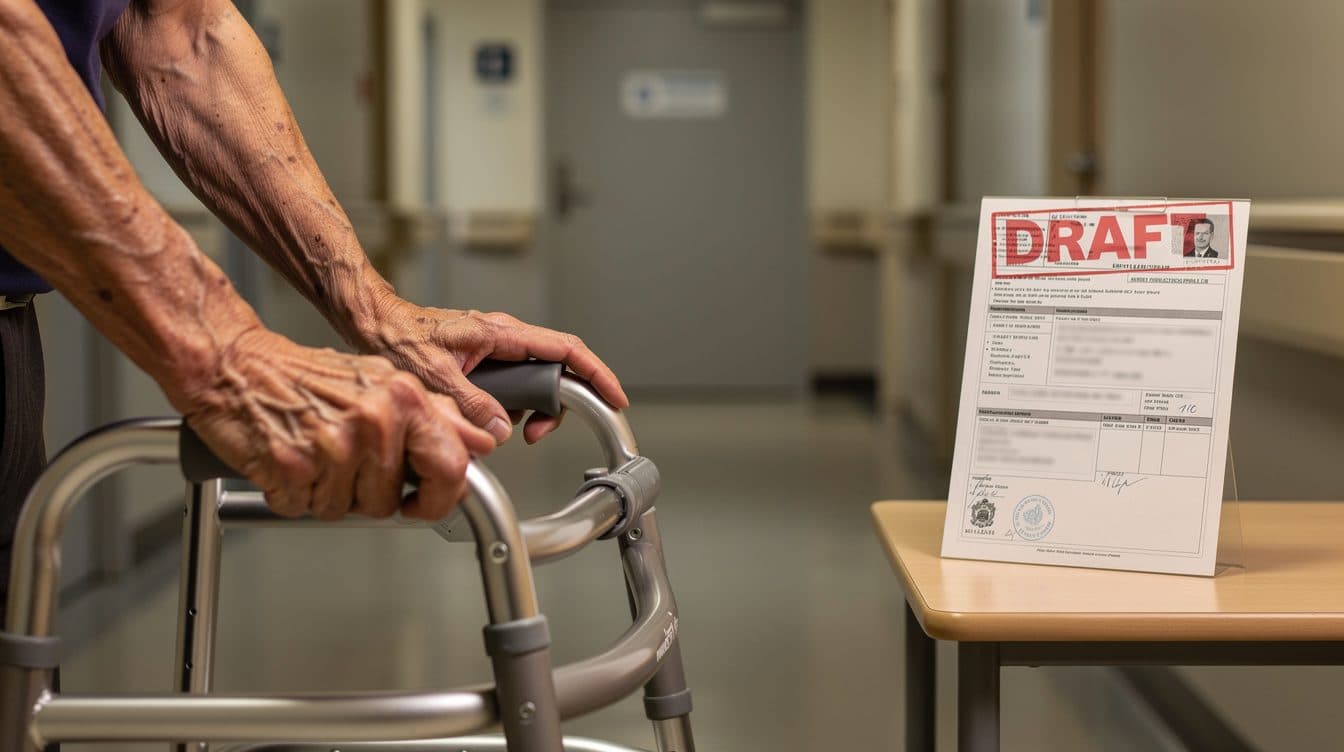
AI-generated image (flux-2/pro-text-to-image via Kie.ai)
Summary
Germany's Health Minister Nina Warken has presented a draft reform of long-term care insurance aimed at closing a multi-billion-euro funding gap. The plan raises contributions for childless insured persons, lifts the income ceiling for high earners, and delays higher subsidies for care recipients, prompting harsh criticism from welfare unions and care associations.
Berlin, 04 June 2026
Germany's Health Minister Nina Warken (CDU) has presented a draft reform of statutory long-term care insurance that lifts the contribution assessment ceiling for high earners, raises surcharges for childless insured persons, and postpones higher subsidies for those in need of care, prompting welfare groups to denounce the package as unbalanced.
A funding gap in the billions
The reform, prepared by the black-red coalition government, is intended to shore up the long-term care insurance (Pflegeversicherung) and prevent further steep increases in regular contribution rates. According to the draft, the system faces a combined deficit of roughly 22.5 billion euros over the next two years, with a projected shortfall of 7.6 billion euros in 2027 at the current general contribution rate of 3.6 percent. Without intervention, the annual funding gap would grow to about 15.4 billion euros by 2028, the ministry warned.
Warken care reform: cuts for caregivers, higher costs for | allfacts360
At the heart of the draft is a revenue-raising package worth around 11 billion euros in its first year and an estimated 20.34 billion euros in cumulative savings by 2030. The contribution assessment ceiling (Beitragsbemessungsgrenze) is to be raised so that higher earners contribute more, analogous to the statutory health insurance system. That change is projected to bring an additional 1.6 billion euros into the care funds in the coming year and 1.7 billion euros in each of the following two years.
New contributions and a higher ceiling
The contribution surcharge for childless insured persons is to rise by 0.1 percentage points, from the current 0.6 points to a total of 0.7 contribution rate points, generating an additional 1.1 billion euros annually. Contributions to statutory long-term care insurance are also to be levied on mini-jobs in future, closing what the ministry describes as a long-standing gap in the funding base.
On the spending side, the draft makes the deepest cuts to benefits and timelines. Care recipients will be reclassified into the next higher care level only after a six-month delay, a measure expected to save roughly 2.6 billion euros in 2027. Care-dependent persons will also receive higher subsidies from long-term care insurance for their home costs six months later than at present, and for full inpatient care, the highest care supplement will be reached only after four and a half years instead of the current three years.
Cuts to benefits and timelines
The flat-rate relief amount of up to 131 euros per month, previously available to recipients in the lowest care level (Pflegegrad 1) for services such as household help, is to be eliminated. New care recipients in Pflegegrad 2 or 3 will receive only half of the relief amount during their first three months. The ministry says those affected will be compensated through expanded prevention counseling, but welfare organizations warn the change amounts to a significant benefit cut.
Family caregivers, who currently receive full pension contributions paid by the care funds, would in future see those contributions capped at 70 percent of the full amount. According to the draft, that change is expected to save the funds 1.8 billion euros in the coming year, rising in equal steps to 2.1 billion euros by 2030. A new bridging budget is also to be introduced for emergencies when family caregivers are temporarily unavailable.
New entitlements and prevention
The reform also creates new entitlements. A so-called care accompaniment (Pflegebegleitung) is to be introduced for home care, intended to detect signs of health deterioration earlier. Insured persons over 60 are to receive a regular supplementary entitlement to medical services for early detection and prevention of age-related health risks, burdens and illnesses. For the first time, a mechanism for annual increases in regular long-term care benefits tied to inflation is to be written into law, intended to cushion the out-of-pocket share of care costs paid by insured persons.
Children of care recipients could be required to contribute more to the financing of their parents' nursing home accommodation, although the ministry says that increased financial burden on relatives will be regulated in a separate law. The draft also caps wage increases in the nursing sector by suspending the mandatory collective bargaining compliance rule, a provision the Verband Deutscher Alten- und Behindertenhilfe objects to in particular.
Industry and union reactions
Digitalization in the nursing sector is to receive 1.7 billion euros from the special infrastructure fund, and the federal government wants to strengthen private long-term care provision, possibly through tax incentives for voluntary supplementary insurance or company-based long-term care arrangements. The draft states that further increases in regular contribution rates are off the table: "Weitere Anhebungen der Beitragssätze kommen hierbei nicht in Betracht."
Welfare unions and care associations have reacted harshly. The Sozialverband Deutschland (SoVD) called the draft "vor allem ein Spargesetz" – above all a savings law. SoVD chairwoman Michaela Engelmeier acknowledged that the long-term care insurance needs reform and said it was right to strengthen prevention and rehabilitation, but criticized possible cuts in pension contributions for family caregivers as "ein fatales Signal an die Menschen, die die häusliche Pflege jeden Tag aufrechterhalten" – a fatal signal to the people who maintain home care every day.
Eugen Brysch of the Patientenschutz Foundation described the cut to family caregivers' pension contributions as "harten Schlag für pflegende Angehörige" – a hard blow for family caregivers. He added: "Viele reduzieren ihre Arbeitszeit oder geben ihren Beruf ganz auf und nehmen erhebliche finanzielle Einbußen in Kauf" – many reduce their working hours or give up their jobs entirely and accept considerable financial losses.
What comes next
Caritas sharply criticized the same measure as "eine familien- und frauenfeindliche Fehlentscheidung" – a family- and women-hostile wrong decision. Oliver Blatt, head of the GKV-Spitzenverband, expressed understanding that "auch zu unpopulären Maßnahmen gegriffen werden muss" – unpopular measures must also be taken – but said the overall package is "unausgewogen" – unbalanced – with too many burdens falling "one-sidedly on those in need of care and contributors."
The trade union Verdi called the suspension of the mandatory collective wage requirement "ein Affront gegen diejenigen, die sich jeden Tag professionell um pflegebedürftige Menschen kümmern" – an affront against those who professionally care for people in need of care every day. CSU parliamentary group leader Klaus Holetschek added: "Wer pflegende Angehörige stärken will, darf nicht gleichzeitig Kürzungen ihrer Renten in Kauf nehmen" – anyone who wants to strengthen family caregivers must not simultaneously accept cuts to their pensions.
More than six million people in Germany are currently classified as care-dependent. The reform is among the projects the federal government intends to pass this summer. The draft was first reported by Politico and is available to the ARD-Hauptstadtstudio; further details were obtained by Der Tagesspiegel. The news was broadcast on Deutschlandfunk on 04.06.2026.
Warken has framed the package as a way to put the Pflegeversicherung on a sustainable footing while shielding ordinary contributors from higher rates. Critics counter that the savings are concentrated on precisely those who are least able to absorb them, namely those in need of care and the relatives who look after them at home, leaving the political fight over the bill's final shape open as the legislative process moves forward.
Questions & Answers
Who is Nina Warken and what role does she play in the long-term care reform?
Nina Warken is the Federal Health Minister of Germany and a member of the CDU. She has presented the draft reform of statutory long-term care insurance prepared by the black-red coalition government.
Why is the federal government pushing through a long-term care reform now?
Long-term care insurance faces a projected combined deficit of about 22.5 billion euros over the next two years, with an annual gap expected to widen to roughly 15.4 billion euros by 2028 if nothing is done. The reform aims to raise revenues and curb spending growth without raising the general contribution rate.
Which measures in the draft are most criticized by welfare groups?
The Sozialverband Deutschland, Caritas, the Patientenschutz Foundation and the trade union Verdi have attacked the planned cap on pension contributions for family caregivers, the elimination of the 131-euro relief amount for Pflegegrad 1, the delay in care-level reclassification, and the suspension of the mandatory collective wage requirement in nursing.