White House employee allegedly bet over $100,000 using insider knowledge from Trump speeches
Washington, July 17, 2026
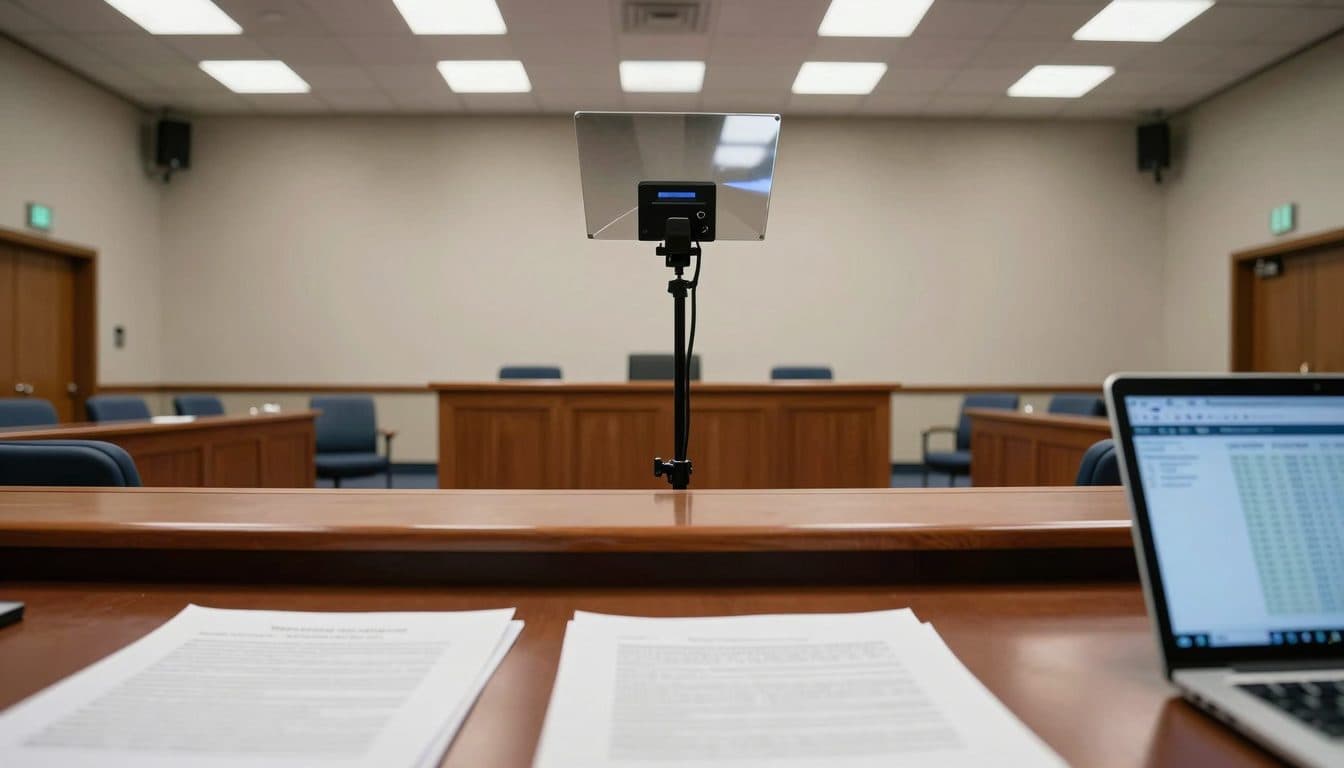
AI-generated image (z-image via Kie.ai)
Summary
A White House employee who has operated the teleprompter for US President Donald Trump for roughly a decade is suspected of having earned more than $100,000 by…
Washington, July 17, 2026
A White House employee who has operated the teleprompter for US President Donald Trump for roughly a decade is suspected of having earned more than $100,000 by betting on the content of Trump's speeches. The platform Kalshi itself detected the suspicious transactions and reported them to the relevant US regulatory authority.
A long-time teleprompter operator for US President Donald Trump is suspected of having won more than $100,000 on the prediction platform Kalshi by using insider knowledge about the content of Trump's speeches.
Who is the accused?
According to US media reports, the accused is Gabriel Perez, who has operated the president's teleprompter for roughly a decade. He allegedly placed bets on the content of more than a dozen of Trump's speeches on the Kalshi platform, exploiting inside information. The winnings are estimated at more than $100,000, equivalent to roughly €87,400.
Kalshi is a so-called prediction-market platform on which users can bet, among other things, on whether certain words will be spoken, certain sentences will be said, or certain topics will be addressed at a particular event. Whoever operates the teleprompter typically knows the wording of the speech before it is delivered – an informational advantage that can be directly converted into bets.
How do prediction markets work?
According to its own statements, the platform itself noticed the suspicious transactions and reported them to the relevant US regulatory authority, the Commodity Futures Trading Commission (CFTC). Kalshi interpreted the detection as evidence of the effectiveness of its own security systems. The company declined to comment on a request regarding possible compensation for users who lost money through the alleged fraud.
The CFTC neither confirmed nor denied publicly whether it is investigating the case. According to information from ABC News, however, the authorities are seeking an out-of-court resolution. Under a proposed settlement, Perez would agree not to place such bets in the future and to return the money.
Role of the CFTC regulator
According to the report, US federal authorities are also not prepared to bring criminal charges in the case. The matter would therefore likely be concluded without formal criminal proceedings, provided Perez agrees to the settlement.
The case is part of a growing number of incidents in which individuals with access to sensitive information have apparently monetized their knowledge on prediction markets. As recently as April, the US Department of Justice accused a soldier of having earned more than $400,000 on the Polymarket platform using secret knowledge about plans to arrest Venezuelan leader Nicolás Maduro.
Further cases of alleged insider trading
There have also been reports of extensive trading activity on bets regarding a possible war with Iran, with suspicions of insider trading attached. The incidents throw a spotlight on the question of how vulnerable prediction markets are to information abuse – especially when the events being traded on are politically highly charged.
According to press secretary Karoline Leavitt, the White House has taken note of the matter. Leavitt said the White House has "strict ethics guidelines" under which such transactions are prohibited. Trump has been informed and thinks it is "deeply unfortunate and, frankly, a disgrace."
Reaction from the White House
It is noteworthy that Trump himself continues to conduct stock market transactions in the millions, while those around him come under scrutiny for comparatively smaller sums. The discrepancy between the amounts involving Trump himself and the $100,000 Perez allegedly earned raises questions about a uniform application of the rules.
The Polymarket platform, on which bets on political events are also placed, was not the site of the alleged acts in the current case, but plays a role in the context: it is another example of prediction markets that have gained significantly in importance in recent years – and that simultaneously offer new attack surfaces for insider trading.
The way such platforms work differs from traditional financial markets: instead of betting on stocks or derivatives, bets are placed on whether specific statements or events will occur. This makes them vulnerable to individuals who know in advance what will be said or decided. In Perez's case, it was direct access to the president's speech text.
Oversight of such markets in the US is assigned to the CFTC. It is also the responsible authority in the current case. However, it has become apparent that the authority has so far tended to favor settlements over prosecution in comparable cases – a circumstance that is repeatedly criticized in the debate over the regulation of prediction markets.
Open questions and consequences
For Kalshi itself, the case comes at an inopportune time: the company had increasingly emphasized in recent months the seriousness of its platform and the effectiveness of its own controls. The incident counters this portrayal, even though Kalshi framed it as a success of its own detection mechanisms.
It remains unanswered whether and to what extent users who lost money on the opposite side of the allegedly manipulated bets will be compensated. Kalshi did not comment on this. The question of whether other White House employees acted in a similar manner also remains open.
The Perez case overall underscores the tension between the speed with which prediction markets make new events tradable and the difficulty of effectively protecting such markets against the abuse of insider information. As long as bets on political statements are possible and individuals with advance knowledge have access to platforms, the risk of such incidents persists.
Reporting on the matter comes, among others, from Andreas Proschofsky, whose article appeared on July 17, 2026. The case is likely to continue attracting attention, particularly with regard to how the White House handles the incident internally and whether consequences will be drawn for the affected procedures.
Questions & Answers
Who is Gabriel Perez?
According to US media reports, Gabriel Perez is the White House employee who has operated the teleprompter for US President Donald Trump for roughly a decade. He is suspected of having won more than $100,000 on the Kalshi platform using insider knowledge from Trump speeches.
What is Kalshi and how does the platform work?
Kalshi is a US prediction platform on which users can bet, among other things, on whether certain words will be spoken or a particular topic will be addressed at an event. In the current case, Perez allegedly bet on the content of Trump's speeches.
Which authority is responsible in the case?
The responsible authority is the US regulator Commodity Futures Trading Commission (CFTC). It neither confirmed nor denied publicly whether it is conducting an investigation; according to information from ABC News, an out-of-court resolution is being sought.
White House employee allegedly bet over $100,000 using… | allfacts360