WHO warns of dramatic rise in cancer cases by 2050
Geneva, 08 July 2026
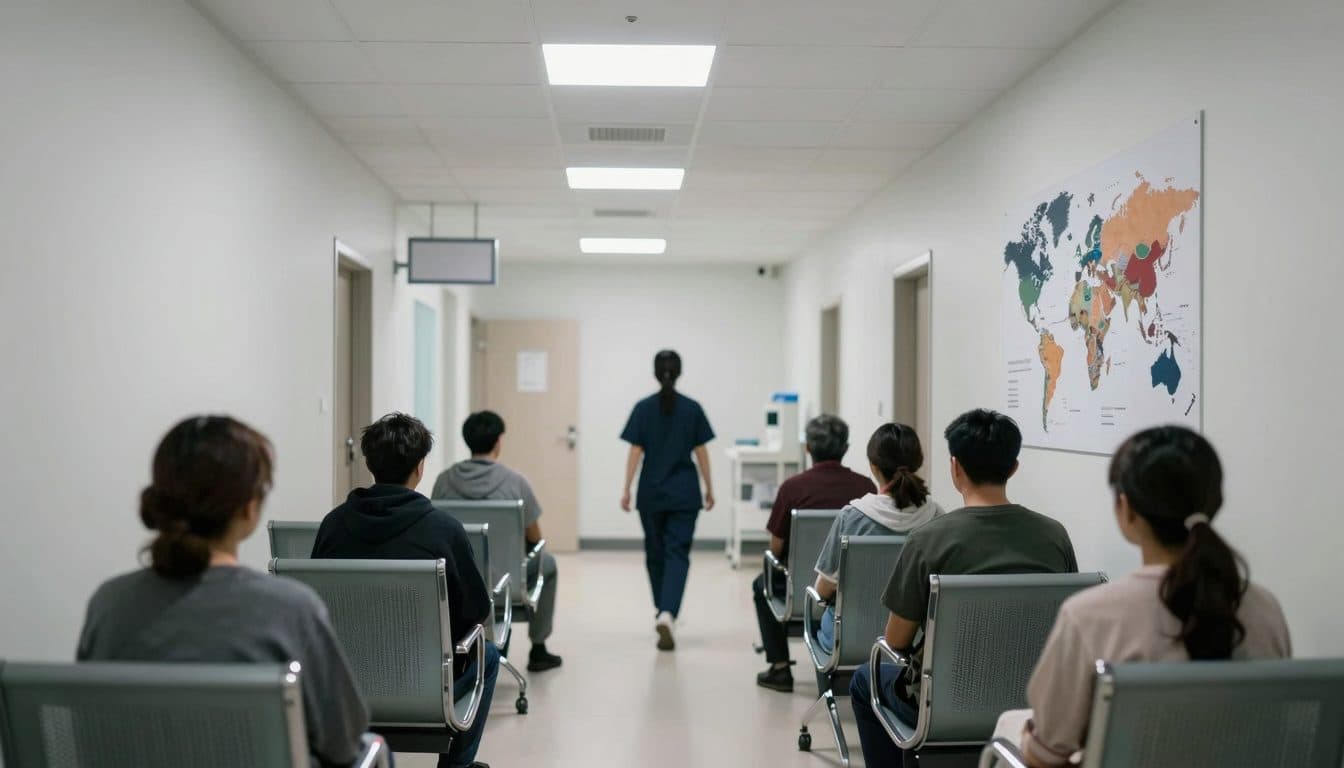
AI-generated image (z-image via Kie.ai)
Summary
The WHO expects around 35 million new cancer diagnoses per year by 2050 unless decisive countermeasures are taken. Currently, about 20.6 million people worldwide develop cancer each year, and nearly ten million die from it.
Geneva, 08 July 2026
The World Health Organization (WHO) is warning in a new cancer report of a doubling in annual new cases to around 35 million by 2050 if prevention and care are not fundamentally improved.
According to the WHO, about 20.6 million people worldwide currently receive a cancer diagnosis each year. Nearly ten million people die from the consequences of the disease each year, according to the figures. Should the trend of recent years continue, experts expect around 35 million new cases in 2050 – an increase of about 70 percent compared with today.
In its new cancer report, presented on Wednesday in Geneva, the WHO stresses that a large proportion of this increase is attributable to changing living and working conditions. These include growing tobacco and alcohol consumption in emerging and developing countries, increasing air pollution, and rising life expectancy, which naturally increases the risk of developing cancer.
Causes of the increase
The organization is therefore calling for new priorities in global health policy. "Das bedeutet, dass ein Großteil der Weltbevölkerung keinen Zugang zu einer Grundversorgung hat", the WHO writes with regard to existing gaps in care. Access to even minimal cancer treatment is currently possible in only 39 percent of all countries.
The WHO points to enormous differences between industrialized and developing countries. For breast cancer, for example, the survival rate in rich countries is around 85 percent, while in poorer countries it is only about 40 percent. The differences are also glaring for other types of cancer, which the organization considers politically and ethically unacceptable.
WHO Director-General Tedros Adhanom Ghebreyesus delivered the report's message in clear terms: "Krebs ist eine zutiefst persönliche Krankheit, die uns fast alle betrifft. Doch ob ein Mensch den Krebs überlebt, darf niemals davon abhängen, wo er geboren wurde oder wie viel er verdient." The UN specialized agency sees this as a mandate to governments and health systems worldwide.
Global inequality in care
The economic consequences of a cancer diagnosis can be devastating for affected families. "Krebs ist eine der Hauptursachen für medizinisch bedingten Bankrott", according to the report. In many countries, patients have to bear a large share of treatment costs themselves, which – without sufficient protection – can lead to poverty.
According to WHO estimates, 92 percent of the world's population will be confronted with cancer at some point in their lives – either as patients or as close family members. The diagnosis often means very high psychological stress for those affected and their relatives, as well as the possibility of financial ruin. "Viel zu viele Menschen werden immer noch im Stich gelassen", the organization warns.
At the same time, the WHO sees reason to report some progress. Compared with 2010, 27 percent fewer people now smoke cigarettes, cigars, or pipes. Partial successes have also been achieved with awareness campaigns, vaccinations against cancer-causing viruses, and early detection programs. However, these are far from sufficient to stem the expected wave.
Progress is not enough
The report draws a sobering conclusion: the greatest gap is no longer our knowledge of the disease, but the gap "between what we know and what we do". The WHO is therefore calling for, among other things, greater investment in cancer registries, better primary prevention, and the expansion of palliative care services.
André Ilbawi, one of the report's co-authors, pointed out that without political action, the inequalities that already exist would continue to grow. Even today, investment in research and care is concentrated in a few wealthy countries, while poorer states barely have functioning oncological structures.
The WHO recommends, among other things, higher taxation of tobacco and alcohol, binding limits for air pollutants, and the expansion of HPV and hepatitis vaccination programs. Early detection screening for breast, cervical, and colorectal cancer should also be offered universally.
WHO's demands
In the organization's view, cancer is not only a medical problem but also a social and economic one. The growing number of patients is hitting health systems that are already overstretched in many places. Without decisive action, a worldwide crisis in oncological care threatens.
The report was published ahead of a series of international health conferences at which ways to implement the WHO's recommendations are to be discussed. The organization is calling on governments, civil society, and the private sector to share responsibility.
The WHO's dramatic prognosis fits into a series of similar warnings published in recent months by professional associations and research networks. Cancer researchers worldwide speak of a "silent pandemic" that is not yet receiving the political attention commensurate with its scale.
Prevention as the most cost-effective lever
With the report, the WHO is expressing the hope that the coming years will be remembered as a turning point in the global fight against cancer – provided governments and societies act now. Experts consider the next five to ten years crucial to at least mitigating the expected increase.
The news was broadcast on 08.07.2026 on the program Deutschlandfunk. Sources quoted included the WHO report and statements from WHO Director-General Tedros Adhanom Ghebreyesus.
If the increase occurs as projected, the consequences will be not only humanitarian but also macroeconomic: estimates suggest that productivity losses caused by cancer will rise significantly in the coming decades – particularly in countries with a large working-age population and, at the same time, weak health infrastructure.
The WHO emphasizes that prevention is by far the most cost-effective lever. Up to 40 percent of all cancers could be prevented by avoidable risk factors such as smoking, excessive alcohol consumption, lack of exercise, and poor diet. Behavioral change programs could therefore save more lives in the long run than any therapy, no matter how expensive.
Questions & Answers
How many cancer diagnoses does the WHO expect by 2050?
In its new cancer report, the WHO expects around 35 million new cancer cases per year by 2050, unless decisive countermeasures are taken. Currently, there are about 20.6 million new cases annually.
Why does the cancer survival rate differ so greatly between countries?
For breast cancer, for example, the survival rate in rich countries is around 85 percent, while in poorer states it is only about 40 percent. The WHO attributes this to lack of access to early detection, diagnostics, and treatment.
What is the WHO asking governments to do?
The WHO is calling for, among other things, greater investment in prevention, the expansion of vaccination programs against cancer-causing viruses, better early detection, and higher taxation of tobacco and alcohol.
WHO Cancer Report 2026: 35 million cases expected by 2050 | allfacts360