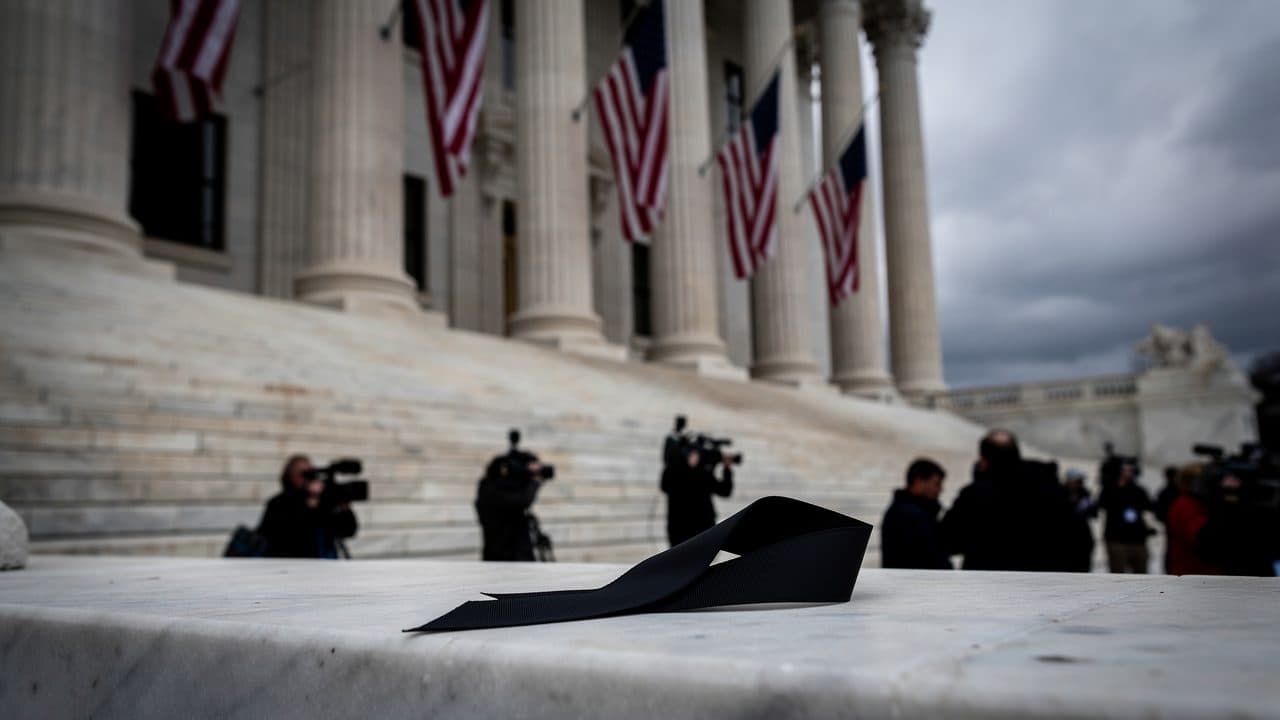
Alan Greenspan is dead: Fed chair dies at 100 from complications of Parkinson's disease
Washington, June 22, 2026
AI-generated image (flux-2/pro-text-to-image via Kie.ai)
Summary
The chairman of the US Federal Reserve, Alan Greenspan, has died at the age of 100. He shaped American monetary policy for nearly two decades and served under four presidents.
Washington, June 22, 2026
Former US Federal Reserve Chairman Alan Greenspan died on Monday at the age of 100 at his home from complications of Parkinson's disease, NBC News reported, citing his wife Andrea Mitchell.
Confirmation by the Federal Reserve
The Federal Reserve confirmed the death of its chairman. "The Federal Reserve notes with deep sadness the death of Alan Greenspan," the central bank said in a statement. Greenspan, who served as the 13th chairman of the Fed's Board of Governors from 1987 to 2006, brought "a rigorous analytical discipline to monetary policy decision-making." He also helped "establish the credibility that continues to count among the Federal Reserve's most important assets."
Economic record of a long tenure
As the Washington Post reported, citing Greenspan's wife, the economist died from complications of his Parkinson's disease. The family announced the death on Monday, the report added. During his five terms, the central bank chief repeatedly and deliberately avoided making concrete commitments. His communication also had a major influence on financial markets. Greenspan helped shape modern American capitalism from the final years of the Cold War to the dawn of the digital age.
Greenspan led the central bank during one of the longest economic expansions in US history, a boom that lasted from 1991 to 2001. Under his leadership, the Federal Reserve also navigated the bursting of the dot-com bubble and the immediate aftermath of the September 11, 2001 terrorist attacks. During this period, he was regarded as one of the most influential figures in international financial policy.
Defending central bank independence
Greenspan's most important achievement is considered to be his defense of central bank independence. In the early 1990s, he resisted pressure from President George H. W. Bush to lower interest rates. This move cemented his reputation as someone who shielded monetary policy decisions from political interference.
Criticism after the 2007 financial crisis
Greenspan was a proponent of financial sector deregulation. After his departure, Greenspan faced criticism over the financial crisis that began in 2007. Opponents accused him of having fostered speculative bubbles through a long period of low interest rates. He later acknowledged misjudgments.
The legendary "Fedspeak"
The legendary central banker repeatedly and deliberately avoided making concrete commitments during his long tenure. With his often seemingly cryptic communication, he developed a style all his own at the Federal Reserve, known by the term "Fedspeak." This kind of deliberate obfuscation of intentions was also described as the "art of obfuscation."
From music student to central bank chief
Greenspan was born in 1926, making him 100 years old at the time of his death. After studying music, he switched to economics and made a name for himself as an economic adviser. In 1974, he took over as chairman of the Council of Economic Advisers.
Before his time at the helm of the central bank, Greenspan built a reputation as an influential economic policy adviser. He advised several Republican presidents and was regarded as someone who could translate complex economic interrelationships into clear recommendations for action. This reputation paved his way to the top of the world's most powerful central bank.
Greenspan's tenure lasted roughly 19 years in total, making him one of the longest-serving Fed chairs in history. During this time, the US economy experienced phases of significant upheaval: from the end of the Cold War, through the globalization of financial markets, to the rise of the digital economy. The US Federal Reserve is described as the world's most influential central bank.
Reactions and spread of the news
The news of Greenspan's death was first reported by NBC News on Monday and later picked up by Reuters on June 22, 2026, as well as on the Deutschlandfunk program on 22.06.2026. The report was also distributed by the dpa-AFX news agency, according to the report disseminated from Washington.
The Federal Reserve stated that Greenspan's "contributions to monetary policy and to economic theory have left a lasting mark on this institution, the economics profession more broadly, and the country." With these words, the central bank honored one of its most defining chairmen.
Greenspan's economic policy convictions, in particular his advocacy of free markets and a hands-off approach to financial sector regulation, influenced not only monetary policy but also the political debate in the US for decades. His appearances before Congress were considered events in their own right, at which his choice of words was closely analyzed by analysts and investors.
Greenspan's economic convictions and his political influence made him internationally one of the most closely watched voices in global financial policy. Economists, politicians, and market participants will continue to discuss his work even after his death.
His death marks the end of an era of US monetary policy that was significantly shaped by Greenspan's cautious, often hard-to-fathom communication style. His successor and subsequent Fed chairs repeatedly had to measure themselves against his legacy.
Questions & Answers
Who was Alan Greenspan?
Alan Greenspan was the 13th chairman of the Board of Governors of the US Federal Reserve from 1987 to 2006, leading monetary policy over five terms under four presidents.
What did Alan Greenspan die of?
Alan Greenspan died at the age of 100 at his home from complications of Parkinson's disease, according to the Washington Post, citing his wife Andrea Mitchell.
Why was Greenspan criticized after leaving office?
After leaving office, Greenspan faced criticism over the financial crisis that began in 2007; opponents accused him of having fostered speculative bubbles through a long period of low interest rates, a misjudgment he later acknowledged.
Alan Greenspan dead: Fed chair dies at 100 | allfacts360