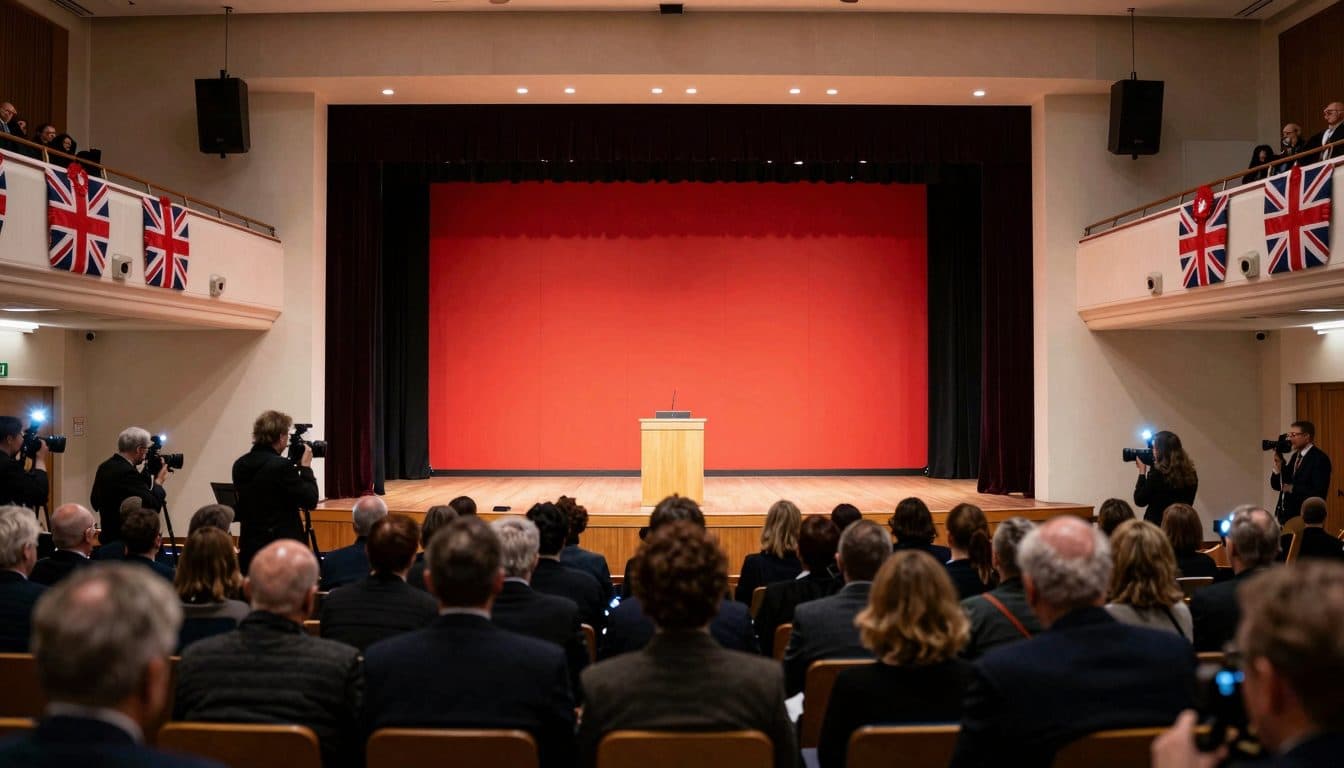
Andy Burnham launches Labour leadership bid to succeed Keir Starmer as UK prime minister
London, 25 June 2026
AI-generated image (z-image via Kie.ai)
Summary
Andy Burnham, the mayor of Greater Manchester, confirmed his bid to succeed Keir Starmer as leader of the UK Labour Party and prime minister, days after Starmer announced he would step down. His main rival, former health secretary Wes Streeting, withdrew and backed Burnham, who is widely regarded as Labour's most popular politician.
London, 25 June 2026
Greater Manchester mayor Andy Burnham formally declared on Monday that he will stand to replace Keir Starmer as leader of the UK Labour Party, setting up a contest to become Britain's next prime minister.
Burnham confirmed his candidacy shortly after Starmer's resignation statement outside 10 Downing Street, ending weeks of mounting pressure from within the parliamentary party. In a brief statement, Burnham paid tribute to the work of the outgoing leader, writing: "Burnham würdigte den 'gewaltigen Dienst', den Starmer dem Land erwiesen habe." He framed his own pitch around delivery, pledging to translate local successes to the national stage: "Ich denke, wir müssen das, was wir im Großraum Manchester erreicht haben, auf die nationale Ebene übertragen," he told the BBC in May.
The 56-year-old, born in 1970 in Aintree near Liverpool and raised in Culcheth, joined Labour at 14, an experience shaped by the miners' strike of 1984 and 1985. He became active in the Madchester music and youth scene of the 1990s before entering Westminster. Under Tony Blair he served as a Home Office minister, then as a Treasury minister under Gordon Brown, who later made him culture secretary and then health secretary. Burnham ran unsuccessfully for the Labour leadership in 2010 and 2015 before leaving Westminster in 2017 to become mayor of Greater Manchester, a region of about 2.8 million people.
From Madchester to Westminster and back
Since then he has built a reputation as a hands-on regional leader. He pressed for more financial support for businesses and workers in areas hit by pandemic lockdowns, a stance that earned him the nickname "King of the North." He describes himself as a proponent of "wirtschaftsfreundlichen Sozialismus" – business-friendly socialism – and is a long-standing critic of Brexit. After the 2017 terror attack on Manchester, the worker bee became a symbol of the city's solidarity, a motif Burnham has repeatedly invoked.
Starmer's departure followed months of dire opinion polling and a punishing set of regional and local elections in May. According to ARD correspondent Christoph Prössl, "Die britische Wirtschaft hat im ersten Halbjahr dieses Jahres das größte Wachstum aller G7-Staaten verzeichnet. Das ist die Hälfte von dem, was man im Jahr davor gesehen hatte." Yet those economic gains failed to lift Labour's ratings. Net migration fell to 171,000 in 2025 and illegal Channel crossings dropped 40 percent in the first half of 2026, but neither achievement dented the public mood. Starmer's late flagship policy – a ban on social media for under-16s – also failed to turn things around.
The May elections that broke the dam
The political damage crystallised in May's local and regional elections, where Labour lost parts of its traditional "Red Wall" heartlands in the Midlands and the North of England to Nigel Farage's right-wing populist Reform UK and to a resurgent Green Party. One hundred Labour MPs publicly called for Starmer to resign, and roughly twice that number signalled support for Burnham. The appointment of Peter Mandelson – a long-time associate of the late Jeffrey Epstein, who died by suicide in 2019 – as ambassador to Washington added to Starmer's difficulties.
Speaking in a dark suit and a burgundy tie outside the famous black door of Number 10, Starmer accepted his fate: "Ich akzeptiere das bereitwillig," he said, thanking staff and family for warm applause as he and his wife Victoria left the building at around 9.30 a.m. He said Britain was, compared with two years earlier, "viel stärker und fairer" and better prepared for the future. Starmer will remain in post until Labour chooses his successor.
Under party rules, each candidate must secure the support of 20 percent of Labour MPs to enter the contest, a threshold Burnham appears on course to clear comfortably. A potential ballot is scheduled to run until MPs return on 1 July and conclude before the parliamentary summer recess on 16 July. With Labour holding 403 seats, 81 MPs constitute the required share. Burnham is to be sworn in as a member of Parliament on Monday afternoon.
Streeting steps aside for Burnham
Wes Streeting, the 43-year-old former health secretary who resigned in May with a sharp attack on Starmer – accusing him of "keine Vision, ein Vakuum" – had been seen as the frontrunner but withdrew on Monday morning. "Er habe 'in den letzten Tagen ausführlich mit Andy gesprochen'," Streeting said on social media, adding: "Wir sollten gemeinsam die Ärmel aufkrempeln und ihm dabei helfen, die nötige Veränderung zu bewirken." He told supporters: "Mit Andy können wir das immer noch."
To secure a seat from which to launch his leadership campaign, Burnham fought and won a by-election in Makerfield, near Manchester, defeating a Reform UK challenger. In victory, he sounded a prime-ministerial note: "Ich werde alles geben, was ich habe, um dafür zu sorgen, dass der Name Makerfield für immer ein Synonym dafür ist, den Wandel herbeizuführen, den dieses Land braucht - und etwas zurückzubringen, das wir verloren haben: Hoffnung, Hoffnung auf die Zukunft." He added: "Jeder spürt, dass das Land nicht dort ist, wo es sein sollte," and promised the country "Stabilität, Ernsthaftigkeit und dauerhafte Fokussierung auf die wichtigen Themen."
Britain, Europe and the road back from Brexit
Burnham has signalled that a Labour government under him would continue Starmer's effort to reset relations with the European Union. The first formal EU-UK summit after Brexit took place in May 2025; from 2027 Britain will rejoin the Erasmus exchange programme; and a clear majority of British voters – 56 percent – now say they would back rejoining the EU. Just 32 percent still consider Brexit the right decision, and only 18 percent view the United States as a reliable ally. Burnham has previously argued that pragmatically deepening ties with the bloc without polarising voters with a full "Rejoin" campaign is the more promising path.
Reform UK under Nigel Farage, the architect of Brexit, remains a formidable force and, according to Prössl, will be "die große Herausforderung für Labour bei den nächsten Parlamentswahlen." "Deswegen der wachsende Druck in den vergangenen Wochen," the correspondent said of Labour's urgency. Burnham has pledged to bind himself to the 2024 election manifesto and to focus on what voters tell pollsters they want: "Die Menschen wollen Fortschritt beim Wirtschaftswachstum, den Lebenshaltungskosten, staatlichen Leistungen, Wohnungen und den Chancen für die kommende Generation sehen," he wrote.
Reform UK and the challenge ahead
Politicians across the spectrum reacted to Starmer's exit. Reform UK leader Nigel Farage demanded an immediate general election. Liberal Democrat leader Edward Davey said voters had "das politische Karussell" – the political carousel – quite enough. Conservative Party chair Kemi Badenoch called Starmer "ein furchtbarer Premierminister." Questions remain over whether a successful regional and city leader can steer a major G7 economy on the world stage: "Ob er jedoch als erfolgreicher Regional- und Stadtpolitiker eine moderne G-7-Nation auf dem weltpolitischen Parkett und in der Weltwirtschaft zu führen vermag, wird mit großer Skepsis betrachtet," one analyst noted.
In his resignation letter, Starmer emphasised Labour's mandate: "Wir wurden gewählt, um unser Land zu verändern, um zu zeigen, dass Politik eine Kraft für das Gute sein kann, und um Chancen für alle zu schaffen." Burnham, who won his Greater Manchester mayoralty twice and now commands a national profile, will spend the coming days rallying MPs before the formal nomination window opens. If he wins, he will become prime minister without ever having led his party at Westminster – a trajectory that mirrors his path from Salford town hall to the national stage.
Questions & Answers
Who is Andy Burnham and why is he running for Labour leader?
Andy Burnham, 56, has been mayor of Greater Manchester since 2017 and is widely regarded as Labour's most popular politician. He is standing to replace Keir Starmer, saying he wants to take what has worked in Greater Manchester to the national level.
Why did Keir Starmer step down after only two years as prime minister?
Starmer resigned under pressure from Labour MPs after the party suffered heavy losses in the May 2026 local and regional elections to Reform UK and the Greens, with about 100 MPs publicly calling for his resignation and twice as many backing Burnham.
What happens next in the Labour leadership contest?
Candidates must win the support of 20 percent of Labour MPs – 81 of the party's 403 MPs – to enter the ballot, which is scheduled to conclude before MPs leave for the summer recess on 16 July. Wes Streeting has withdrawn and endorsed Burnham, who will be sworn in as an MP on Monday afternoon.
Burnham bids to succeed Starmer as UK PM | allfacts360